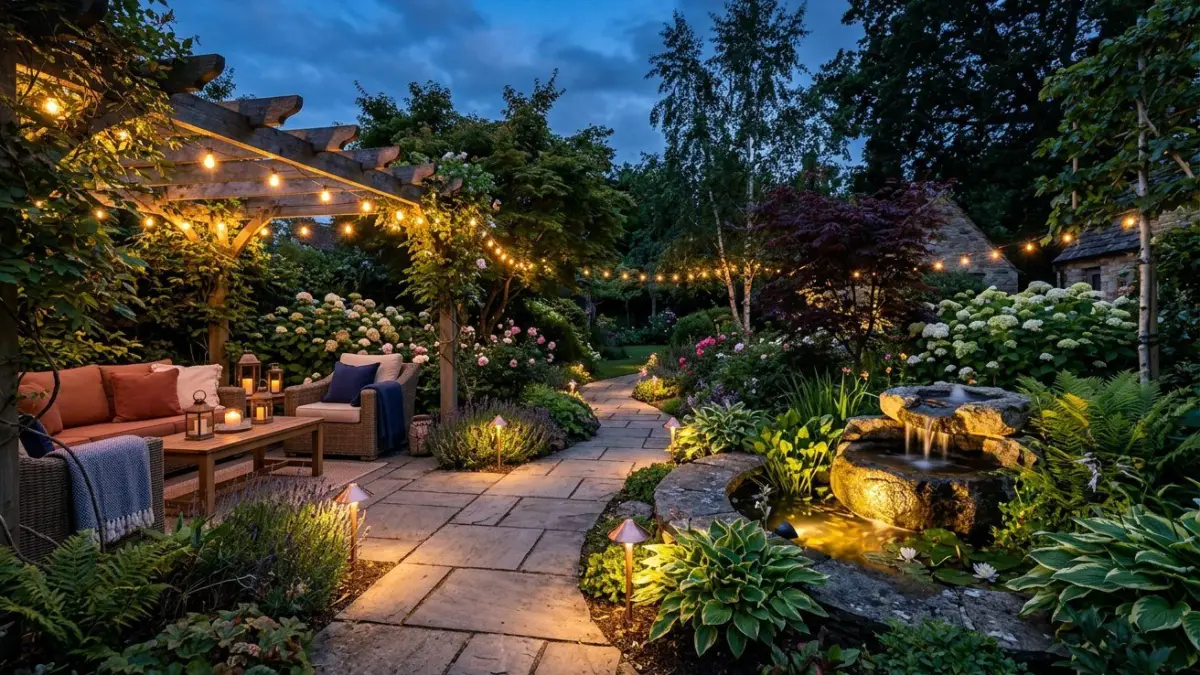
Quick answers
- Where should a water feature go?
- Put it where you will both see and hear it from your main seat, usually within 3 to 6 m (10 to 20 ft). Avoid spots directly under deciduous trees, which fill it with leaves, and avoid low points where runoff will carry soil into it.
- Should I choose solar or low-voltage wired lighting?
- Solar suits path and ambient lighting in places that get 6 or more hours of direct sun. Low-voltage 12V systems suit uplighting and key safety lights that must work every night. Mains-voltage work always needs a licensed electrician, as covered in Outdoor Electrical Safety.
- What colour temperature is best for a garden?
- Warm white, around 2700 to 3000 K, suits almost every garden because it flatters foliage and wood and attracts fewer insects than cool white. Keep any brighter, cooler light for security, as discussed in Lighting for Safety and Security.
- Is a water feature safe with young children?
- Open water is a drowning risk, since a toddler can drown in a few centimetres. Many safety organisations advise choosing a pebble pool, wall spout or bubbler with a hidden reservoir until children are older. See Water Features for Small Gardens for compact options.
Key takeaways
- Site water within 3 to 6 m of your main seat and away from overhanging deciduous trees
- Use three light layers: safety on routes, one accent, and low ambient where you sit, all in 2700 to 3000 K
- Pick the feature by upkeep tolerance: a bubbler needs minutes a month, a pond needs hours each season
- Put pumps and any mains-connected lighting on RCD (GFCI) protection and hire an electrician for mains wiring
Table of contents10 sections
Water features and garden lighting give the evening transformation of a garden, as moving water and soft light change how the space feels after dark.
Decide on three things before you buy anything: where you’ll sit in the evening, which one or two views deserve light or water, and how much upkeep you’ll actually do. The answers narrow the choices quickly. Most gardens are best served by a small, well-sited water feature that runs on a pump, plus three layers of warm, low-level light, with mains-voltage work left to an electrician. This guide covers siting, the choice between options, and the budget and upkeep trade-offs. It doesn’t repeat build details, which live in the dedicated guides linked throughout.
It belongs to the Garden Design guides and builds on the layout thinking in Garden Design Principles. The full technical treatment is in the Water Features & Lighting guides.
At a glance
| Decision | Rule of thumb |
|---|---|
| Distance from main seat to water | 3 to 6 m (10 to 20 ft) so you hear it at normal speaking volume |
| Light layers | Three: safety, accent, ambient |
| Colour temperature | 2700 to 3000 K (warm white) |
| Lit area | Roughly 10 to 20 percent of the garden, leaving the rest dark |
| Solar sun requirement | 6 or more hours direct sun per panel |
| Low-voltage system | 12V, installed with the transformer on a protected outdoor circuit |
| Pump and mains lights | Protected by a 30 mA RCD (GFCI in North America) |
| Open water with toddlers | Avoid; use a covered reservoir feature |
Siting: where light and water earn their keep
Start from the seat, not the feature. Sit where you’ll spend evenings and note what you see and what you hear. Water works best when it sits in the view from the terrace or kitchen window and within a few metres, because sound falls off quickly outdoors. A small splash or trickle masks traffic mostly at close range.
Then check the constraints:
- Tree cover. Falling leaves, blossom and sap foul small water bodies fast. Open sky or evergreen-only surroundings halve the cleaning.
- Sun. About 4 to 6 hours of sun suits most water plants and keeps algae in check without baking the water. All-day sun grows algae, and dense shade slows plant growth.
- Level ground. Water shows any tilt. Avoid the lowest spot in the garden, where rain runoff brings soil, fertiliser and debris.
- Power. Note the distance to a protected outdoor socket. A long run adds cost and a trip hazard, and it’s a job for a qualified electrician.
- Neighbours. Splashing sounds that you find calming can annoy someone on the other side of a fence.
For lighting, walk the garden after dark with a torch and note where you would trip: steps, level changes, path junctions and the doorway. Those are your fixed safety points. Then pick one tree, wall or sculpture worth highlighting. Everything else can stay dark.
Choosing a water feature
| Option | Footprint | Upkeep | Best for | Main drawback |
|---|---|---|---|---|
| Bubbler or pebble pool (hidden reservoir) | 0.5 to 1 sq m | Top up weekly in summer, clean pump yearly | Small gardens, homes with young children | Little wildlife value |
| Wall spout or spillway | Slim, wall plus basin | Clean basin each season | Courtyards, narrow plots | Needs a sturdy wall and a hidden power route |
| Container pond (half barrel) | 0.5 to 1 sq m | Seasonal clean, thin plants | Patios, a taste of pond life | Small volume swings in temperature |
| Preformed or liner pond | 2 sq m and up | Several hours per season | Wildlife, planting, larger gardens | Excavation, child-safety planning |
| Stream and waterfall | Depends on slope | Highest: pump, filter, pipework | Large gardens with a natural fall | Cost and complexity |
For tight spaces, Water Features for Small Gardens shows compact builds in detail, and Pond and Water Garden Basics covers depth, planting and balance if you want a real pond.
Two design rules matter for sound. First, volume comes from fall height and surface, not basin size: water dropping 15 to 30 cm (6 to 12 in) onto a hard surface or into water is clearly audible, while a smooth ripple is silent. Second, moving water stays clearer and is less attractive to egg-laying mosquitoes than still water, but a pump alone doesn’t stop larvae in side pools. A mosquito larvicide based on Bti (a bacterium sold in tablets or rings) is a common measure, and it’s harmless to most other wildlife when used as directed.
Open water is a drowning hazard for toddlers, even at a depth of a few centimetres. If young children visit or live at home, choose a feature with a covered reservoir, such as a pebble fountain with a grid, or delay a pond until they are older. A fence or cover isn’t a substitute for supervision. Always run pumps through an RCD (GFCI) and have mains connections made by a licensed electrician.
Choosing a lighting approach
Three power options dominate. They differ by reliability, cost and the amount of work needed.
| System | Installation | Reliability | Best for |
|---|---|---|---|
| Solar | Stake in, position panel in sun | Good in summer, weak in winter or shade | Path edging, ambient fairy lights, spots with no cable access |
| Low-voltage 12V with transformer | Cable laid shallow, transformer on a protected socket | Consistent every night | Uplighting, steps, key safety lights |
| Mains-voltage fixtures | Licensed electrician, buried armoured cable, RCD | Highest output | Floodlights, security, permanent builds |
Solar lights are the lowest-effort option, but their performance depends on sun hours and battery age. Rechargeable cells typically last two to three seasons, and many sets dim noticeably in winter. Put the lights that must never fail (steps, the front door) on a wired system. See Installing Solar Garden Lights for placement and panel tips, and Outdoor Electrical Safety for IP ratings, RCDs and when a professional is mandatory.
Layering light
- Safety layer. Low, shielded path or step lights, generally 50 to 150 lumens each, spaced 2 to 3 m apart so you see pools with dark gaps. Light the step, not your eyes.
- Accent layer. One or two features: uplight a tree from the base with a single fixture, or graze a textured wall from 15 to 30 cm away. Use 200 to 400 lumens for a medium tree.
- Ambient layer. Lanterns, string lights or candle clusters near the seat, at or below eye level, in warm white.
The guiding rule is contrast. Lighting everything flattens the garden, while leaving edges dark makes it feel larger. Details on fixtures, beam angles and placement are in Garden Lighting Design. If security is the priority, put motion-activated lights at entries and read Lighting for Safety and Security.
Test before you fix. Place fixtures on temporary stakes, view them from the seat and from the house window, and adjust for a week before burying any cable.
Budget and upkeep trade-offs
The purchase price is rarely the full cost. Compare ongoing effort too.
| Item | Upfront cost | Running cost and effort |
|---|---|---|
| Solar path set | Low | Replace batteries every 2 to 3 years, wipe panels monthly |
| 12V kit with transformer | Moderate | Very low electricity use with LED, check cable joints yearly |
| Bubbler | Low to moderate | Top up water, clean pump once a year |
| Wildlife pond | Moderate | Seasonal clean, plant thinning, leaf removal |
| Stream or waterfall | High | Pump and filter maintenance, possible winter shutdown |
As a budgeting habit, spend first on the things that can’t be moved later: buried cables, power points and excavation. Cheap fixtures can be swapped, but a badly sited pond or trench is expensive to fix. In freezing climates, plan to lift and drain pumps and small bubblers before hard frost, because ice can crack housings.
How water features and lighting work together
A pump circulates pond water and prevents the stagnation that encourages algae, while an oxygenator and water lily shade the surface and reduce green water. A filter holds debris and keeps a fountain clear. Uplighting a tree or fern highlights texture, and a low-voltage led path light costs little to run.
Water and mains power are a dangerous mix, so an electrician should fit a gfci or rcd and a weatherproof outdoor socket. A transformer steps mains down to 12 volts for garden lights, and a solar panel suits sunny spots where cable is hard to run. Warm white around 2700 kelvin flatters foliage and doesn’t attract as many moth and insect visitors. How bright should it be? Subtle light controls glare and protects night wildlife such as hedgehog and frog, and you’ll appreciate the calm mood.
How water features and garden lighting work together after dark
A pump circulates pond water and prevents the stagnation that encourages algae, while an oxygenator and water lily shade the surface and reduce green water. A filter holds debris and keeps a fountain clear. Uplighting a maple or fern boosts texture, and a low-voltage led path light reduces running cost.
Water and mains power cause shock, so an electrician should fit a gfci or rcd to protect any pump circuit. A transformer steps mains down to 12 V for garden lights, and a solar panel suits sunny spots where cable is hard to run. Warm white around 2700 kelvin flatters foliage and attracts fewer moth and insect visitors. Subtle light controls glare and protects hedgehog and frog, and you’ll appreciate the calm mood. A spotlight of 200 lumens makes a fountain shimmer, and a bubbler adds sound and prevents stagnation in a shallow pond. Barley straw releases compounds that reduce algae in a still pond over about 8 weeks. A conduit protects cable from a spade, and an ip rating of ip65 or higher suits a pump or led fitting near splash. An electrician can advise on safe wiring, and the outdoor electrical safety guide protects your pump circuit with a gfci.
If you light a pond edge softly, you’ll protect frog and hedgehog from glare, and a motion sensor can switch lights on only when you need them.
Common mistakes
- Buying fixtures before mapping the garden. You end up with lights in the wrong places. Fix seats, paths and focal points first, then light them.
- Cool-white floodlights everywhere. They glare, wash out colour and attract more insects. Use 2700 to 3000 K for living spaces and keep bright light for entry points.
- Siting a pond under a tree. Leaf fall and low oxygen make the water green and smelly. Choose open sky or add a net during autumn.
- Underpowering solar in shade. A panel with under 4 hours of sun will fade by midnight. Move the panel or use a wired fixture.
- Ignoring child safety. A pond isn’t a feature you can add later without risk. Use a covered reservoir while children are young.
- Cutting corners with mains power. Garden mains wiring is a job for a licensed electrician. Never run indoor extension leads to a pump long-term.
Next steps
If you have a small space, start with Water Features for Small Gardens. For layout and fixtures, read Garden Lighting Design, then check Outdoor Electrical Safety before buying any powered kit. Return to the Garden Design guides.
Frequently asked questions
How bright should garden lights be?
Keep them modest. Path and step lights of about 50 to 150 lumens each are usually enough, and a medium tree needs roughly 200 to 400 lumens for an accent. Warm white light looks softer, and glare makes the surrounding dark feel darker.
How do I stop mosquitoes breeding in a water feature?
Keep the water moving, because mosquitoes prefer still water. A pump alone will not clear side pools, so you can also use a Bti larvicide sold in tablets or rings, following the label. Empty small containers of standing water weekly.
Do outdoor garden lights harm wildlife at night?
They can affect night wildlife. Warm white light of 2700 to 3000 K attracts fewer insects than cool white, and soft, shielded lighting limits glare for hedgehogs and frogs. Light only about 10 to 20 percent of the garden and use motion sensors where possible.
How long do solar garden lights last?
The fittings can last several years, but rechargeable batteries typically last two to three seasons. Wipe the panels monthly, because dirt cuts charging. Many sets dim in winter or shade. Use wired lighting for steps and doors that must work every night.
Can I install garden lighting myself?
Low-voltage 12V kits and solar lights are usually suitable for a careful DIYer, following the maker's instructions. Mains-voltage fittings, buried cable and fixed outdoor sockets should be fitted by a qualified electrician. See the guide to outdoor electrical safety for details.
What is an RCD and why do garden pumps need one?
An RCD (called a GFCI in North America) cuts power in a fraction of a second if it detects a current leak, which reduces the risk of electric shock. Garden pumps and mains lights should be protected by one, rated at 30 mA, and fitted by an electrician.
Which water feature needs the least maintenance?
A bubbler or pebble pool with a hidden reservoir needs the least, usually weekly topping up in summer and a yearly pump clean. Ponds need several hours a season and streams need the most. A covered reservoir also suits homes with young children.
How much of my garden should I light?
Roughly 10 to 20 percent. Leave the rest dark, because contrast makes a garden feel larger and more atmospheric. Light the safety points first, such as steps and path junctions, then one accent such as a tree, and keep ambient light near the seating.
Why does my water feature turn green?
Algae thrives in strong sun, warm water and nutrients from leaves or runoff. Aim for about 4 to 6 hours of sun, keep leaves out, avoid siting it under trees or at the lowest point, and add plants that shade and use up nutrients.
Do I need to switch off a garden pump in winter?
In freezing climates, yes. Lift and drain small pumps and bubblers before hard frost, because ice can crack the housing and pipes. Check the maker's instructions, and store the pump clean and dry or submerged in frost-free water if advised.
More in Garden Design
Garden Design Principles: Balance, Scale, Rhythm, Unity
Unity, balance, rhythm, focal points and scale turned into measurable rules, plus a worked layout for a 12 m by 8 m plot you can copy…
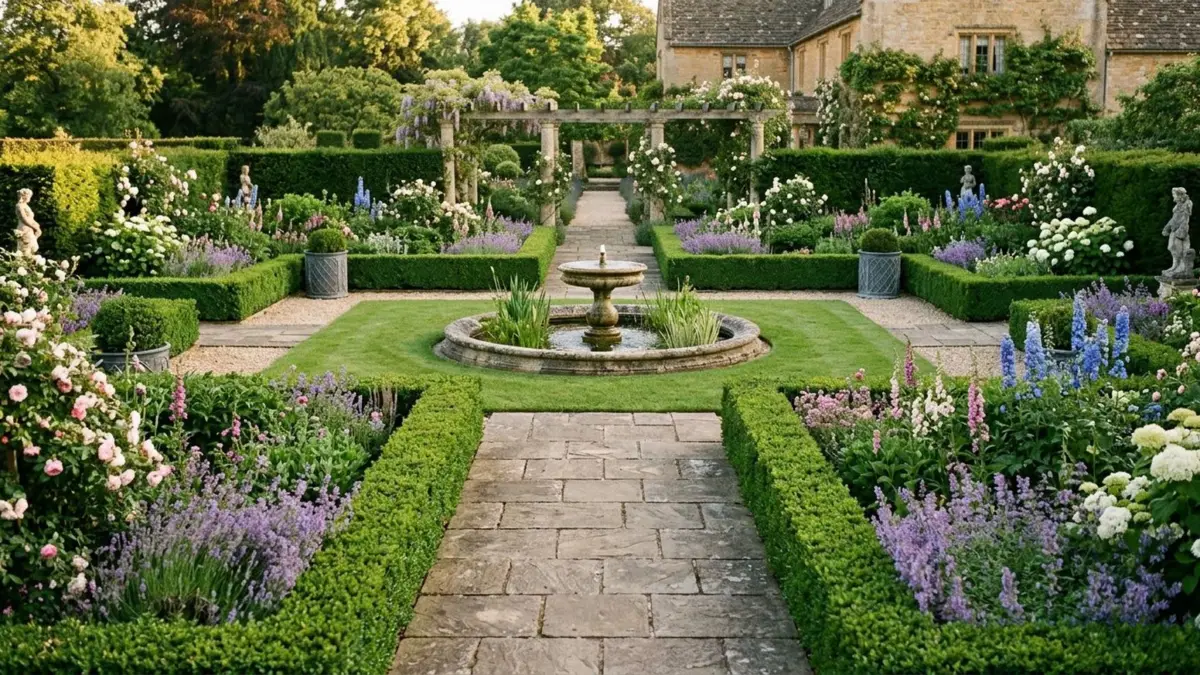
Garden Styles Explained
Compare cottage, formal, Mediterranean, modern, wildlife and Japanese-inspired gardens by plants, upkeep and cost, then pick one that fits your house, soil and time.
Privacy Screens and Hedges: Plants, Fences and Layout
How to plan a garden privacy screen with hedges, trellis, fences and tall plants: heights, spacing, fast and evergreen choices, and how to plant and trim…