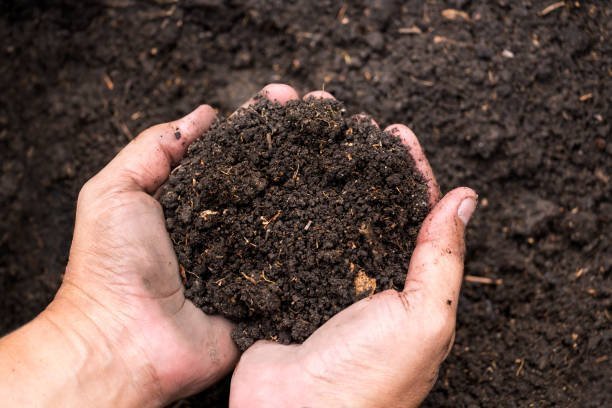
Quick answers
- Does compost tea actually work?
- The evidence is mixed. It supplies very little fertilizer, and trials on disease suppression give inconsistent results, so treat it as a low-cost experiment, not a proven treatment. Finished compost spread on the soil is the better investment, as covered in our composting guide.
- Is compost tea safe on vegetables?
- It can be, if you use fully finished plant-based compost, brew with air, use it within 4 to 6 hours and apply it to the soil, not the leaves of crops you will eat soon. Never use manure-based tea on edibles within 90 to 120 days of harvest.
- How much compost tea should I apply?
- Dilute finished tea about 1 part to 3 parts water and apply 0.5 to 1 litre per plant, or about 1 litre per square metre of bed. Repeat every 2 to 4 weeks in the growing season, not more often.
- Do I need to add molasses?
- Only to an aerated brew, at about 1 tablespoon per 10 litres. Sugar feeds every microbe present, including any pathogens, so skip it for non-aerated steeps and always use fresh, finished compost.
Key takeaways
- Evidence for benefits is mixed: expect a gentle tonic, not a fertilizer or fungicide
- Brew with an air pump for 24 to 36 hours; sour or rotten smell means discard it
- Use within 4 to 6 hours, apply to soil, and keep it off edible leaves near harvest
- No raw or fresh manure in teas for food crops, ever
Table of contents10 sections
The compost tea guide shows how to brew liquid gold for your garden, and what it can and cannot do for your plants.
Compost tea is finished compost steeped in water, sometimes with an air pump running, then strained and applied to soil or foliage. Gardeners value it as a gentle liquid feed and a way to spread beneficial microbes, but the proof is thinner than the marketing suggests: nutrient content is low and trials on disease control give inconsistent results. This guide covers how to brew it safely, what to expect, how much to use and the pathogen rules that matter for vegetables.
It sits in the Soil, Water & Fertilizer guides. If your real goal is feeding plants, start with Organic vs Synthetic Fertilizers; if it’s improving soil, Composting at Home covers making the compost this tea depends on.
Food safety first. Home brews can carry harmful bacteria, especially if made with manure. Use only fresh, clean compost, keep the brew aerated, apply it to the soil rather than to leaves you’ll eat raw, wash your hands and equipment afterwards and follow your local food safety guidance. Check local rules if you plan to sell produce grown with it.
Compost tea at a glance
| Question | Answer |
|---|---|
| Starting mix | 1 litre finished compost to 10 litres water (about 1 part to 10 by volume) |
| Aerated brew time | 24 to 36 hours, at 15 to 25°C (59 to 77°F) |
| Non-aerated steep | 12 to 24 hours, stirred often, used the same day |
| Microbe food (aerated only) | About 1 tablespoon unsulfured molasses per 10 litres, optional |
| Dilution for use | 1 part tea to 3 parts water, or until it looks like weak tea |
| Rate | 0.5 to 1 litre per plant, or about 1 litre per m² of bed |
| Frequency | Every 2 to 4 weeks in the growing season |
| Shelf life | Use within 4 to 6 hours of the end of brewing |
| Typical N-P-K | Negligible; far below any packaged fertilizer |
What the evidence does and does not show
Three claims are usually made for compost tea: it feeds plants, it suppresses leaf diseases and it boosts soil biology. Only the second and third have any research behind them, and neither is settled.
As a fertilizer, tea is weak. Compost itself has an N-P-K of roughly 1-1-1, and when you dilute a small amount of it in a large volume of water, very little reaches the plant. A single dose adds a trace of nutrients at most.
On disease, some lab and greenhouse studies have found reduced pressure from foliar fungi such as powdery mildew and grey mould (Botrytis) after tea sprays. Other trials found no effect, and results varied with the compost source, the brewing method and the crop. Reviews of the field generally conclude the effect is unreliable and not a replacement for resistant varieties, spacing and hygiene (see Preventing Garden Problems Before They Start).
On soil biology, applying microbes in a liquid is small compared with what a 2 to 3 cm layer of compost or mulch delivers, and microbes only persist if the soil has food and moisture to keep them alive.
A fair way to think about it: compost tea is cheap and low-risk if you brew it properly, so it’s reasonable to try. It isn’t reasonable to expect it to cure disease or replace feeding. Test on a few plants, leave a comparison row untreated, and judge by results.
Food safety: the part most guides skip
A warm, nutrient-rich, sugary liquid is also a good growth medium for human pathogens such as E. coli and Salmonella if any are present. Outbreaks have been traced to produce, and brewing can multiply bacteria that were few in number in the starting material. The rules below reduce that risk sharply.
- Use finished, plant-based compost. It should be dark, crumbly and earthy, with no recognisable food scraps and no sour smell. Compost made from kitchen and garden waste is far safer than anything containing manure.
- Brew with air. An aerated brew keeps oxygen-loving microbes ahead of the anaerobic ones that produce foul-smelling compounds and often carry pathogens.
- Use it fresh. Bacterial numbers keep rising as the tea stands. Apply within 4 to 6 hours and never store leftovers.
- Apply to soil, not food. On lettuce, herbs, strawberries and other crops you eat raw, keep tea off the leaves and fruit at all times.
- Leave a gap before harvest. A sensible rule for plant-compost tea is to stop foliar sprays at least 2 weeks before picking, and wash produce well.
- No manure on edibles near harvest. See the warning below.
Don’t make tea from raw or fresh manure for any food crop. Under US organic standards, raw manure must go on the soil at least 90 days before harvest for crops whose edible part doesn’t touch the soil, and at least 120 days for crops that do (lettuce, carrots, strawberries). A manure tea is raw manure in liquid form, so the same gaps are a reasonable minimum. If you use composted manure, make sure the compost reached sustained high temperatures (around 55°C or more for several days). Wear gloves, wash your hands, and keep children and pets away from the brew.
How to brew an aerated batch
- Prepare clean equipment. Scrub the bucket, air stone and tubing with hot water and a little baking soda. Old biofilm is the main reason brews turn sour.
- Treat the water. Use rainwater or tap water that has been aerated for an hour. Standing water for 24 hours removes chlorine but not chloramine, which many water suppliers now use; if yours uses chloramine, use rainwater or ask your supplier. A pinch of ascorbic acid (vitamin C) neutralises both.
- Add compost in a bag. Fill a mesh or cloth bag with 1 litre of finished compost per 10 litres of water and suspend it in the bucket.
- Start the pump. The surface should visibly roll and bubble constantly. A pump that’s too weak for the volume lets the bottom go anaerobic.
- Add food if you wish. About 1 tablespoon of unsulfured molasses per 10 litres. Skip it if you’re unsure about the compost.
- Brew 24 to 36 hours. Longer isn’t stronger. Past about 36 hours oxygen runs out and the brew deteriorates.
- Judge it. Earthy, sweet or yeasty, with a thin foam, is right. A sour, vinegary, rotten-egg or sewage smell means discard it down the drain and start again with clean equipment.
- Strain and dilute to roughly 1 part tea to 3 parts water, then apply the same day.
Applying it
Soil drenches are the safer, more useful route. Pour diluted tea around the base of the plant, in the morning, onto soil that’s already moist. Dry soil repels the liquid, and drenching a dry bed sends it straight past the roots.
Foliar sprays are where disease claims come from, but they carry the most risk on edible crops. If you do spray ornamentals such as roses, use a fine sprayer with the tea filtered through fine mesh so nozzles don’t clog, and spray in the early morning or at dusk. Strong midday sun and a wet leaf can scorch foliage, and ultraviolet light kills many microbes quickly.
Pair tea with mulch. A drench onto bare soil in full sun loses most of its benefit to heat and drying. A drench under a 5 cm mulch layer (see Mulching Mastery) keeps the microbes in a moist, shaded home.
Compost tea versus simpler options
| Option | Effort | Nutrient value | Best use |
|---|---|---|---|
| 2 to 3 cm compost top-dressing | Low | Moderate, slow | Nearly all beds, the default choice |
| Aerated compost tea | Moderate | Very low | Experiments, pots, seedling trays |
| Non-aerated compost extract | Low | Very low | Quick drench for pots |
| Diluted liquid organic fertilizer | Low | Defined by the label | Pots and hungry crops |
Troubleshooting a brew
| Symptom | Likely cause | Fix |
|---|---|---|
| Sour, rotten or sewage smell | Anaerobic: weak pump, too much compost or sugar, dirty equipment | Discard; clean thoroughly; use a stronger pump or less compost |
| No foam or bubbling surface | Pump too small or air stone clogged | Clean or replace the stone; match pump to volume |
| Plants wilt or leaves scorch after use | Tea too concentrated, applied to dry soil or leaves in midday sun | Dilute further; water soil first; apply at dawn or dusk |
| Sprayer keeps clogging | Compost particles | Strain through fine mesh or a stocking |
| No visible effect after 2 months | Normal: effects are subtle or absent | Compare with an untreated plot; spend effort on compost and mulch instead |
What compost tea does and doesn’t do for your garden
Compost tea carries soluble nutrients and microbes from finished compost, and it feeds tomato, lettuce and rose lightly while improving the leaf surface. Aeration with an air pump or bucket stirring supplies oxygen, which prevents the smelly anaerobic brew that can harm plants. Molasses feeds the microbes in compost tea and boosts their numbers, so a spoonful per 10 litres goes a long way.
Fresh manure can carry pathogens, and a tea made from it needs care, so you should use mature compost and wash edible leaves. A leaf spray may reduce powdery mildew and blight in some trials, but the evidence is mixed, so treat it as a supplement. Seaweed and fish emulsion add potassium and nitrogen if the bed needs a boost. Compost tea holds far less nitrogen than a fertiliser, so it can’t replace compost on the bed. Brewing for 24 to 36 hours at 20°C suits most compost tea recipes, and a sour brew needs to go on the compost heap. Fresh compost tea feeds bean, squash and pepper best within 4 hours, because oxygen drops and microbes die back after that. Mulch locks the nutrients in place and holds moisture, and a drip line spreads the tea evenly. Your extension service publishes tested recipes, and the fertiliser guide compares how manure and compost feed a bed.
Compost improves clay and sand, and compost tea feeds tomato and rose between feeds. Mulch protects the soil and holds the nutrients, while seaweed boosts potassium for fruit. If you brew small batches of 10 litres, you’ll avoid waste, and a vet or extension service can advise if pets eat manure-based mixes.
Compost tea feeds tomato and pepper and improves loam. Mulch protects clay and reduces weeds around rose.
Common mistakes
- Treating it as a fertilizer. The nutrient content is negligible, so plants showing pale leaves need a real feed. Check the label approach in Organic vs Synthetic Fertilizers.
- Brewing with manure for vegetables. It multiplies pathogens and can’t be reliably washed off leaves. Use finished plant compost only.
- Brewing for 48 hours or more. Oxygen runs out, populations crash and the brew turns anaerobic. Stop at 36 hours.
- Keeping leftovers. Microbes and any pathogens keep multiplying in standing tea. Use it or tip it out.
- Adding fertilizer, fish emulsion or large amounts of sugar. Salts can damage microbes and extra food feeds the wrong organisms. Stick to a small amount of molasses at most.
- Skipping the equipment clean. Biofilm from the last batch sours the next one.
- Expecting disease control. If powdery mildew or blight appears, rely on airflow, resistant varieties and removing affected leaves.
Next steps
Build the foundation first with Composting at Home, then decide how to feed with Organic vs Synthetic Fertilizers, and protect the surface with Mulching Mastery. For the wider picture of how these fit together, return to the Soil, Water & Fertilizer guides.
Frequently asked questions
How long does compost tea last once brewed?
Use it within 4 to 6 hours of finishing the brew. After that the microbes run short of oxygen and food, and the tea can turn sour. If it smells rotten, discard it on the compost heap, not on your plants.
Is compost tea the same as liquid fertilizer?
No. Compost tea supplies very little nitrogen, phosphorus or potassium, while liquid fertilizer carries labeled nutrient amounts. Think of tea as a gentle soil tonic at best. If plants need feeding, use a measured fertilizer or spread finished compost on the soil.
Can I make compost tea without an air pump?
You can steep compost in water, but it is not the same as an aerated brew. Without air the water can go stagnant and smell sour. Treat a non-aerated steep as a weak compost soak, use it quickly and discard it if it smells bad.
What should good compost tea smell like?
A healthy brew smells earthy and slightly sweet, like forest soil. A sour, vinegary, rotten egg or sewage smell means it has gone anaerobic. Discard it, clean the bucket and the air stone, and start again. Do not apply a foul-smelling brew to plants.
What compost should I use for compost tea?
Use fully finished, mature, plant-based compost that looks and smells like soil. Worm castings are a common alternative. Avoid fresh or half-rotted material and manure, because unfinished compost can carry pathogens that multiply in the warm, sugary brew. Check the pile smells earthy before you scoop any into the brewing bucket.
Can I spray compost tea on plant leaves?
You can on ornamentals, though the evidence for disease control is mixed. Do not spray it on the leaves of vegetables or herbs you will eat soon. Apply it to the soil around edibles instead, and wash your hands after handling it.
Can I use chlorinated tap water for compost tea?
Let tap water stand open for 24 hours first, or use rainwater, since chlorine can harm microbes. Some water supplies use chloramine, which does not escape on standing, so rainwater is the safer choice if you are unsure what your supply uses.
How do I use up leftover compost tea safely?
Pour it onto the soil around ornamentals or onto the compost pile within a few hours. Do not store it in a sealed container, because gas and bacteria can build up. Never tip it into drains, ponds or streams, where the nutrients feed algae.
Is compost tea worth the effort for beginners?
For most beginners, no. Spreading 2 to 3 cm of finished compost on the soil does more for plants with less work. Try compost tea later as a small experiment, once soil testing, mulch and watering are in good order.
Can I use compost tea on houseplants and seedlings?
Use it with care. Dilute 1 part tea to 3 parts water and apply it to the potting mix, not the leaves. Young seedlings are sensitive, so many gardeners wait until true leaves appear. Skip it entirely if the brew smelled off.
More in Soil, Water & Fertilizer
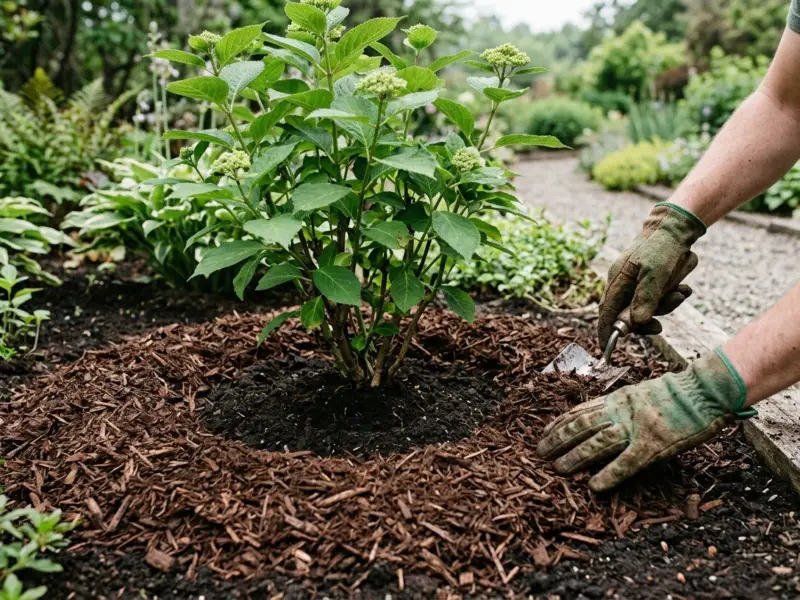
Drip Irrigation & Smart Watering: Set It and Trust It
Size a drip system from flow rate and pressure, choose filters, regulators and emitter spacing for your soil, add sensors, and winterise it properly.
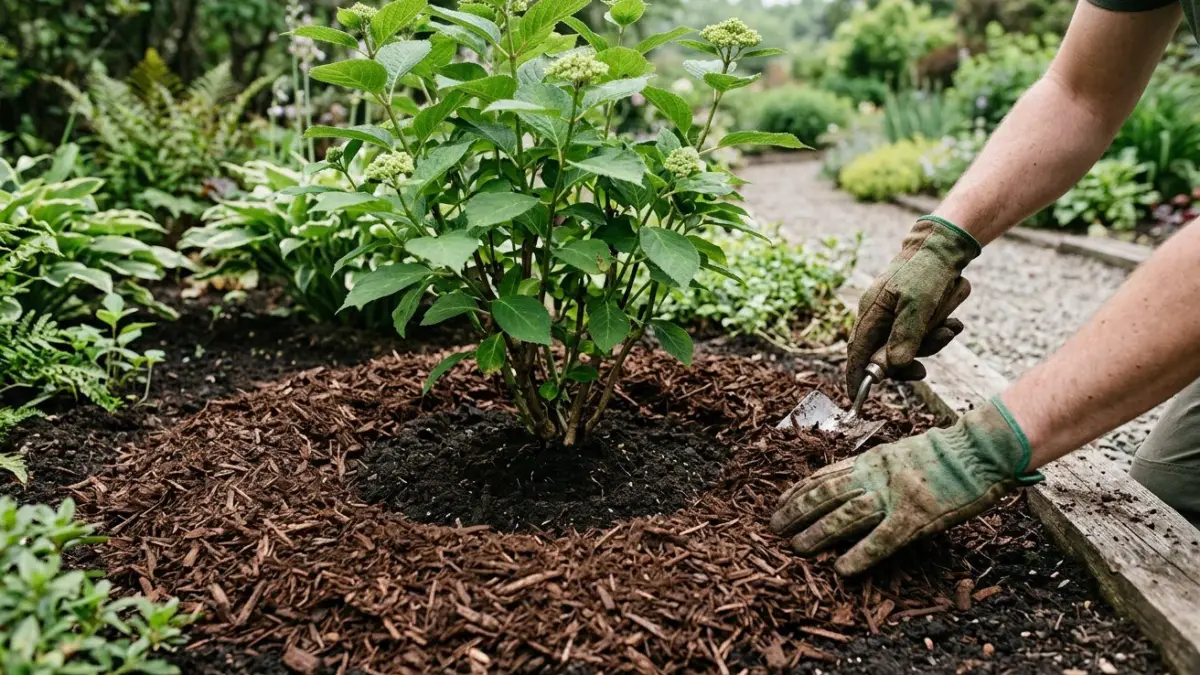
Mulching Mastery: The One Habit That Transforms Gardens
Mulch depths by material, why volcano mulching kills trees, what nitrogen tie-up really means, and a comparison table to pick the right mulch for each bed.
Preventing and Fixing Soil Compaction in the Garden
How to test for compacted soil, what causes it, and the methods that actually fix it: no-dig, aeration, organic matter, cover crops and raised beds.