Quick answers
- Why do I need two different herb mixes?
- Rosemary, thyme and oregano evolved on dry, poor, stony ground, so rich or wet mix rots them and dulls their flavour. Basil, parsley, coriander and chives want steady moisture and more nutrients. Mix 1 part grit into 2 parts potting mix for the dry group, and use plain potting mix with a little compost for the other.
- How much can I cut from a herb at once?
- Take no more than one third of the plant in a single harvest, less for slow woody herbs. Always cut just above a pair of leaves or into green growth, because rosemary and thyme rarely regrow from bare brown wood.
- Which herbs come back every year?
- Rosemary, thyme, oregano, sage, chives and mint are perennials in most temperate climates. Basil, coriander (cilantro) and dill are annuals, and parsley is a biennial that most people sow fresh each year. Pots are less hardy than open ground, so protect perennial pots in hard frost.
- Can I plant mint in a bed with other herbs?
- Not safely. Mint spreads by underground runners and will smother neighbours within a season or two. Grow it in its own pot, or sink a solid-walled container into the bed with the rim 2 to 3 cm above the soil. See container gardening for pot basics.
Key takeaways
- Mediterranean herbs want sun, grit and little water; soft-leaf herbs want moisture and richer mix
- Never harvest more than one third at once, and never cut woody herbs into bare old wood
- Basil needs nights above 10°C; coriander bolts once days run hot and long
- Keep mint in its own sunk pot, or it will take over the bed
Table of contents12 sections
- At a glance: the eight herbs
- The Mediterranean camp: dry, lean and sunny
- The soft-leaf camp: moist and richer
- Pots or beds?
- Perennial, biennial or annual: what to plan for
- Harvesting: how much, where and when
- Preserving a surplus
- Herbs indoors and over winter
- Troubleshooting
- What herbs need to stay productive in your garden and kitchen
- Common mistakes
- Next steps
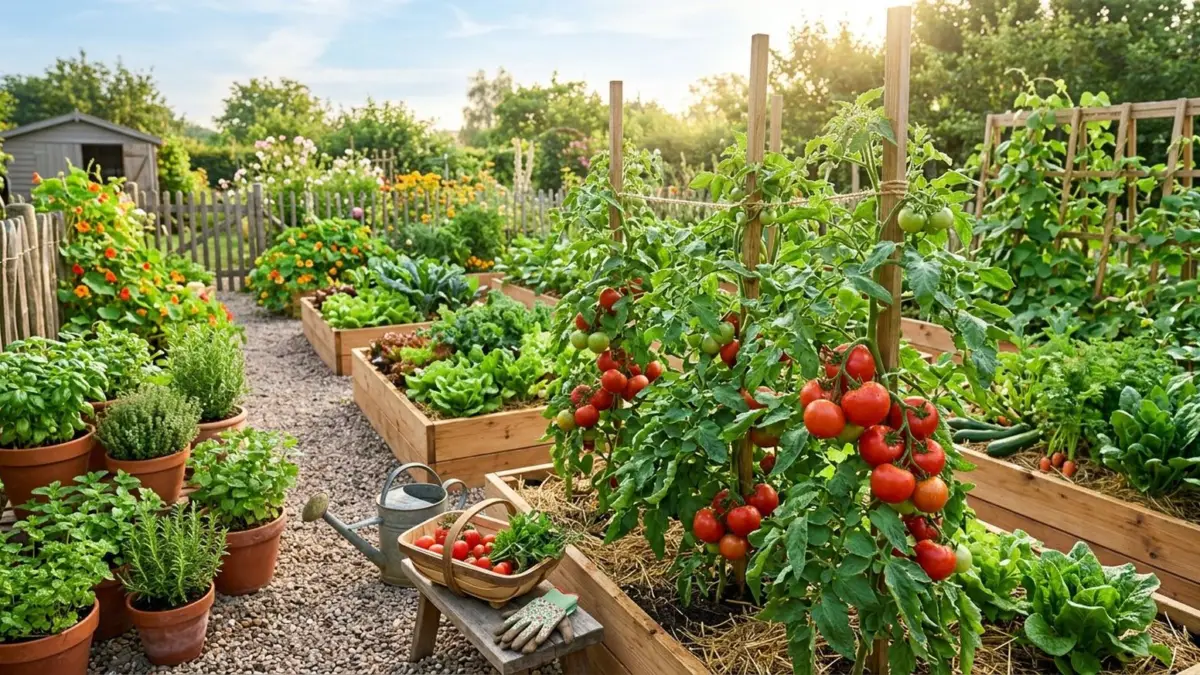
Herb garden essentials covers the 8 herbs worth growing, and the sun, drainage and pruning each one needs to stay productive.
Herbs fall into two camps, and most failures come from treating them as one. Rosemary, thyme and oregano want sun, gritty soil and neglect. Basil, parsley, coriander and chives want steady moisture and richer ground. Get that split right, harvest by the one-third rule and eight herbs will keep a kitchen supplied from a few square metres or a handful of pots. This guide covers the two camps, pot and bed set-ups, cutting rules for each herb and which ones come back every year.
It sits in the Vegetables & Herbs guides and pairs with Container Vegetable Gardening, Companion Planting and How to Plant Seeds Step by Step.
At a glance: the eight herbs
| Herb | Camp | Life cycle | Water | Pot size (minimum) |
|---|---|---|---|---|
| Rosemary | Mediterranean | Evergreen perennial shrub | Dry between drinks | 30 cm (12 in) across |
| Thyme | Mediterranean | Perennial, low shrub | Dry between drinks | 20 cm (8 in) |
| Oregano | Mediterranean | Perennial, spreading | Dry between drinks | 25 cm (10 in) |
| Basil | Soft-leaf | Tender annual | Even, never soggy | 20 cm (8 in) |
| Parsley | Soft-leaf | Biennial, grown as annual | Even moisture | 20 cm wide, 25 cm deep |
| Coriander (cilantro) | Soft-leaf | Cool-season annual | Even moisture | 25 cm (10 in) deep |
| Chives | Soft-leaf | Hardy perennial clump | Even moisture | 20 cm (8 in) |
| Mint | Soft-leaf | Hardy perennial, runners | Keep moist | 30 cm (12 in), alone |
The Mediterranean camp: dry, lean and sunny
Rosemary (Salvia rosmarinus), thyme and oregano come from hot, rocky hillsides. They need 6 to 8 hours of direct sun and fast drainage, and they taste best when slightly stressed, because rich soil produces soft, watery growth with fewer aromatic oils. Sage and lavender belong in this camp too.
In a pot, blend 1 part coarse grit or perlite with 2 parts potting mix, use terracotta if you can (it dries faster than plastic) and water only when the top 3 to 5 cm (1 to 2 in) is dry. Skip routine feeding: a half-strength liquid feed once in spring is plenty. In a bed, add grit to heavy clay or plant on a raised mound 15 to 20 cm high. Wet winter soil kills these herbs far more often than cold does.
- Rosemary: common forms usually tolerate about -10°C (14°F) in the ground, but potted roots freeze more easily, so move pots against a wall or into an unheated porch below that.
- Thyme: common thyme is typically hardy to about -15°C (5°F) if drainage is sharp. It turns woody after 3 to 4 years, so take cuttings to replace it (see Propagation by Cuttings).
- Oregano: flavour is stronger in hot, dry sun. Greek types are usually more pungent than the milder, showier ornamental forms, so taste before you buy.
The soft-leaf camp: moist and richer
Basil, parsley, coriander, chives and mint make fast, tender leaf growth and need water and nutrients to do it. Use ordinary potting mix with a handful of compost, keep it evenly damp (water when the top 2 cm is dry) and feed with a dilute liquid fertiliser every 2 to 4 weeks in the growing season.
- Basil is a heat crop. Growth stalls below about 12°C (54°F) and leaves blacken near 10°C (50°F). Sow or plant out only when nights stay above 10°C, and soil is around 18°C (64°F) or warmer.
- Parsley germinates slowly, typically 3 to 5 weeks, so sow into the pot where it will grow. It has a deep taproot and sulks when moved.
- Coriander also dislikes root disturbance. It bolts when days pass roughly 25°C (77°F) or lengthen, so sow in spring and autumn, not midsummer.
- Chives form clumps that you divide every 3 years or so in spring or autumn.
Pots or beds?
| Situation | Better choice | Why |
|---|---|---|
| Heavy clay or wet winters | Pots or a raised bed for Mediterranean herbs | You control drainage; clay drowns thyme and rosemary |
| Light, sandy or chalky soil | Open bed for Mediterranean herbs | Natural drainage and lean ground suit them |
| Mint | Always a container | Runners cross a bed within a season |
| Basil and coriander for quick cooking | Pots by the kitchen door | You harvest more often when they are close, and you can move them out of heat |
| Hot, dry summers | Soft-leaf herbs in part shade, large pots | Pots under 20 cm can dry out in a day |
Plant both camps in the same bed only if you can separate them: a gritty, sunny end for rosemary and thyme, and a moister, slightly shadier end for parsley and chives. Otherwise one group is always wrong.
Perennial, biennial or annual: what to plan for
- Perennials (rosemary, thyme, oregano, chives, mint) are planted once. Renew thyme every few years, divide chives and oregano, and cut mint back hard in autumn.
- Annuals (basil, coriander, dill) finish after flowering. Sow every 3 to 4 weeks for a steady supply (see Succession Planting).
- Parsley is a biennial. In year two it runs to seed and the leaves turn bitter, so replace it after its first full season.
Let one pot of coriander or dill flower at the end of the season. The seeds are a spice, and the umbels feed hoverflies and other beneficial insects.
Harvesting: how much, where and when
The rule that protects every herb is the one-third limit: never remove more than a third of the plant at once. After that, the right cut depends on how the plant grows.
- Basil: pinch stems just above a pair of leaves, leaving at least two pairs below. The two buds in those leaf joints become new branches. Remove flower spikes as they form.
- Parsley and coriander: cut outer stems at the base and leave the centre to keep producing.
- Chives: cut the whole clump to 3 to 5 cm above the soil. It regrows in 2 to 3 weeks.
- Mint: cut stems back to about 5 cm above a leaf pair, and take the tips of flowering stems first.
- Rosemary, thyme, oregano and sage: trim soft green tips, and cut back lightly after flowering. Always leave some green growth on every stem, because bare old wood rarely sprouts again.
Harvest in the morning once the dew has dried, when oil content is high. Soft-leaf herbs wilt fast, so cut them as you cook.
Preserving a surplus
| Method | Best herbs | Notes |
|---|---|---|
| Air drying | Rosemary, thyme, oregano, sage | Hang small bunches in a warm, shaded, airy place for 1 to 2 weeks; store whole in jars |
| Freezing in ice-cube trays | Basil, parsley, coriander, chives | Chop, cover with water or oil, freeze; best used within about 6 months |
| Not worth drying | Basil, coriander, chives | Drying strips most of the flavour; freeze instead |
Herbs indoors and over winter
A windowsill can carry soft-leaf herbs if it gets 6 hours of direct light; otherwise a grow light 20 to 30 cm above the plants for 12 to 14 hours a day fills the gap. Mediterranean herbs indoors need your brightest south-facing window and cool, dry conditions, so they usually do better outside. In cold-winter areas, bring basil in before nights fall below 10°C, and keep rosemary pots in an unheated, bright, frost-free spot, watering only enough to stop the mix turning to dust, roughly every 2 to 3 weeks.
Troubleshooting
| Symptom | Likely cause | Fix |
|---|---|---|
| Rosemary browns from the base up | Root rot from wet soil | Repot into gritty mix, reduce watering, and raise the pot off its saucer |
| Basil leaves go black or spotted | Cold nights, or downy mildew in humid weather | Move indoors on cold nights; water the soil, not the leaves; space plants for airflow |
| Coriander flowers at 15 cm | Heat, long days or root disturbance | Sow in cool seasons, sow in place, harvest young |
| Pale, leggy herbs on a windowsill | Too little light | Move to a south or west window, or add a grow light for 12 to 14 hours |
| Thyme thin and woody in the middle | Age, or never pruned | Trim lightly each year; replace from cuttings after 3 to 4 years |
| Aphids on mint or basil tips | Soft new growth | Rinse with water; a diluted soap spray if needed |
What herbs need to stay productive in your garden and kitchen
Rosemary, thyme and sage need sharp drainage and full sun, because wet clay causes root rot, and grit improves heavy soil. Mint spreads aggressively and requires a container, while basil and parsley prefer richer compost and regular water. Cutting back chives and mint boosts fresh growth and stops flowering from making leaves bitter.
Basil attracts bee and repels whitefly near tomato, and chives repel aphid beside rose. Frost kills basil, so you shouldn’t set it out until nights stay above 10°C. Terracotta suits Mediterranean herbs because it dries quickly, while plastic holds water for mint and coriander. Light fertiliser is plenty, since too much nitrogen reduces flavour, and you’ll get stronger taste from lean soil. Dill and fennel attract hoverfly and lacewing, which control aphid across your beds, and oregano tolerates drought once its roots reach 30 cm. Pinching basil above the second pair of leaves every 2 weeks encourages bushy growth, and a harvest of no more than a third at once protects the plant. Rosemary and thyme need a trim after flowering to stop woody stems. Your extension service lists herbs that overwinter in your zone, and the container vegetable guide suits pots on a sunny step.
Common mistakes
- Treating all herbs alike. One watering routine will drown the Mediterranean group or parch the soft-leaf group. Pot them separately, or at least on different watering rules.
- Feeding rosemary and thyme. Rich soil gives lush but weak-flavoured growth and shortens the plant’s life. Feed lightly once a year at most.
- Planting mint in the open bed. The runners will cross the plot within two seasons and are hard to remove. Contain it from day one.
- Cutting woody herbs into bare wood. The plant often won’t regrow from it. Cut into green growth only.
- Sowing basil too early. Chilled seedlings stall for weeks, and a later sowing usually overtakes them.
- Stripping a plant in one go. Taking more than a third slows regrowth, and on a young plant it can set it back for a month.
Next steps
Set up pots with Container Vegetable Gardening, plan the beds with How to Start a Vegetable Garden from Scratch and match herbs to neighbours with Companion Planting. Back to Vegetables & Herbs.
Frequently asked questions
Can I grow herbs indoors on a windowsill?
Yes, with enough light. Basil, chives, parsley and mint cope on a bright south or west facing window with at least 6 hours of light, or under a grow light. Rosemary and thyme need more sun and often struggle indoors, so keep their mix on the dry side.
Why is my basil turning black?
Usually cold. Basil leaves blacken near 10°C (50°F) and growth stalls below about 12°C (54°F), so keep plants indoors until nights stay above 10°C. Overwatering and fungal disease also cause dark spots, so water at the base and allow airflow.
How often should I water rosemary and thyme?
Only when the top 3 to 5 cm of mix is dry. In pots that is often about once a week in summer, and less in cool weather. Wet winter soil kills these herbs more often than cold does, and terracotta pots dry faster than plastic.
Why does my coriander go to seed so fast?
Heat and long days trigger it. Coriander bolts when days pass roughly 25°C (77°F) or lengthen, and it dislikes root disturbance. Sow direct in spring and autumn, not midsummer, and sow small batches every 3 to 4 weeks.
Why does parsley take so long to germinate?
Parsley typically takes 3 to 5 weeks, which is normal. Sow it where it will grow, because the deep taproot dislikes being moved. Keep the mix evenly moist and use fresh seed, since old seed germinates poorly.
Can I grow herbs from supermarket pots?
Yes, but divide them. Supermarket pots hold dozens of crowded seedlings. Split the root ball into 2 or 3 clumps, repot each in fresh mix and water well. Harden plants off over a week before moving them outdoors.
When should I divide chives?
Every 3 years or so, in spring. Lift the clump, split it into smaller pieces with a spade or knife, and replant at the same depth. Water well. Dividing keeps the clump vigorous and gives you free plants.
How do I overwinter rosemary in a pot?
Move the pot against a sheltered wall, or into an unheated porch, when temperatures fall below about -10°C (14°F), because potted roots freeze more easily than roots in the ground. Keep it on the dry side and avoid standing saucers of water.
Do herbs need fertiliser?
Mediterranean herbs need very little, so a half-strength liquid feed once in spring is plenty. Soft-leaf herbs such as basil and parsley like a dilute liquid feed every 2 to 4 weeks in the growing season. Too much feed gives watery, less aromatic growth.
Can I plant lavender and sage with other herbs?
Yes, with the Mediterranean group. Rosemary, thyme, oregano, sage and lavender share the same needs: full sun, gritty soil and watering only when dry. Keep them apart from thirsty basil, parsley and coriander, which prefer richer, moister mix.
More in Vegetables & Herbs
Container Vegetable Gardening: Grow Food Anywhere
Pot volumes for each crop, how often to water and feed vegetables in containers, and how to keep roots cool on a hot balcony or patio.
Composting at Home: Turn Kitchen Waste into Garden Gold
Get the carbon to nitrogen balance right, choose hot or cold composting, know what never goes in the bin, and use the finished compost safely on…
Companion Planting: What Grows Well Together (and What the Evidence Says)
Which companion pairings have real evidence (trap crops, flower strips, marigolds against nematodes) and which are folklore, plus a bed plan built on the proven ones.