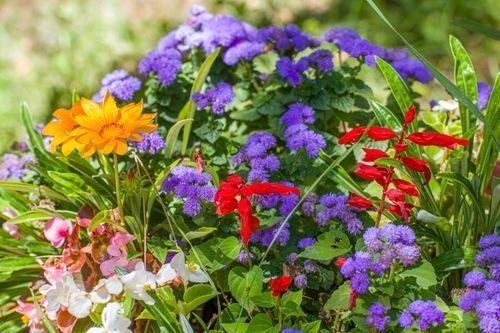
Quick answers
- Which flowers attract the most bees?
- Open, single-petal flowers with easy access to nectar and pollen, such as lavender, borage, single dahlias, echinacea, salvia and catmint. Plant each kind in a patch at least 1 metre (3 ft) across, because bees forage more efficiently on clumps than on single plants.
- How long should something be in bloom at all times?
- Aim for at least three flowering species open in every month your climate allows, from early spring to the first hard frost. Gaps in early spring and late autumn are the most common weakness, so start with bulbs and finish with asters and sedum.
- Do double-flowered varieties help pollinators?
- Usually not. Heavily doubled blooms such as many roses, peonies and double dahlias hide or replace the nectar and pollen parts with extra petals. Choose single or semi-double forms when pollinator value matters.
- Is it safe to spray on plants in flower?
- Avoid spraying any insecticide on open flowers, including products labelled natural. If a pest outbreak needs treatment, spray at dusk after bees have stopped flying and read the label, or use physical controls such as a jet of water. See our natural remedies guide for safer timing rules.
Key takeaways
- Keep at least three species in bloom in every growing month
- Plant in clumps of 1 metre or more, single-flowered forms first
- Match flower shape to the visitor: open dishes, tubes and flat clusters
- Habitat counts: bare ground, stems, water and zero insecticide on flowers
Table of contents13 sections
- Pollinator planting at a glance
- Build a bloom calendar, not just a plant list
- Match the flower shape to the visitor
- Avoid flowers that look generous but are not
- How to plant for impact
- Habitat that keeps them coming back
- Pesticides and pollinators
- A starter planting for a 2 m by 3 m bed
- Water, wind and lawns
- How flowers attract pollinators to your garden
- How flowers that attract pollinators feed insects from March to October
- Common mistakes
- Next steps
This guide to flowers that attract pollinators gives a bloom calendar and habitat plan, so bees, hoverflies and butterflies find food from March to October.
Pollinators arrive where there’s food from early spring to late autumn, shelter nearby and no poison on the flowers. A garden that supplies those three things draws more bees, hoverflies and butterflies than any single “bee-friendly” plant can. This guide gives you a bloom calendar, the flower shapes each visitor can use, planting numbers and the habitat features that keep them around.
It sits in the Flower Gardening guides and works with Low-Maintenance Flower Borders, Flowering Plants for Full Sun and Beneficial Insects: Your Garden Allies.
Pollinator planting at a glance
| Question | Working rule |
|---|---|
| Patch size | 1 m (3 ft) across or more per species; 3 to 5 plants of a perennial together |
| Bloom coverage | 3 or more species flowering in each month of the growing season |
| Best flower types | Single, open or tubular forms; avoid heavily doubled blooms |
| Sun | Most nectar plants need 6 or more hours of sun; sheltered from strong wind |
| Water | A shallow dish with stones so insects can land, refreshed every few days |
| Nesting | Patches of bare, well-drained soil and uncut hollow stems left through winter |
| Pesticides | None on open flowers; treat only at dusk if you must |
Build a bloom calendar, not just a plant list
Most gardens flower heavily in midsummer and run dry at both ends of the season. Queen bumblebees leave hibernation hungry in late winter and early spring, and colonies need fuel again in autumn to raise the next generation of queens. Gaps at those two points hurt more than a gap in July.
| Season | Reliable flowers | Why it matters |
|---|---|---|
| Late winter to early spring | Crocus, snowdrop, hellebore, pussy willow, winter heath, early flowering shrubs | Feeds queens emerging from hibernation |
| Spring | Grape hyacinth, primrose, pulmonaria, flowering currant, wallflower, apple and pear blossom | Colonies are building; pollen is the priority |
| Early summer | Salvia, catmint, borage, foxglove, geranium (hardy), allium, lavender | Peak foraging; keep nectar plants varied |
| Midsummer | Echinacea, bee balm, single dahlia, cosmos, agastache, verbena bonariensis, sea holly | Long-flowering plants carry the season |
| Late summer to autumn | Sedum (Hylotelephium), aster, goldenrod, Japanese anemone, ivy flowers, late salvia | Fuels queens and migrating butterflies |
Species lists vary by region. Check what local nurseries and native plant societies recommend, because a plant that’s a bee magnet in one climate may bloom at the wrong time in another. For bulbs that fill the early gap, see Flower Bulbs for Year-Round Bloom.
Match the flower shape to the visitor
Pollinators aren’t interchangeable. Tongue length, body size and feeding style decide which flowers they can use.
- Short-tongued bees and hoverflies feed from open, flat or shallow flowers: daisy types, single roses, cosmos, yarrow, fennel and other umbels, marigold, borage.
- Long-tongued bumblebees work deep tubes and lipped flowers: foxglove, comfrey, salvia, lavender, catmint, snapdragon, honeysuckle.
- Butterflies prefer flat landing platforms and clusters: buddleja (check local invasiveness rules), verbena, sedum, scabious, zinnia, phlox, echinacea.
- Hummingbirds in the Americas favour red or orange tubular flowers such as bee balm, penstemon, trumpet vine and agastache.
- Moths work in the evening and respond to pale, strongly scented flowers: evening primrose, nicotiana, honeysuckle, night-scented stock. See Creating a Moon Garden.
Mix at least one open flower, one tube and one flat cluster in every border. That alone widens the range of visitors more than adding extra species of the same shape.
Avoid flowers that look generous but are not
Breeding for showy blooms has sometimes removed the very parts pollinators need. Heavily doubled flowers pack extra petals where stamens and nectaries used to be. Some modern bedding varieties, including certain pollen-free sunflowers and sterile hybrids, offer little or no pollen. When you buy, prefer single or semi-double forms and read the plant tag or the grower’s description. Native species and older cultivars are usually safer choices than novelty hybrids.
Foliage plants and wind-pollinated plants such as grasses add structure and shelter but don’t replace flowers. Use them to frame the nectar plants.
How to plant for impact
- Choose a sunny, sheltered spot. Six hours or more of sun and protection from strong wind make foraging easier for small insects.
- Plant in drifts. Groups of 3 to 5 perennials, or 10 to 20 bulbs, in one block of at least 1 m (3 ft) across.
- Repeat the same species in two or three places along the garden, so insects find it again as they move.
- Layer heights. Low spring bulbs and ground covers at the front, mid-height perennials in the middle, tall plants such as sunflowers and agastache at the back.
- Don’t over-fertilize. Rich soil gives leafy growth and fewer flowers in many nectar plants, especially lavender, salvia and native wildflowers. Soil basics are in Reading Your Soil.
- Mulch lightly and leave some soil bare, as described in the habitat section below.
Habitat that keeps them coming back
- Bare ground. Many solitary bees nest in tunnels in sunny, well-drained soil. Leave a patch of undisturbed bare earth, ideally south-facing, and avoid thick mulch on all of it.
- Hollow stems and dead wood. Leave seed heads and hollow stems standing through winter and cut them in spring to about 30 cm (12 in), because some bees nest in stems. Log piles shelter beetles and wasps.
- Water. A shallow dish with pebbles or marbles gives a safe landing. Refresh every few days to avoid mosquito breeding.
- Shelter. Grass tussocks, hedges and shrubs protect bumblebees and butterflies from wind and cold.
- Host plants for caterpillars. Butterflies need larval food as well as nectar, such as milkweed (Asclepias) for monarch butterflies in North America or nettles for several European species. Accept some chewed leaves.
- Bee hotels. If you add one, choose a well-made design, keep it dry and sunny, and clean or replace the tubes yearly, otherwise parasites and mould build up and it can do more harm than good.
Pesticides and pollinators
Neonicotinoid insecticides and many broad-spectrum sprays harm bees and other pollinators, and plants bought from garden centres may have been pre-treated, so ask the seller. Even organic sprays such as soaps, oils and pyrethrins can kill bees if sprayed on open flowers. Safer habits:
- Spray only when necessary, never on open flowers and never in bright sun when bees are active.
- Choose targeted controls first: hand picking, water jets, barriers and encouraging predators. See Common Garden Pests: Organic Control.
- If you must treat, do it at dusk or early morning and follow the label exactly.
- Tolerate low pest levels. A few aphids feed hoverfly larvae and ladybirds.
Any product that’s toxic to bees stays toxic until it dries. Read the label for a “bee hazard” statement and follow local rules about spraying near flowering plants.
A starter planting for a 2 m by 3 m bed
For a sunny border of about six square metres, a balanced mix could include three lavender or catmint plants, three echinacea, three salvia, one hardy geranium clump, five alliums, two sedum, three asters, and a patch of crocus and grape hyacinth bulbs along the edge. Add a dish of water and leave one corner un-mulched. Expect more insects in the first season, with the largest increase in year two as perennials fill out. Visits depend on local climate and neighbouring plants, so treat the numbers as a starting point.
Water, wind and lawns
Wind makes small insects waste energy, so a hedge or fence upwind of a pollinator border helps. Lawns can also contribute: allowing clover, selfheal and daisies to flower in part of the lawn, or mowing less often in one patch, gives a quick food source at no cost. Mow that patch at the highest setting and leave edges cut short for a tidy look. For lawn care that still works for pollinators see Lawn Care Basics.
How flowers attract pollinators to your garden
Single-flowered lavender, echinacea and salvia attract bee and hoverfly, because open blooms give easy access to nectar. Double blooms on some rose and petunia varieties block access and offer little, so you should choose single forms. Bumblebee needs early crocus and willow, while late sedum and aster feed bees into autumn.
Foxglove and catmint support long-tongued bumblebee, and clustered flowers improve the visit rate. Hoverfly larvae and ladybird control aphid, so a mixed border reduces pests without spraying. Pesticide kills bees on contact, which means you shouldn’t spray open flowers. A shallow dish of water with stones protects insects from drowning, and leaf mould or a pile of logs hosts overwintering beetle and bee. How many plants do you need? Aim for something in bloom from March to October, and the RHS Plants for Pollinators list helps you choose.
How flowers that attract pollinators feed insects from March to October
Single-flowered lavender, echinacea and salvia attract bee and hoverfly, because open blooms give easy access to nectar and pollen. Double blooms on some rose and petunia varieties block access and offer little food, so you should choose single forms. Bumblebee needs early crocus and willow in March, while late sedum and aster feed bees well into October.
Foxglove and catmint support long-tongued bumblebee, and clustered flowers improve the visit rate by 30% or more. Hoverfly larvae and ladybird control aphid, so a mixed border reduces pests without spraying. Pesticide kills bee on contact, which means you shouldn’t spray open flowers, and an evening spray reduces the risk when you must treat. A shallow dish of water with stones protects insects from drowning, and leaf mould or a pile of logs hosts overwintering beetle and bee. Bare patches of south-facing soil of about 1 m² give mason bee a nesting place, and a bundle of hollow stems 15 cm long suits solitary bee. Buddleia and lavender attract butterfly, and nettle hosts caterpillar of peacock and tortoiseshell. Aim for something in bloom for 8 months, and the RHS Plants for Pollinators list helps you choose. The beneficial insects guide explains how predators join them.
Lavender attracts bee, and borage feeds bumblebee. Foxglove supports bumblebee, and echinacea feeds hoverfly. Plant drifts 60 cm wide so bees find them.
Common mistakes
- One plant of everything. Single plants are hard to find and inefficient to forage. Plant in patches.
- Peak summer only. A border with no spring or autumn flowers feeds insects for a few weeks. Fill the gaps with bulbs and late perennials.
- Doubled showy varieties. They look rich but may offer no pollen or nectar. Pick singles.
- Tidying everything. Cutting every stem and mulching all bare soil removes nesting sites. Leave some mess until spring.
- Spraying open flowers. One badly timed spray can undo a season of planting.
Single dahlias suit bees, and you can learn how to grow them in How to Grow Dahlias.
Next steps
Draw your bloom calendar on paper and mark the empty months first. Fill those with plants from the tables above. Then explore Beneficial Insects: Your Garden Allies, The Cutting Garden and Annuals vs Perennials for plant choices that work for both people and insects. Return to the Flower Gardening guides for the full set of flower guides.
Frequently asked questions
How big should a patch of pollinator flowers be?
Aim for at least 1 m (3 ft) across per species, using 3 to 5 perennials together or 10 to 20 bulbs in one block. Bees forage more efficiently on clumps than on single plants. Repeat the same species in two or three places so insects find it again.
Which flowers attract butterflies?
Butterflies prefer flat landing platforms and clusters, such as verbena, sedum, scabious, zinnia, phlox and echinacea. Buddleja is popular, but check local invasiveness rules first. Caterpillars need host plants too, for example milkweed for monarchs in North America or nettles for several European species.
Should I leave dead stems standing over winter?
Yes, some of them. Leave hollow stems and seed heads standing through winter and cut them to about 30 cm (12 in) in spring, because some bees nest in stems. Keep a patch of bare, well-drained soil too. Cutting and mulching everything removes nesting sites.
Which flowers attract hummingbirds?
In the Americas, hummingbirds favour red or orange tubular flowers such as bee balm, penstemon, trumpet vine and agastache. Plant them in a sunny, sheltered spot in drifts. Hummingbirds do not live in Europe, so gardeners there should choose flowers for bees and butterflies.
Do bee hotels help or harm?
A well-made one can help solitary bees if it stays dry and sunny and you clean or replace the tubes yearly. Neglected, parasites and mould build up and it can do more harm than good. A bare soil patch and hollow stems are lower-effort alternatives.
Should I put water out for bees and butterflies?
Yes. Use a shallow dish with pebbles or marbles so insects can land safely without drowning. Refresh it every few days to stop mosquitoes breeding. Place it in a sunny, sheltered spot close to the flowers.
Which flowers feed bees in early spring?
Crocus, snowdrop, hellebore, pussy willow, winter heath and flowering currant feed queen bumblebees as they leave hibernation. Gaps at both ends of the season hurt more than a gap in July. Plant bulbs in autumn to cover the early weeks.
Are pollen-free sunflowers useful to bees?
Not much. Some modern bedding varieties, including pollen-free sunflowers and sterile hybrids, offer little or no pollen. Read the plant tag or grower's description and prefer single, open forms. Native species and older cultivars are usually safer choices than novelty hybrids.
Can I let part of my lawn flower for pollinators?
Yes. Letting clover, selfheal and daisies flower in one patch, or mowing it less often, gives quick food at no cost. Mow that patch at the highest setting and keep the edges cut short so the lawn still looks tidy.
Could garden centre plants already carry insecticide?
Some may. Plants bought from garden centres can have been pre-treated with insecticides, including neonicotinoids, that harm bees. Ask the seller whether the plants were treated, and check the label. Treatments vary by country and retailer, so do not assume either way.
More in Flower Gardening
Low-Maintenance Flower Borders That Look Professionally Designed
Plant spacing, plant counts per square metre, a sample 4.5 m2 plan and a yearly work calendar for a border that needs about an hour a…
Annuals vs Perennials: What to Plant Where
Annuals, biennials and perennials differ in cost, labour and hardiness. Use these decision rules to choose what goes in beds, pots, gaps and cutting rows.
Cutting Garden: Growing Flowers for Bouquets
Plan a production bed that gives bouquets from spring to frost: close row spacing, pinching, the right cutting stage, succession sowing and conditioning for vase life.