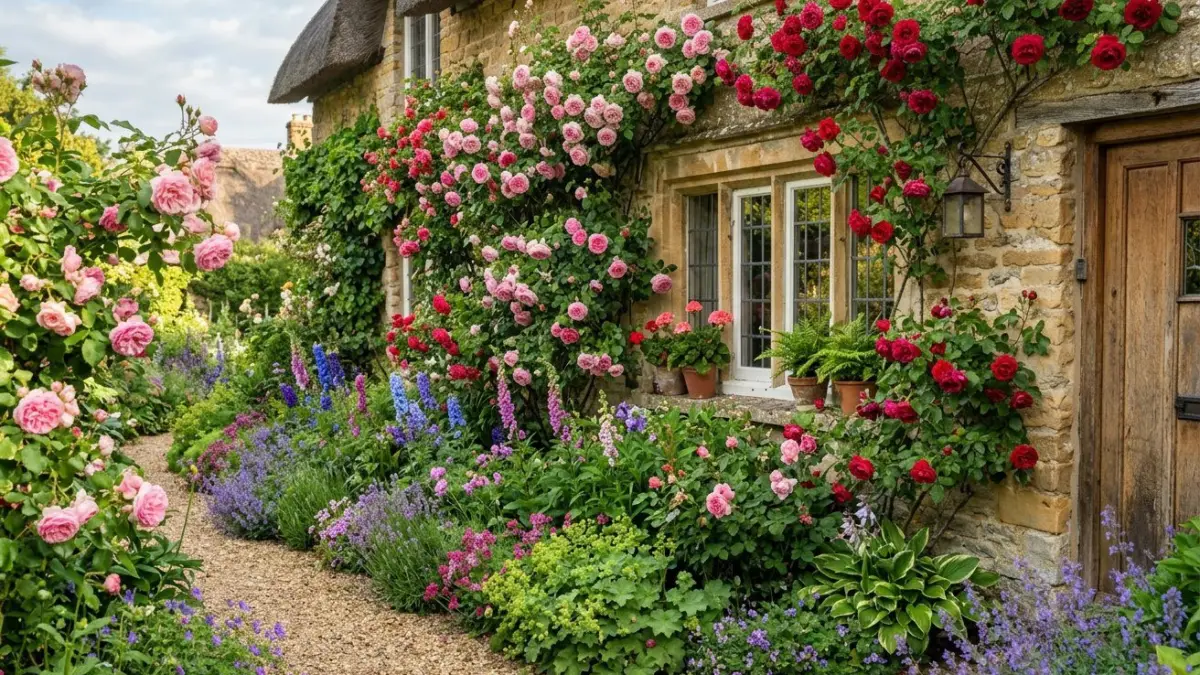
Quick answers
- What is the best material for a garden trellis?
- Treated softwood is cheap and works well, hardwood and powder coated steel last longer, and bamboo suits temporary frames. Choose by strength for the plant and by how long you want it to last.
- How far should a trellis stand from a wall?
- Leave a gap of 3 to 5 cm between the trellis and the wall, using battens, so air can move behind the plants and stems can wind through the slats.
- How tall should a plant support be?
- Match the plant: sweet peas and clematis need 1.8 to 2 m, climbing roses 2 to 3 m, dahlias 1.2 m and peony hoops about 60 cm. Allow for the plant to reach its full height.
- Do I need to tie plants to a trellis?
- Twining plants such as honeysuckle and sweet pea climb alone, but roses and many shrubs need soft ties. Check the ties each season so they don't cut into growing stems.
Key takeaways
- Match the support to how the plant climbs: twining, clinging or leaning
- Fix a wall trellis 3 to 5 cm from the surface so air can circulate
- Choose a support at least as tall as the plant will grow
- Use galvanised or powder coated metal and rot resistant timber for long life
- Set posts at least 60 cm deep so wind doesn't push them over
Table of contents15 sections
- Best trellises and plant supports at a glance
- How to choose trellises and plant supports
- How supports, plants and wind affect each other
- A worked example: a rose and clematis on a fence
- Choosing supports for tall flowers and vegetables
- Maintaining trellises and plant supports through the year
- Which support for which plant
- Choosing materials for your climate
- Suggested picks to check
- Related guides
- Common mistakes
- Next steps
The best trellises and plant supports are the ones that suit how each plant climbs and grows, so the right material, height and fixing keep climbers, roses and tall flowers upright for many seasons.
A flimsy trellis collapses in the first storm, and a support that’s too short leaves a plant sprawling. This guide explains the main types of trellises and plant supports, how to match them to climbers and tall flowers, and how to fix them safely. It’s general advice, and your local extension service or the Royal Horticultural Society (RHS) can add tips for your area. Links on this site may earn a commission, and that never changes what we recommend.
It belongs to the Flower Gardening guides and works with How to Grow Roses, How to Grow Dahlias and Low Maintenance Flower Borders.
If you only do one thing: check how your plant climbs, then buy a support that’s taller than it will grow and set it firmly in the ground or wall.
Best trellises and plant supports at a glance
| Support | Typical size | Best for |
|---|---|---|
| Panel trellis | 1.8 m tall by 0.9 m wide | Clematis, honeysuckle and climbing roses on a fence |
| Obelisk | 1.5 to 2 m tall | Sweet peas, clematis and runner beans in a border |
| Wires on vine eyes | Wires 30 to 40 cm apart | Training roses, fruit and wall shrubs |
| Arch | 2.2 m tall, 1.2 m wide | Climbing roses over a path |
| Grow-through grid | 40 to 60 cm tall | Peonies and floppy perennials |
| Stakes and canes | 1.2 to 2.4 m | Dahlias, delphiniums and tomatoes |
These are typical values. Wind, plant weight and soil change what you need, so choose stronger supports in an exposed garden.
How to choose trellises and plant supports
- Check how the plant climbs. Sweet pea and honeysuckle twine, clematis wraps leaf stalks, and roses lean and need ties.
- Find the full height. Choose a support at least as tall as the plant, and add 30 cm if the plant is vigorous.
- Pick the material. Treated softwood is cheap, hardwood and galvanised or powder coated steel last longer, and bamboo suits annual crops.
- Plan the fixing. Screw a wall trellis to battens 3 to 5 cm off the surface, and set freestanding posts at least 60 cm into the ground.
- Allow for weight. Wisteria and mature roses are heavy, so use thick posts and strong wires.
- Add soft ties. Use stretchy or twine ties and check them each season.
How supports, plants and wind affect each other
Twining plants such as sweet pea and honeysuckle climb thin canes and wire, while clematis grips narrow slats and mesh. Climbing roses lean on a support and need ties to carry the weight, and heavy wisteria pulls down a weak trellis. Dahlias and delphiniums grow tall flower spikes that snap in wind, so a stake or a cage prevents the damage. Peony and other floppy perennials flop under rain, and a grow-through grid holds the stems up while the leaves hide it.
A solid fence panel acts like a sail in wind, whereas an open trellis lets air through and puts less strain on the posts. A gap of 3 to 5 cm behind a wall trellis allows air to circulate and reduces powdery mildew on roses and clematis. Rot attacks softwood in wet soil, so set posts in metal sockets or treat the ends. Galvanised steel resists rust for 15 years or more, and powder coating protects it from scratches.
A worked example: a rose and clematis on a fence
For a fence panel 1.8 m tall and 1.8 m wide, screw battens 4 cm thick to the fence and fix a trellis to them. Plant a climbing rose 45 cm from the base, and train its main stems out sideways along the trellis at about 45 degrees to encourage flowers. Plant a clematis 60 cm away, and let it scramble through the rose with its roots shaded by low shrubs. Tie the rose with soft twine every 30 cm, and check the ties in spring and autumn. In a windy site, use 75 by 75 mm posts set 60 cm deep instead of relying on the fence alone.
Choosing supports for tall flowers and vegetables
- Dahlias: a stake of 1.2 m beside each plant, tied at three heights as it grows.
- Delphiniums and lupins: stout canes of 1.5 m, tied loosely with twine.
- Peonies: a grow-through hoop of 60 cm set early in spring so the stems grow up through it.
- Sweet peas and runner beans: a wigwam or obelisk of 1.8 to 2 m with canes 25 cm apart.
- Tomatoes: a stake or spiral of 1.5 m, or a cage for bush types.
Maintaining trellises and plant supports through the year
Check posts and ties each spring and autumn. Retie roses every 30 cm as new stems grow, and cut any tie that has started to bite. Treat softwood with a plant-safe preservative every 2 years, and brush rust from steel before you repaint it. Clematis and honeysuckle prefer cool roots, so mulch with 5 cm of compost and shade the base with a low shrub such as lavender. Compost feeds the climber and improves clay, and mulch protects roots and reduces weeds.
In winter, lower the stems of tender climbers away from a wet wall, and prune clematis according to its group, which your extension service or the RHS explains. Remove old canes after the season, because dead stems shelter slug and fungal spores, and dry them under cover for next year. Push a dahlia stake 30 cm into the soil before you plant, so you never spear the tuber.
Which support for which plant
| Plant | Support | Size to aim for |
|---|---|---|
| Sweet pea and runner bean | Wigwam of canes or netting | 1.8 to 2.4 m tall, with canes 20 cm apart |
| Clematis | Wire or slim trellis | 2 m or more, with a gap of 3 cm from the wall |
| Climbing rose | Horizontal wires on a wall | Wires 30 to 40 cm apart, fixed with vine eyes |
| Tomato | Stake or string | 1.5 to 2 m, set at planting time |
| Dahlia and delphinium | Single stake or ring | Two thirds of the final height |
A full trellis in summer wind acts like a sail. Anchor posts at least 40 cm deep, and fix panels to the wall with spacers so air passes behind the plant and reduces mildew.
Choosing materials for your climate
Timber suits a traditional border, but untreated softwood rots in 5 to 8 years in wet soil, whereas pressure treated or cedar lasts longer. Powder coated steel is strong and slim, and it holds heavy climbers such as wisteria without bending. Bamboo is cheap and light, and it suits annual climbers that last one season. Plastic coated wire resists rust, and it keeps a low profile on a small wall.
Heat from a south wall can scorch tender shoots on bare metal, so a wooden or coated support is kinder there. Check ties twice a year, and loosen any that cut into stems as they thicken. Soft garden twine or stretch tie protects stems better than thin wire.
Suggested picks to check
We have not tested these products ourselves. They are suggestions that match the criteria above, so check the current size, specification and price on the seller’s page before you buy.
For a fence or wall
Gardman wall trellis
A wooden or steel trellis panel for clematis, climbing rose and honeysuckle. Pick a panel that matches the height of your wall.
Good
- Easy to fix to a wall
- Several sizes
Not so good
- Wood needs treating
For pots and borders
Powder coated steel obelisk
A freestanding obelisk about 1.5 to 2 m tall for sweet pea, clematis and small climbers. Look for a thick steel rod and a base you can push 30 cm into the soil.
Good
- Freestanding
- Lasts many years
Not so good
- Too small for wisteria
For beans and tomatoes
Bamboo canes and garden twine set
A low cost set for wigwams and single stakes. Choose canes 2.1 to 2.4 m long and tie with soft twine.
Good
- Cheap
- Easy to reuse
Not so good
- Lasts only a few seasons
Related guides
Read this guide with How to Grow Roses How to Grow Tomatoes How to Grow Dahlias The Cutting Garden Flowers That Attract Pollinators Best Gardening Tools for Beginners.
Common mistakes
- Buying a short support. A plant that outgrows it falls over.
- Fixing a trellis flat to a wall. Without a gap, air can’t pass and mildew builds.
- Shallow posts. Wind pulls them over, so set them at least 60 cm deep.
- Tying too tight. Ties cut into stems as they thicken.
- Forgetting to stake early. Adding a support after the plant has flopped damages stems.
Next steps
Check how each plant climbs, then choose a support that’s taller and stronger than you think you need. For roses read How to Grow Roses, for tall tubers read How to Grow Dahlias and for easy borders read Low Maintenance Flower Borders. The Flower Gardening guides link every step.
Frequently asked questions
How deep should I set trellis posts in the ground?
At least 60 cm for a freestanding post, so wind cannot push it over. In soft soil use metal post sockets or set the post in concrete, and treat timber ends against rot. In an exposed garden choose thicker posts, such as 75 by 75 mm, because a full trellis acts like a sail.
What is the best support for sweet peas?
A wigwam or obelisk of canes 1.8 to 2.4 m tall, with canes about 20 to 25 cm apart. Sweet peas climb by tendrils, so thin canes, netting or string suit them better than wide slats. Tie in the first shoots by hand to help them find the support.
What kind of support do peonies need?
A grow-through hoop or grid about 60 cm tall, set early in spring. The stems grow up through it and the leaves hide it, so heavy flowers stay upright after rain. Pushing a support in after the stems have flopped risks snapping them and never looks natural.
Can a trellis hold a heavy climber like wisteria?
Only a strong one can. Wisteria and mature roses are heavy, so use thick posts, strong wires on vine eyes or a sturdy powder coated steel frame. A light panel trellis will pull away from a wall or fence. Use fixings suited to the wall, and ask a builder if unsure.
How often should I check plant ties on a trellis?
Twice a year, in spring and autumn, and loosen any tie that has begun to cut into a thickening stem. Soft twine or stretch tie protects stems better than thin wire. Retie climbing roses as new stems grow, roughly every 30 cm along the support.
Does a wooden trellis need treating to stop it rotting?
Softwood lasts longer if you apply a plant-safe preservative about every 2 years. Untreated softwood in wet soil can rot in 5 to 8 years. Pressure treated timber or cedar lasts longer, and keeping post ends in metal sockets instead of the soil helps more than any coating.
Will a metal trellis burn plants in summer?
It can scorch tender shoots on a hot south-facing wall, because bare metal heats up. Plastic coated or powder coated metal, or wood, is kinder in that spot. Mulch the base with 5 cm of compost, since clematis and honeysuckle prefer cool roots.
Is an open trellis better than a solid fence panel in wind?
Yes. A solid panel acts like a sail and strains the posts, while an open trellis lets air pass through. Open slats also reduce mildew on roses and clematis. In a windy garden still choose strong posts set at least 60 cm deep.
How tall should a stake for dahlias be?
About 1.2 m for tall types, or roughly two thirds of the plant's final height. Push it 30 cm into the soil before you plant the tuber so you never spear it. Tie the stem loosely at three heights as it grows. Compact bedding dahlias usually need no stake.
When is the best time to put plant supports in place?
At planting time, or in early spring while growth is under about 20 cm. Stems then grow up through hoops and grids and hide them. Adding a support after a plant has flopped can damage stems, and the plant rarely looks natural again.
More in Flower Gardening
12 Flowering Plants That Laugh at Full Sun
Twelve flowers that bloom hardest in six-plus hours of sun, with heights, water needs, climate picks and the care that keeps them flowering to frost.
Shade-Loving Flowers: What Actually Blooms Where the Sun Does Not Reach
Dry shade, moist shade and dappled light need different plants. Learn to read your shade and choose flowers and foliage that perform in it.
How to Grow Roses: The Complete Care Cycle
When to prune roses in your climate, how to tell black spot from its look-alikes, and a feeding rhythm that matches how roses actually grow.