Quick answers
- What is the easiest vegetable for beginners?
- Radishes, lettuce, bush beans, and cherry tomatoes are the most forgiving. They germinate quickly and give fast visual feedback.
- How much sun do vegetables need?
- Most vegetables need 6-8 hours of direct sun. Leafy greens tolerate 4-6 hours. Fruiting vegetables need 8+ hours.
- When should I start a vegetable garden?
- Any time the soil can be worked. Spring is traditional, but late summer is excellent for fall crops.
- How often should I water vegetables?
- Deep and infrequent: once or twice a week with enough water to wet the root zone 15-20 cm deep. The finger test tells you when.
Key takeaways
- Start small, a 10x10 foot bed or a few containers, and expand as you learn.
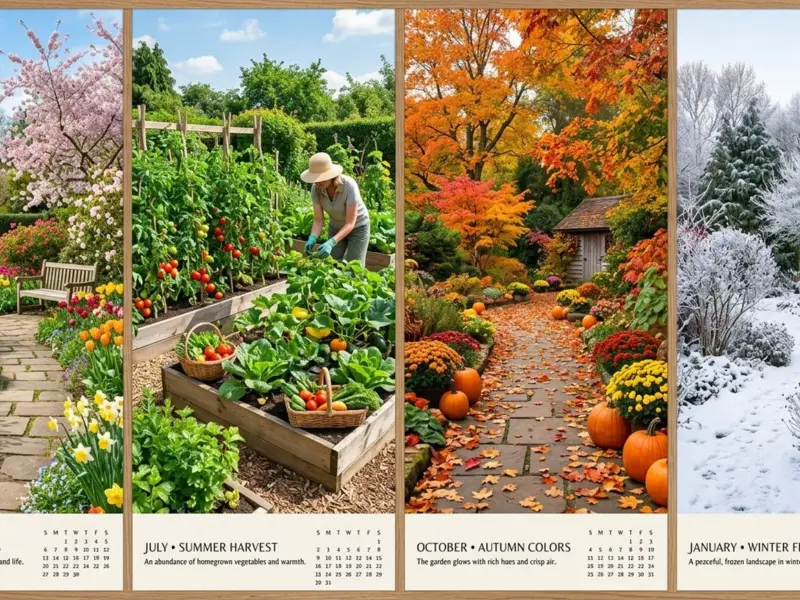
- Know your frost dates. Everything in vegetable gardening revolves around them.
- Soil is not dirt. Build it with compost, protect it with mulch, and test it every few years.
- Water deeply and infrequently. The finger test beats any schedule.
- Succession plant for continuous harvest. Sow lettuce every two weeks, stagger tomatoes.
- Companion planting has some valid applications, but most claimed benefits are exaggerated.
- Harvest at the right time. Tomatoes taste best vine-ripe, lettuce gets bitter if it bolts.
- Keep records. What you planted, when, and how it performed; this compounds in value.
Table of contents28 sections
- From first bed to full harvest
- Choosing crops that suit your experience
- Sun, soil and space
- Herbs: small plants, big return
- Growing in containers
- Compost and companion planting
- Harvest and storage
- Troubleshooting the vegetable garden
- How vegetable and herb choices shape a kitchen garden
- What questions does this guide answer?
- What does each guide cover?
- Starting: How to start a vegetable garden from scratch
- Easy crops: 7 easiest vegetables to grow
- Tomatoes: How to grow tomatoes
- Herbs: Herb garden essentials
- Containers: Container vegetable gardening
- Compost: Composting at home
- Pairing: Companion planting
- Harvest: Harvesting and storing vegetables
- Raised beds: Raised Bed Vegetable Gardening: Building, Filling and Planting Your Beds
- Bed kits: Best Raised Bed Kits
- How much space and sun does each crop need?
- What pot size does each crop need?
- How do you store each crop?
- How do the vegetable choices affect each other?
- Key terms
- Common mistakes with vegetables
- Where to go next
Vegetables and herbs make a kitchen garden that feeds you, so this guide shows you how to choose, grow, harvest and store crops in a small garden.
Growing vegetables and herbs is the practice of giving edible plants six to eight hours of sun, loose fertile soil, steady water and protection from pests, choosing forgiving crops first, and harvesting and storing each one at the right moment.
A productive vegetable and herb garden depends on a short chain: a sunny, well-fed bed or container, crops matched to your skill and season, steady watering, protection from pests, and a harvest handled so food stays good. This guide links the detailed guides in that chain, so you can start a plot from nothing, pick reliable first crops, and carry the harvest through to storage.
Quick answer: start with a small bed or a few large pots in full sun, grow fast forgiving crops such as lettuce, radish, beans and herbs, water steadily, and sow in small batches every two to three weeks.
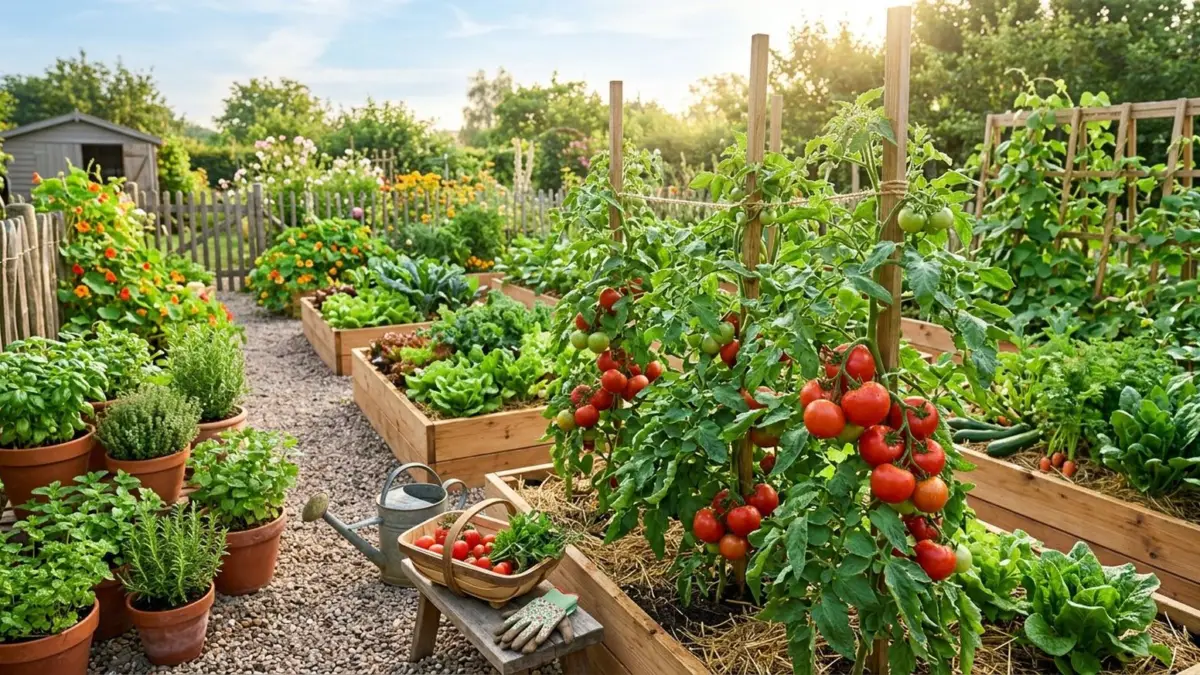
Start small. A bed of about 1.2 by 2.4 metres, or a handful of large containers, gives enough variety to learn from without being overwhelming. Soil quality sets the ceiling for everything else, so read the soil, water and fertilizer guides early, and use the seasonal gardening guides to time each sowing.
From first bed to full harvest
| Stage | Goal | Guide |
|---|---|---|
| Set up | Choose a site with 6 to 8 hours of sun, prepare soil, plan beds | Start a vegetable garden |
| Pick crops | Choose forgiving crops first, skip the demanding ones for now | Easiest vegetables |
| Grow a star crop | Learn one demanding crop end to end | How to grow tomatoes |
| Add herbs | Cook with fresh flavour from a small space | Herb garden essentials |
| No ground | Grow in pots, buckets and raised planters | Container vegetable gardening |
| Feed the soil | Make compost from kitchen and garden waste | Composting at home |
| Combine plants | Use plant partnerships to save space and reduce pests | Companion planting |
| Finish well | Harvest at peak and store safely | Harvesting and storing |
Choosing crops that suit your experience
Crops differ widely in how forgiving they are. Radish, lettuce, bush beans, courgette (zucchini) and many herbs germinate quickly and tolerate mistakes, so they give early success and teach the basics. Crops such as cauliflower, celery and melons are less forgiving, because they need stable moisture, longer seasons or particular temperatures. The easiest vegetables guide sorts crops by difficulty and explains which to delay. Tomatoes then make a good first demanding crop because they teach feeding, support, watering rhythm and disease awareness all at once, covered in how to grow tomatoes.
Sun, soil and space
Most fruiting crops such as tomatoes, peppers, courgettes and beans need 6 to 8 hours of direct sun, while leafy crops and many herbs tolerate less. Good vegetable soil is loose enough for roots to penetrate, drains freely, and holds plenty of organic matter, and a pH between about 6.0 and 7.0 suits most crops. Raised beds help where drainage is poor or the soil is compacted, since you control what goes in. The planning steps are in start a vegetable garden, and soil tests are in reading your soil.
| Option | Best for | Trade-off |
|---|---|---|
| In-ground beds | Large spaces, deep-rooted crops | Depends on your native soil |
| Raised beds | Poor soil, bad drainage, easy access | Cost to build and fill, can dry faster |
| Containers | Patios, balconies, renters | Frequent watering and feeding |
Herbs: small plants, big return
Herbs fall into two groups with different needs. Mediterranean herbs such as rosemary, thyme, sage and oregano want full sun and sharp drainage, and suffer in rich, wet soil. Soft-leaved herbs such as basil, parsley, coriander and chives prefer richer soil and more regular water, and basil is tender to cold. Mint spreads aggressively and is safest in its own pot. The right-plant, right-place rules are in herb garden essentials.
Growing in containers
A container holds a small volume of soil, so it dries and runs out of nutrients faster than a bed. Use pots with drainage holes, a quality potting mix rather than garden soil, and a size that matches the crop: a tomato needs a pot of about 20 litres or more, while lettuce and herbs do well in shallow pots. Water when the top few centimetres are dry, and feed regularly during the growing season. See container vegetable gardening for crop-by-crop pot sizes.
Compost and companion planting
Compost returns organic matter to the soil, which improves structure, water holding and nutrient supply. A working pile needs a balance of “green” nitrogen-rich materials such as kitchen scraps and grass clippings, and “brown” carbon-rich materials such as dry leaves and cardboard, with air and moisture. The composting guide gives ratios and troubleshooting. Companion planting uses plant partnerships, for example tall plants shading lettuce or strongly scented herbs confusing some pests, and it works best when treated as a set of modest, observable effects rather than a guarantee, as discussed in companion planting.
Harvest and storage
Crops differ in how long they hold at their peak. Leafy greens, peas and sweetcorn lose quality fast and are best picked and eaten the same day, while winter squash, onions and potatoes are cured and stored for months. Harvest in the cool of the morning when possible, handle produce gently, and store each crop in the conditions it prefers. Home preserving needs care, because some methods carry real food safety risks if done incorrectly. Harvesting and storing vegetables covers timing, curing and safe storage.
Troubleshooting the vegetable garden
| Symptom | Likely cause | Fix |
|---|---|---|
| Bottom of tomatoes turns black and sunken | Blossom end rot from uneven watering | Water consistently and mulch |
| Lettuce bolts early | Heat and long days | Sow in cooler months or give shade |
| Yellow lower leaves on fruiting crops | Low nitrogen or overwatering | Check soil moisture then feed |
| Holes in leaves | Caterpillars, beetles or slugs | Identify the pest, then hand pick or net |
| Poor fruit set | Cold nights, heat or too few pollinators | Wait for stable temperatures and plant flowers nearby |
Wider pest and disease guidance is in the pests and diseases guides.
How vegetable and herb choices shape a kitchen garden
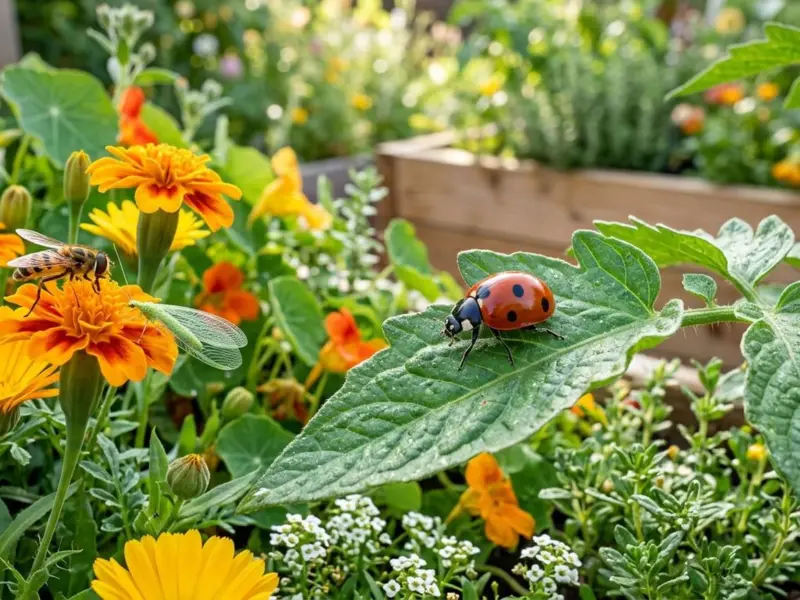
Tomato and pepper need warmth and full sun, while lettuce and spinach tolerate cool soil. Bean and pea fix nitrogen that cabbage uses next year, basil attracts bee, and marigold repels whitefly near tomato. Mint spreads fast, so grow it in a pot, and rosemary and thyme tolerate drought and need sharp drainage, while parsley and chive tolerate part shade.
Compost feeds tomato and improves clay and loam, and mulch protects roots and reduces weeds between rows. Slug damages lettuce and bean, so gravel helps, and aphid attracts ladybird to bean, which controls it. Blight attacks tomato and potato in damp weather, so water at the base. Onion and garlic need sun and loose soil, carrot needs deep loam, and radish suits shallow beds. A bed 1.2 m wide lets you reach the middle, a pot of 30 cm suits one pepper, and picking bean and courgette often encourages more fruit. Sow lettuce every 2 weeks and you’ll eat salad all summer, and your extension service or the rhs lists local sowing dates.
What questions does this guide answer?
Quick answers to the questions people ask most, each linked to the guide that answers it in full.
| Type | Question | Short answer | Full answer |
|---|---|---|---|
| What | How much sun do vegetables need? | Fruiting crops such as tomatoes, peppers and courgettes need six to eight hours. Leafy crops and many herbs tolerate four to six. | Start a vegetable garden |
| How | How big should my first bed be? | About 1.2 by 2.4 m, or four to six large containers. Small enough to manage, big enough to learn from. | Start a vegetable garden |
| How | How big a pot does a tomato need? | About 20 litres or more for one plant, with drainage holes and a support. | Container vegetables |
| When | When do I pick and store? | Pick leafy crops and peas fresh. Cure onions, potatoes and winter squash before storing. | Harvest and store |
| Why | Why do my tomatoes have black bottoms? | Blossom end rot, usually from uneven watering that limits calcium uptake. Water steadily and mulch. | Grow tomatoes |
| Which | Which vegetables are easiest? | Radish, lettuce, bush beans, courgette, spinach and most herbs, as they grow fast and forgive mistakes. | Easiest vegetables |
| Which | Which herbs are best for beginners? | Chives, parsley, mint (in its own pot), thyme and basil, according to your light and the drainage you can give. | Herb garden essentials |
| How | How do I make compost? | Mix nitrogen-rich greens with carbon-rich browns, keep it damp like a wrung-out sponge and turn it for air. | Composting |
What does each guide cover?
Starting: How to start a vegetable garden from scratch
Site, soil and size decide success. The guide covers measuring sun, preparing soil or building a raised bed, sketching a plan and choosing a first set of crops.
Easy crops: 7 easiest vegetables to grow
The guide sorts crops by how forgiving they are, so you build skill with crops that rarely fail and delay harder ones.
Tomatoes: How to grow tomatoes
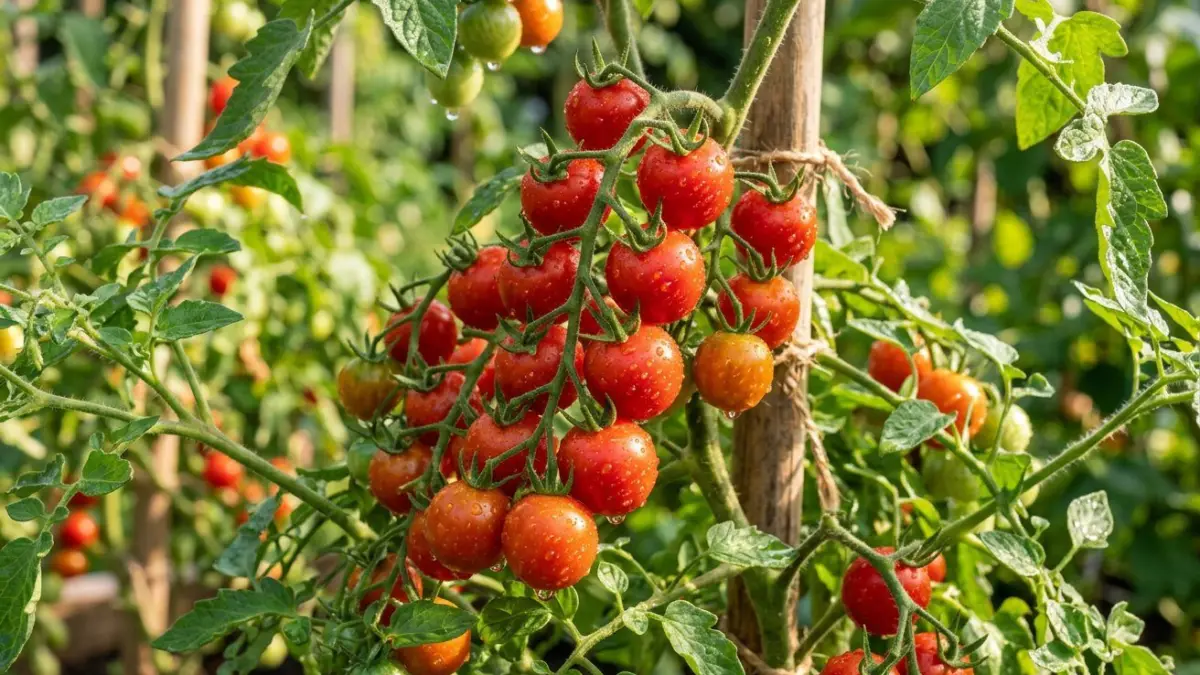
Tomatoes teach feeding, support, watering rhythm and disease awareness. The guide separates determinate from indeterminate types and explains pruning, feeding and blossom end rot.
Herbs: Herb garden essentials
Mediterranean herbs want sun and sharp drainage, soft herbs want richer soil and more water. The guide explains which herbs to group together and how to harvest without weakening the plant.
Containers: Container vegetable gardening
The guide gives pot sizes crop by crop, mix choices and a watering and feeding routine for containers.
Compost: Composting at home
The guide explains greens and browns, pile size, turning and fixes for smell, wetness or slow decay, and notes what not to compost.
Pairing: Companion planting
The guide separates well-supported pairings from folklore and explains how plant partnerships can shade, attract predators or confuse pests.
Harvest: Harvesting and storing vegetables
Timing and handling decide flavour and storage life. The guide covers picking times, curing and safe storage methods.
Raised beds: Raised Bed Vegetable Gardening: Building, Filling and Planting Your Beds
The guide gives bed sizes, safe materials, the best soil mix, crop spacing and a seasonal care routine for productive beds.
Bed kits: Best Raised Bed Kits
The guide compares timber, steel and composite kits, gives sizes and soil volumes, and explains how to assemble and fill a bed.
How much space and sun does each crop need?
| Crop | Sun | Typical spacing | Difficulty |
|---|---|---|---|
| Radish | 4 to 6 hours | About 3 to 5 cm | Very easy |
| Lettuce | 4 to 6 hours | About 15 to 30 cm | Easy |
| Bush beans | 6 hours or more | About 8 to 10 cm | Easy |
| Courgette (zucchini) | 6 to 8 hours | About 60 to 90 cm | Easy |
| Tomatoes | 6 to 8 hours | About 45 to 60 cm | Moderate |
| Carrots | 6 hours | About 5 to 8 cm after thinning | Moderate, needs loose soil |
| Cauliflower | 6 hours | About 50 to 60 cm | Demanding |
What pot size does each crop need?
| Crop | Minimum container volume | Notes |
|---|---|---|
| Herbs, lettuce, radish | 2 to 5 litres, shallow is fine | Dry out fast in summer |
| Bush beans, peppers | About 10 litres | Support tall types |
| Tomato, courgette | About 20 litres or more | Feed and water regularly |
| Potatoes | About 20 to 30 litres per bag | Earth up as shoots grow |
How do you store each crop?
| Crop | Preparation | Storage |
|---|---|---|
| Onions and garlic | Dry for two to three weeks in a warm, airy place | Cool, dry, ventilated |
| Potatoes | Cure for one to two weeks, then brush off dry soil | Cool, dark and frost-free, not near onions |
| Winter squash | Cure about ten days in warmth with the stalk attached | Dry, about 10 to 15 degrees C |
| Tomatoes | Ripen at room temperature | Not in the fridge, which dulls flavour |
| Leafy greens | Cool quickly after picking | Fridge, in a bag, a few days |
Home canning and bottling of low-acid vegetables carries a risk of botulism if done incorrectly. Use tested recipes from your national food safety authority or extension service, and don’t improvise. Wash all produce before eating.
How do the vegetable choices affect each other?
Uneven watering causes cracked fruit and blossom end rot. Too much nitrogen causes lush leaves and few fruit. Heavy planting in one block causes a glut, then an empty bed. Warm weather causes lettuce to bolt, which makes it bitter. Poor airflow around tomatoes causes leaf diseases, which spread faster in wet foliage. A little planning removes most of these links: mulch for steady moisture, feed for the crop type, sow in batches and prune for air.
Key terms
- Bolting: a crop running to flower and seed, usually after heat or stress.
- Succession sowing: sowing small batches over time for a steady harvest.
- Determinate and indeterminate: tomato growth habits, bushy and fruiting all at once, or climbing and fruiting for months.
- Curing: drying a crop under controlled conditions to prepare it for storage.
- Green and brown materials: nitrogen-rich and carbon-rich inputs to compost.
Common mistakes with vegetables
- Starting too big. A large plot becomes unmanageable, so begin with a small bed.
- Too little sun. Fruiting crops sulk in shade, so measure sun before planting.
- Uneven watering. Swings cause splitting and rot, so water steadily and mulch.
- Planting everything at once. You get a glut and then nothing, so sow in batches.
- Using garden soil in pots. It compacts, so use potting mix.
Where to go next
Read start a vegetable garden if you’re building a plot, the soil, water and fertilizer guides for fertility and irrigation, and the seasonal gardening guides for timing and succession.
Frequently asked questions
Which vegetables are easiest to grow in a small garden?
Radish, lettuce, spinach, bush beans, zucchini, chard and spring onions are the most forgiving. They germinate quickly, cope with patchy care and give a harvest within 4 to 12 weeks. Cauliflower, celery and melons are better left until you have a season of experience. See the easiest vegetables to grow for details.
How many hours of sun do vegetables need to grow?
Most fruiting vegetables, such as tomatoes, peppers and courgettes, need 6 to 8 hours of direct sun. Leafy crops, roots and many herbs manage on 4 to 5 hours. Below 4 hours, stick to salad leaves, mint, chives and parsley, which tolerate shade better.
When is the best time of year to start a vegetable garden?
Early spring suits most beginners in temperate climates, once the soil is workable. Sow hardy crops such as peas, lettuce and radish first, and tender crops such as beans and tomatoes after the last frost. Autumn is a good time to prepare beds. Exact dates depend on your local frost dates.
Can I grow vegetables without a garden?
Yes. Salad leaves, herbs, radishes, tomatoes, peppers and bush beans all grow in pots on a balcony, patio or bright windowsill. Use containers with drainage holes and potting mix, not garden soil. Fruiting crops need at least 6 hours of sun, and most pots need watering daily in summer.
How much time does a vegetable garden take each week?
A small bed of about 4 to 6 square metres usually needs 1 to 2 hours a week in season. Most of that goes on watering, picking and weeding. Sowing and peak harvest weeks take longer, while mulch and a drip line cut the watering time.
Are raised beds better than growing vegetables in the ground?
Neither is best everywhere. In-ground beds cost least and suit soil that crumbles and drains well. Raised beds suit heavy clay, stony or waterlogged ground and warm earlier in spring, but they cost more to build and dry out faster in summer.
Which vegetables will grow in partial shade?
Lettuce, spinach, kale, chard, rocket, beetroot and radish crop reasonably on 4 to 5 hours of direct sun, as do herbs such as mint, chives and parsley. Tomatoes, peppers and squash crop poorly in that much shade and need 6 to 8 hours.
How can I protect vegetables from pests without chemicals?
Start with physical barriers: fine mesh or fleece over brassicas and carrots, and hand picking or copper tape for slugs. Plant flowers such as sweet alyssum to attract hoverflies, and water steadily so plants stay strong. Check crops every few days to catch problems early.
Why do my vegetables bolt and run to seed?
Bolting is a stress response to heat, drought or lengthening days. Lettuce, spinach, coriander and radish bolt readily above roughly 25°C (77°F). Sow small batches every 2 to 3 weeks, keep the soil evenly moist and give afternoon shade in midsummer.
Do I need to rotate crops in a small vegetable garden?
Yes, where you can. Moving crop families to a new spot each year, ideally on a 3 year cycle, reduces soil-borne disease and pest build-up. In a very small plot, rotate between beds or pots, and replace pot mix each year rather than skipping rotation.
All Vegetables & Herbs guides
How to Start a Vegetable Garden from Scratch
Choose a sunny site, size the plot honestly, build the soil and plant a first-season plan that works, a step-by-step start for new food growers.
7 Easiest Vegetables to Grow (and 3 to Skip for Now)
Seven forgiving crops with honest yields, weekly effort and days to harvest, plus three fussy ones to postpone. Plan a first bed that pays off within…
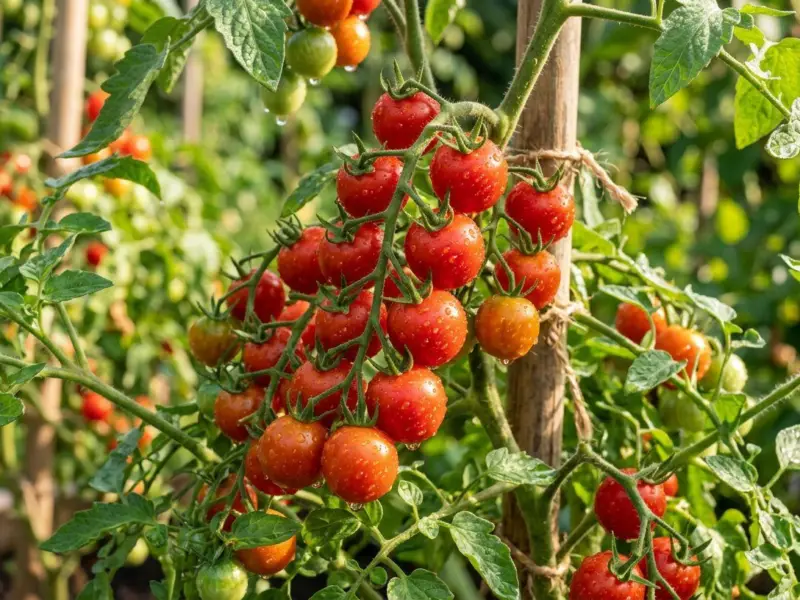
How to Grow Tomatoes: From Seed to Sauce
Determinate vs indeterminate, planting deep, pruning suckers, watering discipline and blossom-end rot fixes, the complete tomato playbook.
Herb Garden Essentials: The 8 Herbs Worth Growing
Split your herbs into two camps: dry, lean Mediterranean types and moist, rich soft-leaf types. Pot and bed advice, cutting rules and perennial vs annual timing.
Container Vegetable Gardening: Grow Food Anywhere
Pot volumes for each crop, how often to water and feed vegetables in containers, and how to keep roots cool on a hot balcony or patio.
Composting at Home: Turn Kitchen Waste into Garden Gold
Get the carbon to nitrogen balance right, choose hot or cold composting, know what never goes in the bin, and use the finished compost safely on…
Companion Planting: What Grows Well Together (and What the Evidence Says)
Which companion pairings have real evidence (trap crops, flower strips, marigolds against nematodes) and which are folklore, plus a bed plan built on the proven ones.
Harvesting and Storing Vegetables: Timing, Curing and Keeping
Harvest signs for common crops, curing for onions, squash and potatoes, storage temperatures and safe preserving, so your harvest lasts for months.
Raised Bed Vegetable Gardening: Building, Filling and Planting Your Beds
How to size, build and fill a raised bed, which soil mix to use, how to plant it densely and how to water and feed a…
Best Raised Bed Kits
How to choose a raised bed kit: timber, steel and composite compared, ideal sizes and heights, board thickness, how much soil you need and how to…