Quick answers
- How do I use a seasonal checklist if my climate is different?
- Anchor each season to your frost dates and soil temperature rather than to months. Spring starts when soil reaches about 5 to 10°C (41 to 50°F), summer after the last frost, autumn around the first frost, and winter when growth stops. Southern Hemisphere gardeners shift the months by about six.
- What are the most important jobs in each season?
- Spring: sow, plant and feed as soil warms. Summer: water deeply, mulch and scout for pests. Autumn: plant bulbs and trees, clear and cover soil. Winter: protect roots, prune dormant plants and plan.
- How do I find my last and first frost dates?
- Look up your average dates from a local extension service, national weather service or garden centre, and treat them as averages, not guarantees. Keep fleece ready for a week either side of them.
- How much time does a year-round routine take?
- For an average family garden, about 2 to 4 hours a week in the growing season and an hour or two in winter. A routine of short weekly visits beats occasional marathon sessions.
Key takeaways
- Tie each task to frost dates and soil temperature, not to calendar months
- Spring is for sowing and feeding, summer for water, mulch and watching
- Autumn is the best planting season for trees, shrubs and bulbs
- Winter is for protection, dormant pruning and planning
Table of contents12 sections
- How to read the seasons in your own garden year round
- Spring checklist for the gardener
- Summer checklist for the gardener
- Autumn checklist for the gardener
- Winter checklist for the gardener
- A weekly routine that works in any season of the year
- Tools to have ready each season
- Adjust the checklist to your kind of garden
- How a year-round checklist keeps your garden on track
- How the gardener’s year-round checklist breaks tasks by season
- Common mistakes
- Next steps
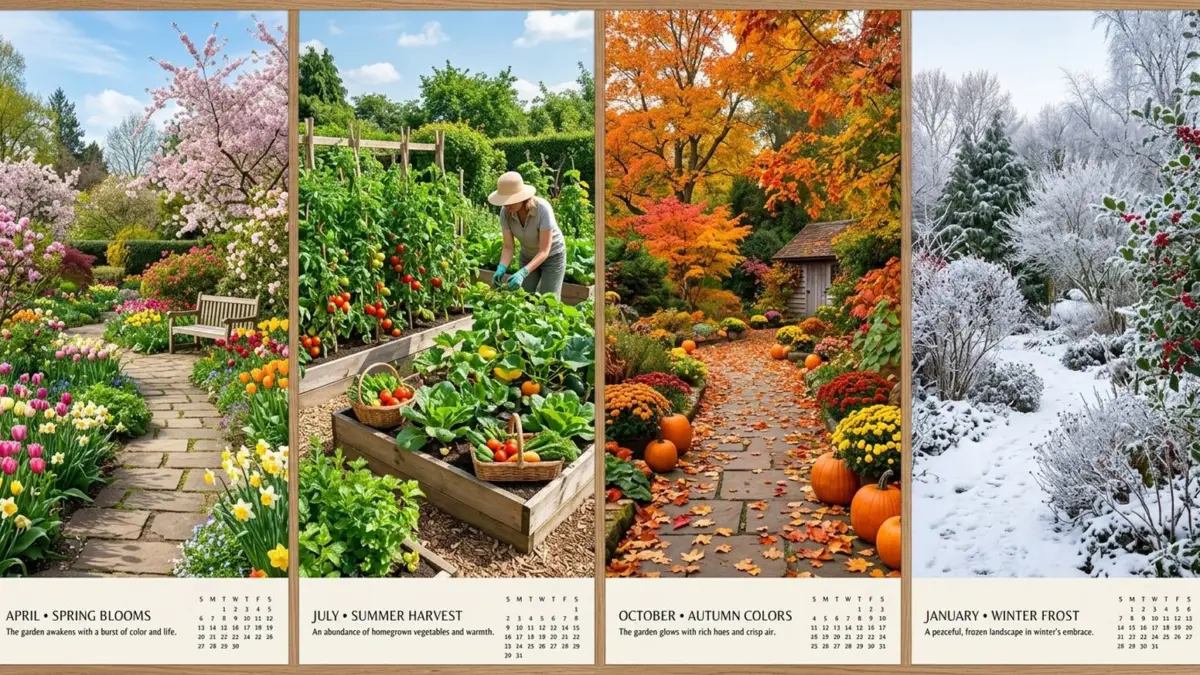
The gardener’s year-round checklist lists tasks by season so you can see what is due now and what is next.
A garden does best when the right job is done at the right moment, and most mistakes come from doing a good job too early or too late. This checklist gathers the key tasks for each season, tied to frost dates and soil temperature so it works in any climate. Use it as a map, then follow the links to the detailed guide for each season.
It belongs to the Seasonal Gardening guides and sits above Spring Garden Tasks, Summer Garden Maintenance, Autumn Garden Tasks and Winter Garden Care.
How to read the seasons in your own garden year round
Calendar months are only a rough guide, because the same month is hot in one place and frozen in another. Use three anchors instead.
| Anchor | How to find it | What it triggers |
|---|---|---|
| Last spring frost date | Average date from your local weather service or extension | Planting tender crops 1 to 2 weeks after it |
| First autumn frost date | Same source | Harvest tender crops, lift tender bulbs, protect plants |
| Soil temperature | A soil thermometer at 5 to 10 cm (2 to 4 in) depth in the morning | Sowing: 5 to 10°C for cool crops, 15°C or more for warm crops |
Southern Hemisphere gardeners shift the months by about six, so autumn tasks fall in March to May and winter tasks in June to August. Record your own dates in a notebook for a few years, because your garden’s microclimate will differ from the regional average. The Seasonal Planting Calendar shows how to turn those dates into sowing and planting dates.
Spring checklist for the gardener
Spring starts when the soil can be worked and begins to warm. The detailed guide is Spring Garden Tasks.
- Test and warm the soil. Wait until soil crumbles and isn’t soggy. Test pH if you have not in the last three years.
- Clean up gently. Cut back last year’s perennial stems and remove winter mulch gradually as frost risk drops.
- Prune the right plants. Late-flowering shrubs and roses now. Spring bloomers after they flower.
- Sow cool-season crops such as peas, lettuce, spinach and radish when soil is 5 to 10°C. Start tomatoes and peppers indoors 6 to 8 weeks before the last frost.
- Harden off seedlings for 7 to 10 days before planting out, as in How to Transplant Seedlings.
- Feed and mulch. Add compost to beds, a light slow-release feed to hungry plants and 5 cm of mulch once soil is warm.
- Divide perennials that have outgrown their space, and plant new ones.
- Watch for early pests such as slugs and aphids, using Prevent Garden Problems Early.
Stop doing: working soggy soil, planting tender crops before frost danger has passed and over-feeding lawns before they grow.
Summer checklist for the gardener
Summer is about keeping up. The full guide is Summer Garden Maintenance.
- Water deeply, not often. About 2.5 cm (1 in) a week for most beds, delivered in one or two long soaks in the early morning. Set up drip lines with Drip Irrigation and Smart Watering.
- Top up mulch to 5 to 8 cm (2 to 3 in) to hold moisture and suppress weeds.
- Deadhead and pick often. Remove spent flowers and harvest beans, zucchini and cucumbers young to keep plants producing.
- Scout weekly for pests and disease. Check the undersides of leaves and act early, using Common Garden Pests: Organic Control.
- Succession sow every two to three weeks for lettuce, beans and carrots. See Succession Planting.
- Feed container plants every 2 to 4 weeks and shade tender pots during heatwaves.
- Prune stone fruit in summer where disease risk is high in winter.
- Plan holiday watering with timers, self-watering pots or a trusted neighbour.
Stop doing: light daily sprinkling, feeding drought-stressed plants and heavy pruning in heatwaves.
Autumn checklist for the gardener
Autumn is the best planting season for trees, shrubs and bulbs, because warm soil and cool air favour roots. The full guide is Autumn Garden Tasks.
- Plant trees, shrubs and perennials at least 6 weeks before hard frost, using How to Plant a Tree Properly.
- Plant spring bulbs once the soil has cooled, usually from late autumn, and protect them from squirrels where needed. See Flower Bulbs for Year-Round Bloom.
- Harvest and cure storage crops before frost, following Harvesting and Storing Vegetables.
- Lift tender bulbs and tubers such as dahlias and gladioli after the first frost has blackened the tops, dry them and store them cool and frost free.
- Collect leaves for leaf mould and compost, and add spent crops to your compost heap if they are healthy. See Composting at Home.
- Cover bare soil with mulch or a cover crop to prevent erosion and nutrient loss.
- Repair and overseed lawns early in autumn while the soil is warm. See Lawn Care Basics.
- Bring tender plants indoors before nights drop below about 10°C (50°F).
Stop doing: heavy pruning of woody plants that isn’t needed, late fertilizing that pushes tender growth and leaving diseased material on the ground.
Winter checklist for the gardener
Winter protects what you have and prepares what comes next. The full guide is Winter Garden Care.
- Mulch roots after the soil cools, keeping mulch off stems and trunks.
- Protect pots and tender plants by raising, wrapping or moving them. See Frost Protection Methods.
- Water evergreens and pots on mild days during dry spells.
- Prune dormant trees and remove dead, diseased or crossing wood, while leaving spring bloomers until after flowering.
- Look after wildlife with unfrozen water, seed heads and clean feeders.
- Check stored crops and tubers every one to two weeks and remove any that are rotting.
- Service tools, drain irrigation systems and clean pots and seed trays.
- Plan the year. Order seeds, review notes and sketch changes. Use Planning for Next Year.
Stop doing: walking on frozen lawns, working wet soil and tight plastic wrapping.
A weekly routine that works in any season of the year
Many gardens fail through irregular care, rather than through lack of effort. A short weekly routine keeps problems small.
- Walk the whole garden once a week with a notebook or phone. Look at leaves, soil and stems, not just flowers.
- Check moisture with a finger 5 cm deep before watering, and water only if dry.
- Pull weeds while they are small, ideally after rain when roots slip out.
- Tackle one pest or disease problem promptly. Identify it first, using Plant Diseases: Identify and Treat or Troubleshooting Wilt, Yellowing and Mystery Symptoms.
- Clean up fallen leaves and diseased material, as explained in Garden Hygiene.
- Record one note. A line about what bloomed, failed or needs change builds your own local calendar.
Tools to have ready each season
| Season | Key tools and supplies |
|---|---|
| Spring | Soil thermometer, seed trays, compost, fork, trowel, labels |
| Summer | Watering can or drip kit, mulch, secateurs, netting, shade cloth |
| Autumn | Bulb planter, rake, compost bins, spade, storage trays |
| Winter | Fleece, burlap, bubble wrap, pruning saw, sharpening kit, notebook |
Adjust the checklist to your kind of garden
The lists above suit a mixed garden. Trim them to match what you grow. A vegetable-focused plot gains most from careful sowing dates, succession planting and storage, so spend extra time in spring and late summer. An ornamental border depends on dividing, deadheading and the right pruning time, so autumn and late winter matter most. A garden with mature trees and shrubs needs far less seasonal work: an annual mulch, a dormant prune and a check of trunk and stakes. Container gardens need steady watering and feeding from late spring and winter protection for pots. Balcony growers should also check wind and weight limits, as described in Balcony and Terrace Gardens. If you’re new, pick one job per week from the current season rather than trying to do the whole list.
How a year-round checklist keeps your garden on track
Spring needs sowing, mulching and pruning of rose and buddleia, while summer needs watering, deadheading and harvest of tomato and bean. Autumn requires planting bulbs, garlic and onion, and a mulch of leaf mould or compost protects the soil. Winter lets you clean tools, sharpen secateurs and prune apple and pear.
Frost kills tender dahlia and geranium, so you’ll lift or fleece them before the first frost. A weekly walk catches aphid, slug and blight early, and crop rotation prevents club root. A soil test every few years guides lime, sulphur and fertiliser. What matters most? Consistency beats effort, since ten minutes a day controls most problems, and your notes improve every season. Your extension service publishes a regional calendar that fits your frost dates.
How the gardener’s year-round checklist breaks tasks by season
Spring tasks cover sowing lettuce, spinach and pea, pruning rose and feeding lawn grass. Summer tasks cover watering tomato and pepper, deadheading dahlia and harvesting bean. Autumn tasks cover planting tulip and daffodil bulbs, raking leaves from grass and adding compost to loam. Winter tasks cover mulching rose and hosta, protecting fig and olive and planning seed orders. Mulch protects roots and reduces weeds, and compost feeds soil and improves clay. Frost damages dahlia and geranium, so you should lift or cover them. Aphid and slug need watching in spring, and blight attacks tomato in summer. Lavender needs a trim after bloom, and peony needs cutting back in autumn. A record of dates helps you repeat success, and a weekly walk of 15 minutes catches problems early. Your extension service or the rhs lists local frost dates. The seasonal planting calendar adds sowing times.
Compost feeds rose and improves loam in autumn, and mulch protects hosta and peony in winter. Lavender needs sun and tomato needs warmth, and bean and pea fix nitrogen that cabbage uses next year, so rotate crops every 3 years and mulch 5 cm deep each winter.
Common mistakes
- Following the calendar, not the frost dates. Plant to your own conditions.
- Doing everything in spring. Autumn is better for trees, shrubs and bulbs.
- Skipping winter. Protection and planning decide how the next year starts.
- Watering a little every day. Deep, less frequent watering builds roots.
- Not keeping notes. Your own records are the best calendar you’ll ever have.
Next steps
Find your frost dates, copy the seasonal list that matches the next three months and start a notebook. Then explore Planning for Next Year, Succession Planting and The First Garden Plan. The Seasonal Gardening guides collects every seasonal guide.
Frequently asked questions
When should I start tomatoes and peppers indoors?
Start them 6 to 8 weeks before your last spring frost. Count back from your own average date, and keep seedlings warm and well lit. Harden them off for 7 to 10 days before planting out after the frost risk has passed.
How do I know when spring has really started in my garden?
Spring starts when the soil crumbles instead of feeling soggy, and begins to warm. Use a soil thermometer at 5 to 10 cm depth, and sow cool crops once it reads about 5 to 10°C (41 to 50°F). A few warm days are not enough, because soil warms more slowly than the air.
How often should I feed container plants in summer?
Feed container plants every 2 to 4 weeks, following the product label. Pots lose nutrients through frequent watering. Shade tender pots during heatwaves, and avoid feeding any plant that is drought stressed. Water the pot first, because feeding dry compost can burn roots, and follow the label dilution exactly.
When should I bring tender plants indoors for winter?
Bring them in before nights fall below about 10°C (50°F). Check for pests first and move them gradually. Lift tender bulbs and tubers such as dahlias after the first frost has blackened the tops, then dry and store them frost free.
What should I stop doing in each season?
In spring, avoid working soggy soil and planting tender crops too early. In summer, skip light daily sprinkling. In autumn, avoid late fertilising and leaving diseased material on the ground. In winter, stay off frozen lawns. Each rule protects either the soil structure, the roots or the plants' ability to harden off before frost.
Is it too late to repair my lawn in autumn?
Early autumn is the best time, while the soil is still warm. Later sowings may not establish before frost, so in cold climates wait until spring. See Lawn Care Basics for repairing patches. Water new seed lightly and often until it is well established, and keep off it for several weeks.
When should I water evergreens in winter?
Water them during dry spells on mild days when the ground is not frozen. Evergreens keep losing water through their leaves, and dry winter wind makes it worse. Check containers weekly, and give a slow drink at midday. Water slowly at the base, and mulch the roots to keep the soil moist for longer.
Should I prune stone fruit in summer?
Yes, where disease risk is high in winter. Plums and cherries are best pruned in summer, because wounds made in wet weather invite silver leaf and canker. Avoid pruning in spring. Use clean, sharp tools. Check your local advice, because timing and disease risk vary by region and species.
How do I keep a simple record through the year?
Use one notebook or a spreadsheet. Note frost dates, sowing and harvest dates, varieties, pests and what you would change. Add a few lines each month, since short regular notes are easier to keep than a detailed diary. Add photographs if you like, because they show gaps and timing at a glance.
Which winter garden jobs help wildlife the most?
Keep water unfrozen, leave seed heads standing and clean feeders regularly. A log pile or a corner of leaves gives shelter. Dirty feeders spread disease, so wash them with hot water at least every few weeks. Fresh water matters most in freezing weather.
More in Seasonal Gardening
Succession Planting: Staggering for Continuous Harvest and Bloom
Get steady harvests instead of gluts: days between sowings for each crop, how to handle bolt-prone leaves, interplanting, and how to count back from your first…
Frost Protection Methods: Row Covers, Cloches and When to Act
Fleece weights, frost thresholds, watering before a cold night, cold frames and the tricks that fail, so you cover the right plants at the right time.
Planning for Next Year: Evaluate, Order and Prepare
Review what failed, keep a useful garden journal, time soil tests, plan a four-bed crop rotation and budget and store seed, all anchored to your frost…