Quick answers
- What is the best organic control for aphids?
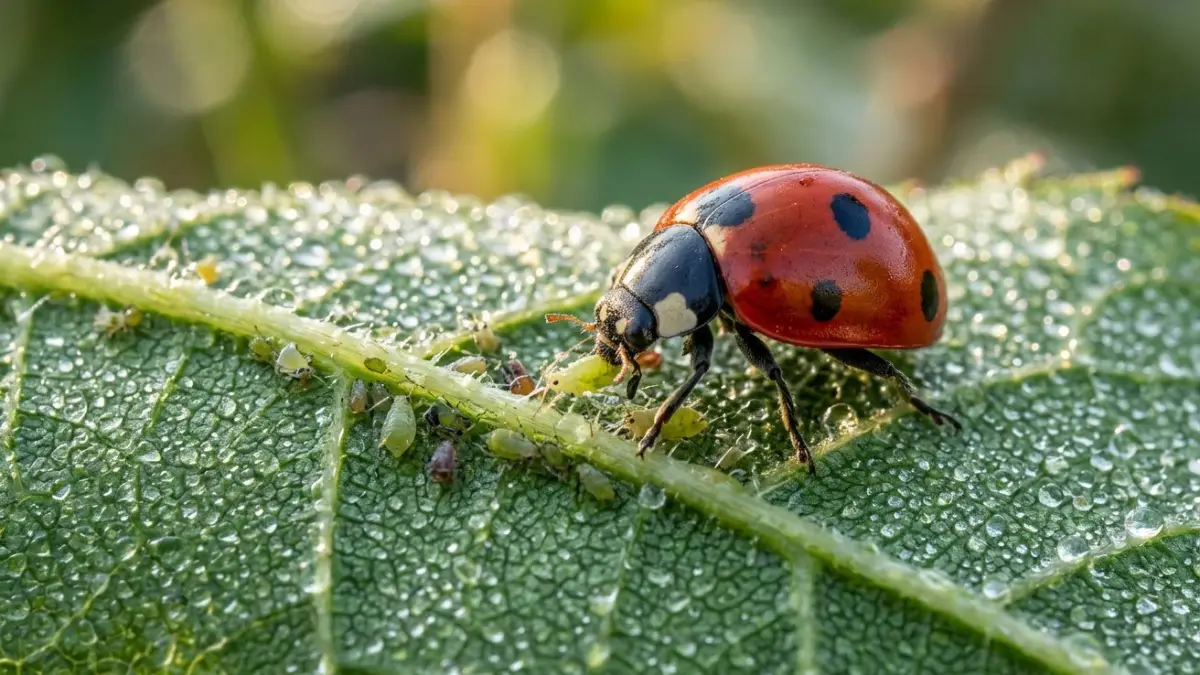
- Rinse or squash them early, then let ladybird and hoverfly larvae finish the job. If colonies keep growing after two removals, use insecticidal soap on the affected shoots in the evening. Details are in our beneficial insects guide.
- When should I use a pesticide in my garden?
- Only when numbers are rising after hand removal and mesh, the damaged part is the part you eat or the plant is young, and a targeted product exists. Choose the narrowest option, spray in the evening and follow the label.
- How do I stop cabbage white caterpillars without spraying?
- Cover brassicas with insect mesh (about 1 to 1.5 mm holes) from transplanting day, tucked tight at the edges, so butterflies cannot lay eggs. If caterpillars get through, hand-pick them or use Bt kurstaki, which affects only caterpillars that eat treated leaves.
- Why do pest problems get worse after I spray?
- Broad-spectrum sprays kill predators, which recover more slowly than aphids or mites. Pests then rebound without enemies. Overfeeding with nitrogen has the same effect, because soft growth suits sap-suckers, as explained in preventing garden problems early.
Key takeaways
- Name the pest by its damage before you treat: chewed, sucked, tunnelled or cut.
- Healthy plants tolerate losing 10 to 20 percent of leaf area, so do not spray for a few holes.
- Mesh and hand removal beat sprays for caterpillars, flea beetles and carrot fly.
- Broad-spectrum sprays remove predators and often make the next outbreak worse.
- Spray in the evening, on the pest, with the narrowest product, and read the label.
- In hot climates populations double in days, so scout twice a week in summer.
Table of contents12 sections
- Pests at a glance
- Read the damage first
- The five-step ladder
- Why populations explode, and what slows them
- Pest by pest control
- Spray rules that matter more than the product
- Biological controls: what is worth buying
- A worked example: caterpillars on cabbage
- Pests in hot and humid climates
- How organic pest control works in practice against common garden pests
- Mistakes that make pest problems worse
- Where to go next
Common garden pests need organic control that actually works, so you identify the pest first and then pick the mildest effective method.
Organic pest control isn’t a matter of swapping a synthetic spray for a “natural” one. It means stopping outbreaks from starting, tolerating a few insects, and using the mildest step that works when numbers climb. Most problems are solved by identifying the pest correctly and then blocking, removing or out-competing it.
This guide covers identification by damage, the escalation ladder, a pest by pest control table and the timing that decides whether a treatment works. It belongs to the Pests & Diseases guides and works with Beneficial Insects, Garden Hygiene and 7 Natural Remedies.
Pests at a glance
| Question | Answer |
|---|---|
| Tolerable damage | Roughly 10 to 20% of leaf area on established plants, if the part you harvest is untouched |
| Scouting frequency | Weekly in spring and autumn; twice a week in hot summer weather |
| Best single tool | Fine insect mesh fitted before the pest arrives |
| Best spray timing | Evening, when bees are in the hive and leaves will not scorch |
| Repeat interval for contact sprays | 5 to 7 days, two or three rounds, because eggs are not killed |
| Quarantine for new plants | 2 to 3 weeks, long enough for hidden eggs to hatch |
Read the damage first
Pests fall into feeding groups, and the group tells you which control family to reach for. Look at the damage before you look for the culprit, since many pests are nocturnal or hide on leaf undersides.
| Damage you see | Feeding type | Likely culprits | First move |
|---|---|---|---|
| Ragged holes, droppings | Chewing | Caterpillars, slugs, snails, beetles | Night patrol with a torch; look for droppings (caterpillars) or slime (molluscs) |
| Tiny round shot holes in young leaves | Chewing | Flea beetles | Mesh; keep soil evenly moist |
| Curled, sticky, distorted shoot tips | Sap-sucking | Aphids | Check tips and leaf undersides |
| Fine pale stippling, later bronzing, webbing | Sap-sucking | Spider mites | Tap a leaf over white paper; moving specks are mites |
| White flies that rise in a cloud | Sap-sucking | Whitefly | Shake the plant gently |
| Silver streaks with black specks | Rasping | Thrips | Blue sticky card; tap flowers over paper |
| White squiggly tunnels inside leaves | Mining | Leaf miners | Squash the larva in the tunnel |
| Seedlings cut at soil level | Chewing at night | Cutworms | Dig around the base by day for curled grubs |
| Maggots in fruit, early drop | Boring | Fruit flies, codling moth | Cut open a dropped fruit |
Honeydew (a sticky shine on leaves) plus black sooty mould points to sap-suckers such as aphids, whitefly, scale or mealybugs. Ants running up a stem often mean aphids too, because ants farm them for honeydew and drive off predators. Deal with the ants (a sticky band around a trunk, or mesh at the base of a pot) and the aphids become easier to manage.
The five-step ladder
Work up only as far as you need. Most problems end at step three.
- Prevent. Choose resistant varieties, rotate crops, water deeply and avoid heavy nitrogen. Soft, sappy growth is where aphids and mites multiply fastest.
- Monitor. Spend 10 minutes weekly checking growing tips, leaf undersides and flower buds. A 2 mm aphid colony takes seconds to remove; a month later it takes a spray.
- Block or remove. Mesh, row covers, sticky traps, collars, hand-picking and a firm jet of water.
- Support predators. Nectar flowers and undisturbed corners, as set out in Beneficial Insects.
- Spray last, and only the affected plants. Choose the narrowest product that works for that pest.
Why populations explode, and what slows them
Aphids give birth to live young without mating, and in warm weather a colony can double in a few days. Spider mites finish a generation in roughly a week at around 30°C, slower when it’s cool, which is why a hot, dry spell turns “a few specks” into webbing. Whitefly and thrips behave similarly. The practical lesson is that early action costs minutes while late action costs weeks.
Two weather facts help. Heavy rain and a hard hose jet knock aphids and mites off leaves (spider mites dislike humidity, so misting under leaves slows them), and cool spells slow every life cycle. Slugs and snails do the opposite: they thrive in mild, damp weather and feed at night, so a dry morning check tells you nothing about last night.
Pest by pest control
| Pest | Works well | Works partly | Weak or risky |
|---|---|---|---|
| Aphids | Squashing, water jet, predators, pinching out infested tips | Insecticidal soap (contact only) | Garlic or chilli sprays |
| Whitefly | Yellow sticky cards, parasitic wasps (Encarsia) in greenhouses | Soap or oil on leaf undersides | Spraying open flowers |
| Spider mites | Humidity, hosing undersides, predatory mites in glasshouses | Soap or horticultural oil | Repeated broad-spectrum sprays, which kill the mites’ predators |
| Caterpillars | Mesh from planting, hand-picking, Bt kurstaki | Spinosad, where legal, evening only | Any spray on plants in flower with bees working |
| Slugs and snails | Night collecting, boards to trap them by day, raised beds, dry mulch kept off stems | Beer traps, copper tape, parasitic nematodes in warm, moist soil | Eggshells, coffee grounds, salt |
| Flea beetles | Mesh with 1 mm holes, even moisture | Sowing in cool weather so plants outgrow damage | Sprays, as adults hop away |
| Leaf miners | Remove and bin mined leaves; mesh | Sticky cards for adult flies | Spraying, since larvae sit inside the leaf |
| Scale and mealybug | Wipe with a swab dipped in 70% alcohol; pruning | Horticultural oil on crawlers | Soap alone on waxy adults |
| Fruit flies and borers | Daily windfall pick-up, fruit bagging, traps | Spinosad bait products | Ignoring fallen fruit |
| Cutworms | Collars 8 to 10 cm tall pushed 2 cm into soil | Digging round the plant to find grubs | Late rescue sprays |
Slug pellets deserve one line. Iron phosphate types are the ones allowed in organic growing in many countries, whereas metaldehyde pellets are toxic to pets and wildlife and have been restricted in some places. If you use any pellet, follow the label and scatter thinly.
Spray rules that matter more than the product
- Identify first. A spray that works on aphids does nothing to a caterpillar.
- Cover the target. Soaps and oils kill by contact, so leaf undersides must be wet.
- Spray in the evening (below roughly 28°C), when bees aren’t foraging, and never on open flowers.
- Test on a few leaves and wait 24 to 48 hours, as some plants scorch.
- Rotate products and don’t repeat the same one beyond two or three rounds.
- Respect harvest intervals on the label, wear gloves and eye protection, and keep sprays away from water, pets and children.
“Natural” doesn’t mean harmless. Pyrethrum, spinosad and neem can all harm bees and aquatic life if misused. The label is the law, and local rules differ on which products are allowed.
Biological controls: what is worth buying
Predators and parasites sold by mail are worth the money in enclosed spaces and not much elsewhere. Predatory mites against spider mites, Encarsia wasps against whitefly and nematodes against vine weevil grubs work well in greenhouses and pots, where the pest can’t escape and the releases can’t fly away. Nematodes need soil warmer than about 5 to 10°C, depending on the species, and moist ground for a fortnight. In an open garden, habitat beats purchase every time: nectar flowers feed hoverflies and parasitic wasps for the whole season. The planting detail is in Flowers That Attract Pollinators.
A worked example: caterpillars on cabbage
- Prevent. Cover at transplanting with mesh on hoops, buried or weighted all round. Butterflies lay yellow egg clusters under leaves; a single gap lets them in.
- Check. Lift a few leaves twice a week. Squash clusters of eggs and tiny caterpillars.
- Pick. Hand-pick larger caterpillars, which are easiest to spot by their droppings.
- Treat. If damage is spreading to the hearts, spray Bt kurstaki on both leaf surfaces in the evening. Caterpillars stop feeding within a day and die in a few days; repeat after 7 days.
- Clean up. Remove old stalks after harvest, since pupae and eggs hide there.
Pests in hot and humid climates
Heat speeds every life cycle, so a pest that needs a month in a cool garden can complete a generation in a week or two. In the plains of Punjab and Sindh, whitefly, thrips, mites and fruit flies build up from late spring and peak through the hot weeks before and during the monsoon; leaf-eating caterpillars and borers surge with the rains. Gardeners often get better results by shifting sowing dates so sensitive crops grow in the cooler months (check local advice for exact dates), by using mesh instead of repeated sprays, and by picking up all fallen fruit daily. Mulch and morning watering reduce plant stress, and stressed plants attract more pests.
How organic pest control works in practice against common garden pests
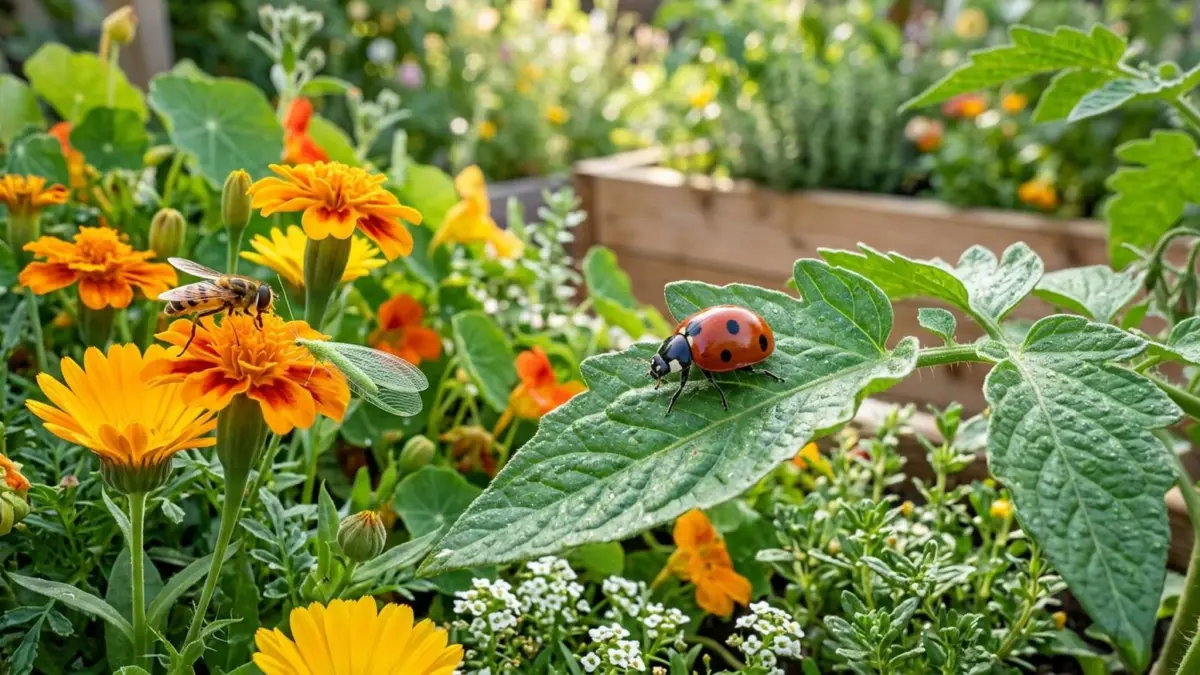
Aphid colonies on rose and bean respond to a jet of water, and ladybird and lacewing control the rest. Slug and snail attack lettuce and hosta, so a beer trap or copper tape stops them, and a dawn patrol with a torch removes them by hand. Netting protects cabbage from caterpillar and carrot fly, and fleece blocks flea beetle on radish.
Nematode watering controls slug and vine weevil in damp soil, and a sticky trap catches whitefly on tomato. Crop rotation prevents club root and cutworm from building up, while clean beds reduce the places pests hide. Soap sprays kill soft-bodied aphid and spider mite but can harm bee, so you should spray in the evening. A few pests feed beneficial insects, so wait until damage spreads, and you’ll keep the natural balance. Mesh of 1 mm blocks cabbage white and carrot fly, and a barrier of 60 cm protects carrot from the low-flying adult. Garlic spray repels some aphid but needs repeating every 5 days after rain. Pheromone traps catch codling moth in apple and plum, and a trap per tree for 6 weeks protects the crop. Your extension service identifies pests from a photo, and the beneficial insect guide shows who helps.
Mistakes that make pest problems worse
- Spraying broad-spectrum insecticides that kill the predators doing the work
- Treating a harmless insect because it looks alarming, such as ladybird larvae
- Spraying at midday or on open flowers
- Skipping the second and third rounds, so survivors rebuild
- Feeding heavily with nitrogen in summer
- Planting a susceptible crop in the same place every year
Slugs and snails need their own plan, set out in Slugs and Snails: Natural Control.
For what works and what to skip, see Best Organic Pest Control Products.
Where to go next
Identify leaf and stem diseases in Plant Diseases: Identify and Treat the Big Five, learn the recipes and their limits in 7 Natural Remedies and guard crops against bigger visitors in Protecting Your Garden from Birds, Deer, Cats and Critters. For plants that look wrong without an obvious culprit, use Troubleshooting Wilt, Yellowing and Mystery Symptoms. Back to Pests, Diseases & Natural Care.
Frequently asked questions
How can I tell aphid damage from spider mite damage?
Aphids leave curled, sticky, distorted shoot tips and shiny honeydew. Spider mites leave fine pale stippling that later turns bronze, often with webbing. Tap a leaf over white paper, and moving specks point to mites. Use a hand lens on leaf undersides to confirm.
Do ants on my plants mean I have aphids?
Often, yes. Ants farm aphids for honeydew and drive off ladybirds and lacewings that would eat them. Look at shoot tips and leaf undersides for colonies. Stopping the ants, for example with a sticky band round a trunk, makes the aphids easier to manage.
How do I get rid of whitefly on tomatoes organically?
Use yellow sticky cards to catch adults, and in a greenhouse consider the parasitic wasp Encarsia. Soap or oil sprays on leaf undersides give partial control. Shake the plant gently to see the cloud of flies, and avoid spraying open flowers.
What is eating holes in my leaves at night?
Slugs, snails and caterpillars are the usual suspects. Go out with a torch after dark. Slime trails point to slugs and snails, while dark droppings point to caterpillars. Tiny round shot holes in young leaves suggest flea beetles, which are active by day.
How do I stop flea beetles on radish and rocket?
Cover the crop with insect mesh that has 1 mm holes, fitted straight after sowing. Keep soil evenly moist, because flea beetles prefer stressed plants, and sow in cool weather so seedlings outgrow the damage. Sprays do little, since adult beetles hop away.
Is it OK to squash pests by hand?
Yes, it is one of the safest controls. Squash or rub off small aphid colonies, pick off caterpillars and snails, and crush leaf miner larvae inside the tunnel. Wear gloves if you prefer. Hand removal works best when done early and repeated weekly.
How many times should I repeat insecticidal soap?
Repeat every 5 to 7 days for two or three rounds. Soap kills only the pests it wets and does not harm eggs, so new nymphs can appear after the first spray. Stop if numbers are not falling and switch to another method.
How long should I quarantine new plants before planting them out?
Keep new plants apart for 2 to 3 weeks. That gives hidden eggs time to hatch and lets you spot pests such as aphids, mealybugs or mites before they reach your other plants. Check leaf undersides and the soil surface during that time.
What are the black sticky marks on my plant leaves?
Sticky shine with black marks is honeydew with sooty mould growing on it. The honeydew comes from sap-suckers such as aphids, whitefly, scale or mealybugs. Treat the insects and the mould will stop returning. You can wipe existing mould off with a damp cloth.
Why do spider mites appear in hot, dry weather?
Warm, dry conditions speed up their life cycle. At around 30 °C a generation can finish in about a week, so a few specks become webbing fast. Mites dislike humidity, so hosing leaf undersides and keeping plants well watered slows them down.
More in Pests & Diseases
Plant Diseases: Identify and Treat the Big Five
Tell fungal, bacterial and viral disease apart by symptom pattern, then match the response: what to spray, what to prune and when to pull the plant.

Beneficial Insects: Your Garden’s Best Hired Hands
Learn to recognise ladybird larvae, hoverflies, lacewings and parasitoid wasps, feed them with the right flowers, and time any spray so you stop killing your own…
7 Natural Remedies Every Gardener Should Know How to Make
Soap spray, neem, bicarbonate, garlic-chili and more: honest efficacy, mixing ratios, test-patch and timing rules, and the bee, fish and pet risks of "natural".