Quick answers
- How big should my first vegetable garden be?
- Start with 4 to 6 square metres (about 40 to 65 square feet), such as one 1.2 m by 3 m bed. That is enough for salads, beans and a few tomatoes, and small enough to weed and water in 15 minutes a day.
- How much sun do vegetables need?
- Fruiting crops such as tomatoes, courgettes and beans need 6 to 8 hours of direct sun. Leafy crops and roots manage on 4 to 5 hours. If your best spot gets less than 4 hours, grow herbs and salad leaves only.
- Should I dig the soil or build raised beds?
- Dig or smother if your soil drains and crumbles; build raised beds if it is rocky, waterlogged, contaminated or heavy clay. Beds 25 to 30 cm tall warm earlier in spring and keep foot traffic off the roots.
- When is the best time to start?
- Prepare the bed 4 to 8 weeks before sowing. Autumn prep suits cool climates because winter breaks down the compost, but spring prep works if you smother grass early and sow cool crops first.
Key takeaways
- Aim for 6 to 8 hours of direct sun for fruiting crops
- Keep beds no wider than 1.2 m so you never step on the soil
- Start with 4 to 6 square metres and expand in year two
- Smother grass with cardboard rather than digging it all out
- Put water within a hose length of the bed before planting anything
Table of contents10 sections
- Choose the site for your vegetable garden
- Size your vegetable garden honestly
- Choose your vegetable garden bed type
- Prepare the garden ground without back-breaking digging
- Filling raised beds properly
- Plant your vegetable garden in the right order
- Climate adjustments
- Water, mulch and feeding in your first vegetable season
- Common mistakes and what causes them
- What to read next
How to start a vegetable garden from scratch begins with sun, soil and a small bed, then adds crops you will actually eat.
To start a vegetable garden, pick the sunniest, most sheltered spot you have (6 to 8 hours of direct sun), build one bed about 1.2 m wide and 3 m long, fill or amend it with 5 to 10 cm of compost, and plant cool-season crops first. Most first gardens fail from too much ambition, too little sun or a tap that’s too far away, not from any lack of skill.
This guide is for anyone with a patch of lawn, a bare yard or a few spare weeks before spring, and it sits inside the Vegetables and Herbs topic. It walks through site, size, bed type, soil, planting order and the first season, with the numbers that decide whether the garden works.
Choose the site for your vegetable garden
Sun, water access and shelter matter more than soil, because you can build soil but you can’t move a shadow. Spend one day checking the spot at 9 am, noon and 4 pm. Count the hours of direct light and note when trees, fences or the house cast shade. In cool temperate regions, remember that the sun is low in early spring, so a spot that’s sunny in June may be shaded in March.
| Direct sun per day | What will grow well | What to avoid |
|---|---|---|
| 8 or more hours | Everything, including tomatoes, peppers, squash, sweetcorn | Leafy crops may bolt in summer without afternoon shade |
| 6 to 8 hours | Tomatoes, beans, courgettes, most roots and brassicas | Melons and aubergines (eggplant) crop lightly |
| 4 to 6 hours | Lettuce, spinach, kale, chard, beetroot, radish, herbs | Tomatoes, peppers, squash |
| Under 4 hours | Mint, chives, parsley, salad leaves in pots | Any fruiting crop |
Next, look at drainage and shelter. Dig a 30 cm hole, fill it with water, and let it drain. Fill it again. If the second fill is still standing after 8 hours, the spot is waterlogged and raised beds are the better route. Avoid frost pockets at the bottom of a slope, where cold air pools on still nights and ends the tomato season early. A windbreak such as a hedge or open fence slows wind without casting a deep shadow, while a solid wall creates turbulence.
Finally, put the bed within a hose length of a tap and within sight of the kitchen door. Gardens that need a long walk are visited less often, and unvisited gardens are the ones that are overrun by weeds and pests.
Size your vegetable garden honestly
A bed 1.2 m wide lets you reach the middle from either side, so you never compact the soil by walking on it. Length is flexible, but 3 m is easy to manage. Leave paths 40 to 50 cm wide, enough for a wheelbarrow if you widen them to 60 cm.
One 1.2 m by 3 m bed (3.6 square metres) can give a steady supply of salad leaves, a few courgettes, a row of bush beans and four to six tomato plants if the tomatoes are trained upright. Two such beds are a sensible target for year two. Most beginners who start with 20 square metres give up by midsummer because weeding and picking outpace the time they have. If you want to know which crops reward a small plot, see the seven easiest vegetables to grow.
Choose your vegetable garden bed type
| Option | Best when | Cost and effort | Watch out for |
|---|---|---|---|
| In-ground bed | Soil crumbles, drains and has no contamination | Lowest cost; 1 to 2 days of work plus compost | Perennial weeds, compaction, slow spring warm-up |
| Raised bed, 25 to 30 cm | Clay, stones, waterlogging or mild contamination | Moderate; timber and fill cost the most | Dries faster; needs more frequent watering |
| Raised bed, 40 cm or more | Bad backs, hard ground, or paved sites | Highest; needs 0.5 cubic metre of fill per 1.2 m by 3 m bed at 15 cm, more at 40 cm | Bottom fill can settle; top up each year |
| Containers | Patios and balconies | Low start-up; constant watering | See container vegetable gardening |
If the land was a former car park, near a painted building from before the 1980s, or beside a busy road, a lab soil test for lead is worth the cost. In those cases use raised beds with imported soil and a barrier layer underneath. For ordinary garden ground, a basic test of pH and texture is enough, and the soil pH guide explains how to read it. Most vegetables want a pH of roughly 6.0 to 7.0.
Prepare the garden ground without back-breaking digging
- Mark the shape. Use string and pegs, and check the corners are square with a 3-4-5 triangle measured in whole centimetres or feet.
- Remove or smother the grass. Mow as short as possible, then lay overlapping cardboard (no glossy print, tape removed) and wet it. Cover with 10 to 15 cm of compost. The grass dies in 6 to 12 weeks, and earthworms pull the cardboard down. In a hurry, strip the turf with a flat spade and stack it grass-side down to rot into loam.
- Loosen only if compacted. Push a garden fork 25 cm deep and rock it back to crack the soil without turning it over. Pushing a rod down shows hard layers. Deep inversion digging disturbs the structure and brings up weed seed.
- Add organic matter. Spread 5 to 10 cm of finished compost or well-rotted manure over the surface. This is about 50 to 100 litres per square metre. Fresh manure burns roots and should be applied at least 3 months before planting.
- Rake level, then stop walking on it. A fine crumb of 3 to 5 cm on top is all that small seeds need. Make your bed edges obvious so no one steps in.
If you make your own compost, composting at home shows how to have a supply ready by next year. Until then, buy bagged compost or bulk compost from a municipal source, and avoid anything labelled as topsoil with no description of its contents, which is often heavy subsoil.
Filling raised beds properly
A reliable mix is roughly 60 per cent screened topsoil and 40 per cent compost, or 50/50 where topsoil is poor. Pure compost looks generous, but it shrinks by a third in the first season, runs short of minerals and can hold too much salt. Pure topsoil sets hard. If cost is a problem, fill the bottom third with rotted logs, branches and leaves (the hugel approach), then top with 20 to 25 cm of the mix. Avoid using treated timber from railway sleepers or old pressure-treated lumber of unknown age for edible beds. Untreated cedar, larch or thick untreated pine all work, and last roughly 5 to 15 years depending on the wood and climate.
Whatever you choose, level the frame and set it on bare ground or on cardboard. A permeable barrier stops weeds, and open ground underneath lets roots and worms reach the soil below.
Plant your vegetable garden in the right order
Vegetables fall into cool-season and warm-season groups, and sowing them out of order wastes seed. Cool crops such as peas, spinach, radish, lettuce, kale and onions germinate in soil at 5 to 10°C and tolerate light frost. Warm crops such as beans, courgettes, tomatoes and sweetcorn need soil of 15 to 18°C and die at 0°C.
- Early spring (soil workable): peas, radish, spinach, lettuce, spring onions, broad beans where winters are mild.
- After the last frost date: bush beans, courgettes, cucumbers, tomatoes (hardened-off plants), basil.
- Midsummer: second sowings of beans, carrots, beetroot and chard.
- Late summer: kale, spinach, lettuce, radish for autumn; garlic in autumn.
A compact first-year layout for a 1.2 m by 3 m bed: tomatoes along the north edge so they don’t shade others, bush beans and courgette in the middle, lettuce and radish along the south edge, and herbs in a pot nearby. When radish and lettuce are finished, replace them with a second sowing. Succession planting explains the timing. For the month-by-month detail, see the seasonal planting calendar.
Climate adjustments
- Cool temperate: start tomatoes indoors 6 to 8 weeks before the last frost and use a cloche or row cover for early sowings. Raised beds warm a week or two sooner.
- Hot dry: the main growing seasons are autumn to spring. Mulch 5 to 8 cm deep, water in the early morning, and put taller crops on the west side so they shade lettuce in the afternoon.
- Humid tropical: choose heat-tolerant crops such as okra, yardlong beans, sweet potato and amaranth; raise beds for drainage, and space plants wider for airflow to reduce fungal disease.
- Subtropical: two seasons, with a cool-season crop group in winter and a warm one from late spring.
Water, mulch and feeding in your first vegetable season
Newly sown seed must stay damp until it emerges, which may mean watering twice a day in warm, windy weather. Established beds need roughly 2.5 cm (1 inch) of water a week, delivered in one or two deep soakings rather than daily sprinkles, because shallow watering keeps roots near the surface. After seedlings are 5 to 8 cm tall, lay 3 to 5 cm of straw, leaf mould or compost around them, leaving a gap at each stem. Mulch cuts evaporation and weeds by a large margin.
With 5 to 10 cm of compost worked in, a first-year bed needs little extra feed. Heavy feeders such as tomatoes, courgettes and sweetcorn benefit from a liquid feed every 2 to 3 weeks once they flower or fruit. Leafy crops that look pale and slow benefit from a nitrogen feed. If you’re unsure about timing and amounts, watering plants the right way gives a practical method.
Common mistakes and what causes them
| Mistake | What causes it | Fix |
|---|---|---|
| Spindly, unproductive plants | Too little sun, usually under 5 hours | Move to a sunnier spot or switch to leafy crops |
| Bed overrun with grass by June | Grass was dug in rather than smothered, leaving roots | Smother with cardboard and compost, or strip turf fully |
| Seedlings never appear | Soil too cold, crust formed, or seed sown too deep | Wait for soil temperature; sow at 2 to 3 times seed width; keep surface damp |
| Everything ripens at once, then nothing | One big sowing | Sow small batches every 2 to 3 weeks |
| Garden abandoned by midsummer | Plot too large or too far from the house | Shrink to what you can manage in 15 minutes a day |
| Hard, cracked soil that sheds water | Walked on, or no organic matter | Keep to paths; add compost each spring |
If your soil is heavy or poor, a raised bed is a good start, as shown in Raised Bed Vegetable Gardening.
For what to look for in a bed kit, see Best Raised Bed Kits.
What to read next
Choose crops with the seven easiest vegetables for beginners, then follow how to plant seeds step by step for sowing depth and temperature. When the first crops are ready, harvesting and storing vegetables shows how to pick at the right moment. Back to the Vegetables and Herbs guide.
Frequently asked questions
How do I clear grass for a vegetable bed without digging?
Smother it. Mow the grass short, lay overlapping cardboard with 10 cm joins, wet it and cover with 10 to 15 cm of compost or mulch. Leave the bed for 4 to 8 weeks, then plant through the compost. Remove tape and staples first.
What vegetables should I plant first in a new garden?
Fast, forgiving crops. Sow lettuce, radish, spinach and peas in cool weather, then bush beans, zucchini and a few tomato plants after the last frost. Our easy vegetables guide gives days to harvest and yields.
How can I tell if my soil is good enough for vegetables?
Squeeze a moist handful. Good soil crumbles when poked, clay stays in a sticky ball and sand falls apart gritty. Dig a 30 cm hole and fill it twice to check drainage. A test kit shows pH, and 6.0 to 7.0 suits most crops.
How much compost should I add to a new vegetable bed?
Spread 5 to 10 cm of finished compost over the bed and fork it in lightly, or leave worms to mix it in. Use only compost that is dark, crumbly and earthy-smelling. Top up with a thinner layer each spring.
How wide should paths between vegetable beds be?
Paths of 40 to 50 cm are enough for walking and kneeling. Widen them to 60 cm if you want to use a wheelbarrow. Wider paths waste growing space, while narrower ones tempt you to step on the bed and compact the soil.
Can I start a vegetable garden under trees?
Usually not. Tree roots compete for water and nutrients, and the canopy blocks the 6 to 8 hours of sun that fruiting crops need. Choose an open spot instead, or grow shade-tolerant leaves and herbs in pots in the dappled areas.
Is it safe to grow vegetables in soil near an old house or busy road?
It may not be. Soil near older buildings and busy roads can contain lead and other contaminants. Have it tested by a laboratory if unsure, or use raised beds filled with clean soil. Wash and peel produce, and see reading your soil.
How often should I water a new vegetable garden?
Water deeply once or twice a week, rather than giving daily sprinkles, to a total of about 2.5 cm a week including rain. Newly sown seed needs the surface kept moist until seedlings appear. Water in the morning and give extra in hot spells.
Is it too late to start a vegetable garden in summer?
Not always. Many crops can be sown in midsummer for an autumn harvest, such as lettuce, radish, spinach, beetroot, chard and kale. Count back from your first frost date using the days to harvest on the seed packet.
What tools do I need to start a vegetable garden?
A spade or fork, a trowel, a hand rake, a hoe, a watering can or hose, gloves and string for straight lines. Buy good-quality basics rather than a large set. A sharp knife or snips helps with harvesting.
More in Vegetables & Herbs
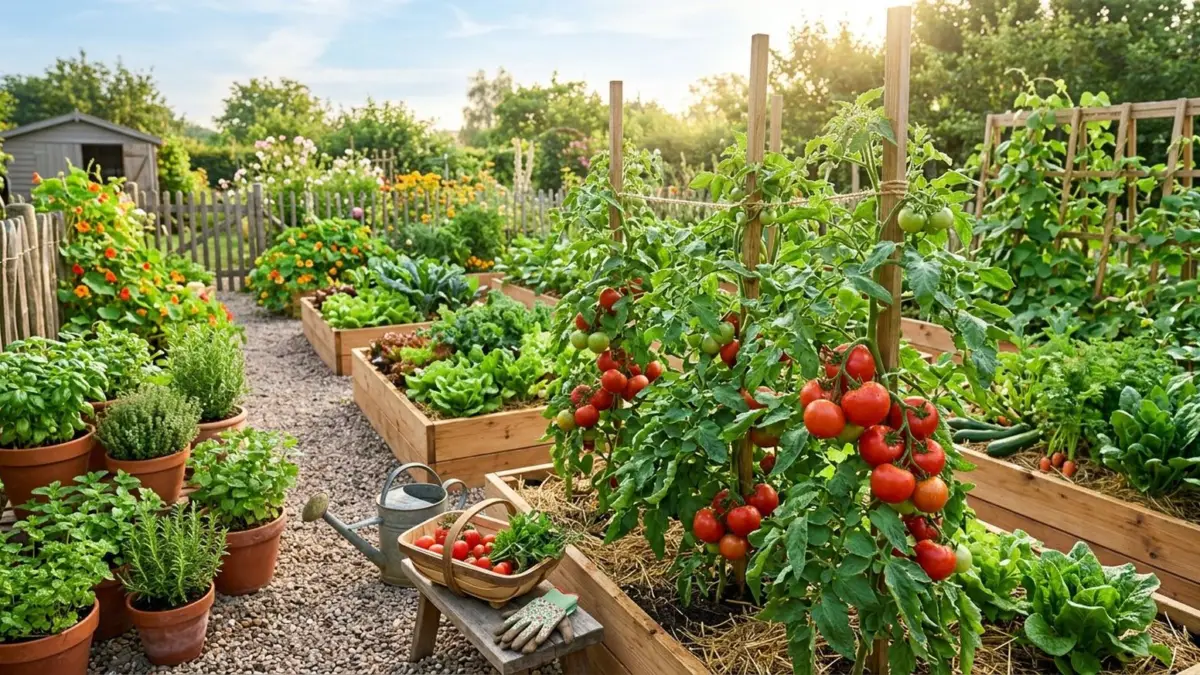
7 Easiest Vegetables to Grow (and 3 to Skip for Now)
Seven forgiving crops with honest yields, weekly effort and days to harvest, plus three fussy ones to postpone. Plan a first bed that pays off within…
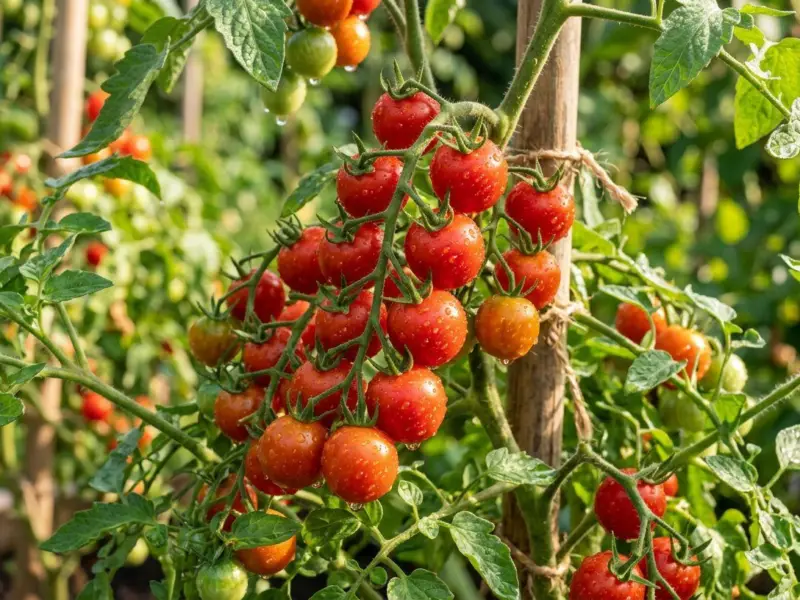
How to Grow Tomatoes: From Seed to Sauce
Determinate vs indeterminate, planting deep, pruning suckers, watering discipline and blossom-end rot fixes, the complete tomato playbook.
Herb Garden Essentials: The 8 Herbs Worth Growing
Split your herbs into two camps: dry, lean Mediterranean types and moist, rich soft-leaf types. Pot and bed advice, cutting rules and perennial vs annual timing.