Quick answers
- To raise pH (make alkaline)
- Garden lime, worked in and retested after a season. Fine lime acts faster; pellets last longer.
- To lower pH (make acid)
- Elemental sulfur (slow, lasting) or acidifying mulches: pine needles, oak leaf mold, peat alternatives. Acid-lovers prefer steady acidic feeding per our fertilizer guide over one dramatic correction.
- Do pH meters from the drugstore work?
- The cheap probe meters are unreliable; liquid kits and lab tests are honest. Calibrate any digital meter with buffer solutions and keep probes moist.
- Why won't my blueberries survive no matter what?
- Almost certainly alkaline soil or water. Blueberries need 4.5-5.5: in most warm climates they thrive only in large pots of ericaceous mix, per our container methods.
Key takeaways
- 6.0-7.0: the sweet spot where nearly all nutrients stay available
- Below 6.0 (acidic): calcium, magnesium lock out
- Above 7.5 (alkaline): iron, manganese, phosphorus lock out
- Acid-lovers: azalea, gardenia, blueberry, camellia (4.5-5.5)
Table of contents15 sections
- What pH measures
- How to test your soil
- What plants prefer
- Raising pH in acid soil
- Lowering pH in alkaline soil
- Signs your pH is wrong
- How pH controls nutrient availability
- A worked example: an alkaline bed for tomatoes
- Water, fertiliser and pots
- How fast pH changes, and when to retest
- Popular fixes that do little
- Why a number changes how plants feed
- How soil pH explained shows what frees or blocks nutrients in the garden
- Mistakes that make things worse
- Where to go next
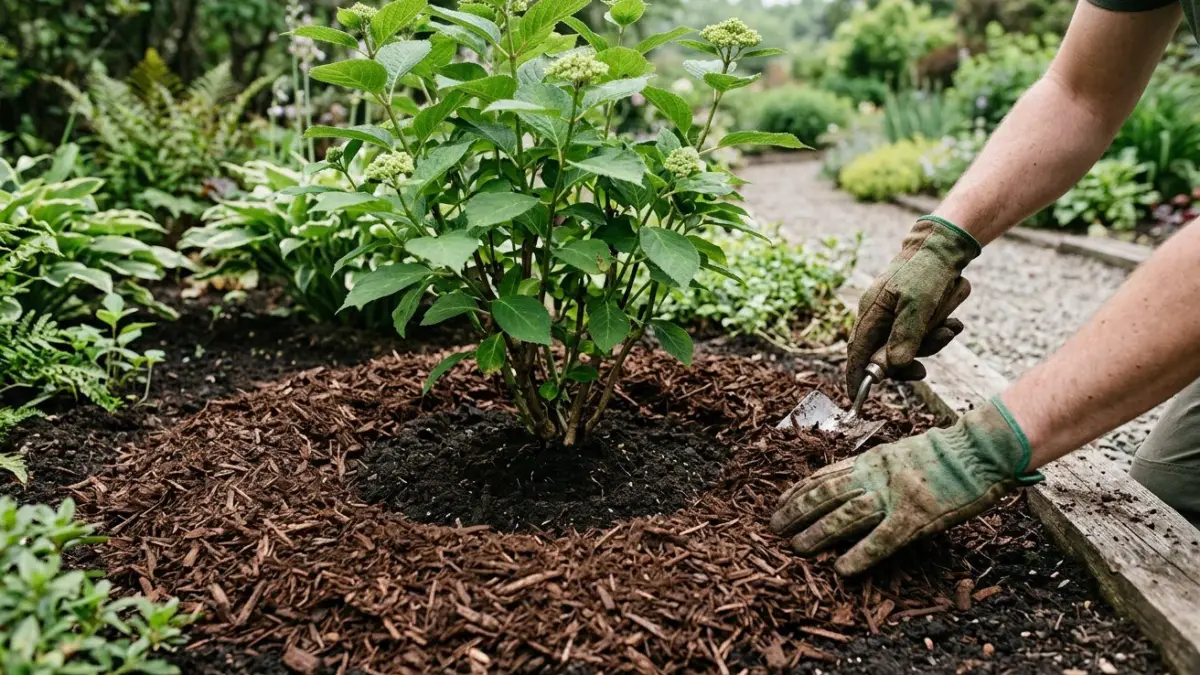
Soil pH explained shows how it frees or blocks nutrients in your garden, and how to test and adjust it safely.
Soil pH is the number that decides whether the food in your soil is actually available to plants. A soil can be rich in iron, phosphorus and calcium, yet plants starve because the pH locks those nutrients away. Gardeners who test and correct pH often see problems that fertiliser never fixed. This guide explains what pH means, how to measure it, which plants like which range and how to move the number safely, including the alkaline soils common across Punjab, Sindh and many dry regions.
It belongs to the Soil, Water & Fertilizer guides and works with Reading Your Soil, Understanding Your Soil Type and Organic vs Synthetic Fertilizers.
Handle amendments safely. Ground lime and sulfur are irritating dusts, so wear gloves, eye protection and a dust mask when spreading them, keep them away from children and pets and follow the label rate exactly. Check local rules before applying anything near streams, drains or ponds, because lime and fertilizer runoff harms water life.
What pH measures
pH is a scale from 0 to 14 that shows how acidic or alkaline something is. Below 7 is acidic, 7 is neutral and above 7 is alkaline. The scale is logarithmic, so a soil at pH 5.5 is ten times more acidic than one at 6.5, and one hundred times more than one at 7.5. Small changes matter.
| pH range | Description | What happens |
|---|---|---|
| Below 5.0 | Strongly acid | Aluminium and manganese can reach toxic levels; calcium and magnesium are scarce |
| 5.0 to 6.0 | Moderately acid | Good for blueberries and rhododendrons; phosphorus starts to lock up |
| 6.0 to 7.0 | Slightly acid to neutral | The best range for most vegetables, lawns and flowers |
| 7.0 to 7.5 | Neutral to slightly alkaline | Fine for many plants; iron and manganese become harder to take up |
| Above 7.5 | Alkaline | Iron, zinc and manganese lock up; yellow new leaves are typical |
How to test your soil
| Method | Accuracy | Cost | Notes |
|---|---|---|---|
| Colour-change test kit or strips | About ±0.5 units | Low | Good enough to know acid, neutral or alkaline |
| Digital probe or meter | ±0.2 to 0.5 if calibrated | Low to medium | Cheap probes drift; calibrate often |
| Laboratory test | Best | Medium | Also reports organic matter and nutrients |
| Kitchen test (vinegar and baking soda) | Rough only | Free | Fizz with vinegar means alkaline; fizz with baking soda paste means acid |
- Sample the right way. Dig 6 to 8 small samples 10 to 15 cm deep from across the bed, avoiding spots where fertiliser or lime was spread recently.
- Mix them in a clean bucket and remove stones and roots.
- Test using your chosen method, following the instructions exactly (distilled water for kits).
- Record the result and the date, and retest every 2 to 3 years or after any pH change.
What plants prefer
| Preferred pH | Plants |
|---|---|
| 4.5 to 5.5 (acid-lovers) | Blueberry, rhododendron, azalea, camellia, heather, hydrangea (blue flowers) |
| 5.5 to 6.5 | Potato, strawberry, raspberry, carrot, radish, parsley |
| 6.0 to 7.0 (most plants) | Tomato, pepper, lettuce, beans, brassicas, roses, most perennials and lawns |
| 6.5 to 7.5 (tolerates alkaline) | Lavender, rosemary, asparagus, spinach, beetroot, clematis, lilac, olive, pomegranate, date palm |
The simplest approach to a difficult pH is to grow plants that like it. Work with the soil you have before you try to change it.
Raising pH in acid soil
Ground limestone (calcium carbonate) is the usual material. Dolomitic lime adds magnesium too, which is useful if your soil is low in it. Wood ash also raises pH but is much stronger and potassium-rich, so use it sparingly.
- As a rough guide, about 200 g per square metre on sandy soil to 400 g per square metre on clay raises pH by about one unit.
- Split large doses over two years rather than applying everything at once.
- Spread evenly, rake into the top 10 cm and water in.
- Keep lime off acid-loving plants and don’t apply it at the same time as manure or ammonium fertilisers.
- Retest after 3 months before adding more. A laboratory recommendation is more accurate than any rule of thumb.
Lowering pH in alkaline soil
Alkaline, lime-rich (calcareous) soils are common in dry regions and are the main cause of yellow new leaves, a condition called chlorosis. They resist change because the lime in the soil buffers it. Realistic options:
- Add organic matter every year. Compost, leaf mould and well-rotted manure lower pH slightly, and make nutrients more available (see Composting at Home).
- Use elemental sulphur. Soil bacteria convert it to sulphuric acid. As a guide, 50 g per square metre on sandy soil to 100 g per square metre on clay lowers pH by up to one unit over several months. Apply in split doses in warm, moist soil and retest. Soils with free lime may not respond at all.
- Feed with acidifying fertilisers, such as ammonium sulphate, in place of nitrate sources.
- Give iron directly. Spray or drench with chelated iron (Fe-EDDHA works at high pH) when new leaves yellow.
- Grow in raised beds or containers filled with potting mix at a controlled pH (see Choosing Pots and Soil Mix).
- Irrigate with rainwater where possible; hard tap water raises pH over time.
Gypsum is often recommended for hard, salty soils, but it corrects sodium problems, not pH. Don’t rely on it to make soil less alkaline.
Signs your pH is wrong
| Sign | Likely pH problem |
|---|---|
| New leaves yellow with green veins | Alkaline soil locking up iron or manganese |
| Stunted plants, purple leaves, poor roots | Phosphorus unavailable at a pH that is too low or too high |
| Moss, sorrel and horsetail spreading | Acid, often wet, soil |
| Clover failing, brassicas with club root | Acid soil (club root thrives below pH 6.5) |
| Hydrangeas turning pink instead of blue | pH above about 6.0 |
Test before you treat. Yellow leaves can also mean overwatering or compaction (see Reading Plant Signals).
How pH controls nutrient availability
Plants take up nutrients dissolved in soil water, and pH changes how soluble each one is. Nitrogen, potassium and sulphur stay available across a wide range, while phosphorus and the trace metals are fussy.
| Nutrient | Best availability | What goes wrong outside it |
|---|---|---|
| Nitrogen | Roughly pH 6 to 8 | Soil microbes slow down in strong acid, so less is released |
| Phosphorus | Roughly pH 6 to 7 | Binds to iron and aluminium below 6, and to calcium above 7.5 |
| Potassium, magnesium, calcium | Roughly pH 6.5 to 8 | Washed out of acid, sandy soils |
| Iron, manganese, zinc | Below about pH 6.5 | Locked up in alkaline soils, causing yellow new leaves |
| Boron | Roughly pH 5 to 7 | Leached away in acid, sandy soil |
That is why a single pH of about 6.5 is the compromise for mixed vegetable beds: it keeps almost everything within reach.
A worked example: an alkaline bed for tomatoes
- Test: a kit shows pH 8.2, and new tomato leaves are pale between the veins.
- Don’t fight it all at once. Dig in 5 cm of compost and spread 80 g of sulphur per square metre in two doses, six weeks apart.
- Treat the plants now. Drench with chelated iron according to the label while the soil slowly changes.
- Mulch with compost or leaf mould to cool the surface and feed soil life.
- Retest after three months. If pH has dropped toward 7.5, the plants should be greener. Keep adding compost each season.
Water, fertiliser and pots
- Irrigation water: hard water rich in bicarbonate slowly pushes soil pH up. Rainwater has a pH of about 5.5 to 6.5 and is gentler on acid-loving plants.
- Fertiliser choice: ammonium-based fertilisers (such as ammonium sulphate) acidify soil over time; nitrate-based ones (calcium nitrate) slightly raise it.
- Potting mixes: peat and coir mixes start near pH 5.5 to 6.5, and often contain a little lime. Use ericaceous (acidic) mix for blueberries and camellias.
- Lawns: grass prefers pH 6.0 to 7.0. Moss and thin patches in an acid, wet lawn point to a lime and drainage problem (see Lawn Care Basics).
How fast pH changes, and when to retest
Soil pH moves slowly, because soil resists change. This resistance, called buffering, is stronger in clay and humus-rich soils than in sand, so a clay soil needs much more lime or sulfur than a sandy soil to shift by the same amount. Ground limestone usually takes three to six months to act fully, finer powders working faster than coarse grit. Elemental sulfur depends on soil bacteria to convert it to acid, so it’s slow in cold or dry soil and may take two to three months or more in warm, moist conditions. Apply amendments in autumn or early spring, work them into the top 10 to 15 cm (4 to 6 in), and retest after three to six months before adding more. Make several small adjustments rather than one large correction, and follow the rate on your test result or label, because overshooting is harder to fix than undershooting.
Popular fixes that do little
- Vinegar and household acids. They drop pH for a few days at most, then the soil buffers back, and they can harm soil life.
- Coffee grounds. Used grounds are close to neutral, so they don’t acidify soil much, though they add organic matter if composted.
- Baking soda. It raises salt levels and can harm plants without lasting pH change.
- Pine needles and oak leaves. They are mildly acidic as they break down, yet the effect on pH is small, so treat them as mulch rather than a correction.
Organic matter is the better long-term tool. Compost buffers pH swings, holds nutrients and helps plants cope with a slightly off soil, which is why Mulching Mastery and Composting at Home often help more than chasing a perfect number.
Why a number changes how plants feed
Acid soil releases iron, so blueberry, azalea and rhododendron feed well, but the same acidity locks up calcium and magnesium and starves lettuce and cabbage. Alkaline soil blocks iron, which is why hydrangea and tomato leaves yellow between the veins in chalky ground. Lime raises ph because it neutralises acid, and sulphur lowers ph because bacteria convert it into acid, which needs several months.
Clay needs more lime or sulphur than sand to shift by the same amount, because its fine particles hold many nutrient ions. Compost and humus buffer ph swings and feed earthworm populations, so a rich bed forgives your mistakes. Wood ash raises ph quickly and supplies potassium, but too much blocks iron and phosphorus. Urea acidifies a lawn as it breaks down, while club root thrives in acid beds, so liming a cabbage and broccoli bed near ph 7 reduces the disease.
How soil pH explained shows what frees or blocks nutrients in the garden
Most vegetables like pH 6.0 to 7.0, while blueberry, azalea and rhododendron need pH 4.5 to 5.5. Hydrangea blooms blue in acid soil and pink in alkaline soil. High pH locks iron and causes yellow leaves in camellia and raspberry, and low pH locks calcium and causes blossom end rot in tomato. Lime raises pH in clay and loam, and sulphur or peat lowers it slowly. Compost buffers pH and feeds roots, and mulch protects soil and reduces swings. Cabbage and kale suffer club root in acid soil, so you should test before sowing. Lavender and clematis tolerate alkaline soil, and rose likes pH 6.0 to 6.5. A test kit costs little and shows pH within 5 minutes. Change pH by 0.5 per year at most. Your extension service or the rhs offers lab tests. The reading your soil guide adds texture checks.
Add 100 g of lime per square metre to raise pH by about 0.5, and retest after 6 weeks.
Mistakes that make things worse
- Adding lime or sulphur without testing
- Expecting a big change in a few weeks
- Putting lime on soil that’s already above 7
- Using aluminium sulphate on garden soil, which can be toxic
- Judging pH from one spot in the garden
For how to choose a test kit, see Best Soil Test Kits & pH Meters.
Where to go next
Read your soil with Reading Your Soil, improve structure through Preventing Soil Compaction and feed correctly with Organic vs Synthetic Fertilizers. Back to Soil, Water & Fertilizer.
Frequently asked questions
What happens to plants if soil pH is too high?
Iron, manganese and phosphorus become hard for roots to take up. New leaves often turn yellow with green veins, a sign called iron chlorosis. Plants grow slowly even when the soil is rich. A test confirms the cause before you treat it.
How long does lime take to change soil pH?
Fine lime can start working within weeks, and most of the change shows in 3 to 6 months. Coarse lime and pellets act more slowly. Retest after that time. Follow the label rate, because over-liming is hard to reverse. Mix it evenly into the top 10 to 15 cm for the best result.
Can I lower soil pH with vinegar or coffee grounds?
Not reliably. Vinegar acidifies only briefly and can harm soil life, and used coffee grounds are close to neutral. For a lasting change use elemental sulphur, slowly and in small doses, and retest after a few months. Sulphur is slow, because soil bacteria must convert it to acid first, so patience is needed.
Does tap water change soil pH?
Hard tap water is usually alkaline and can raise pH over time, especially in pots with acid-loving plants. Rainwater avoids this problem. Yellowing leaves on plants such as blueberry or camellia can be an early sign. Collecting rainwater in a butt is a simple way to avoid the problem.
What is the best soil pH for vegetables?
Most vegetables grow well at pH 6.0 to 7.0. Potatoes tolerate more acidic soil, around 5.0 to 6.0. Check the needs of each crop, and test the bed before adding any lime or sulphur. Always check what your own crops need, because a few vegetables prefer slightly different ranges.
Why do hydrangea flowers change colour?
In many mophead hydrangeas, flower colour depends on aluminium availability, which rises in acidic soil and gives blue flowers. In neutral to alkaline soil, flowers are pink. White varieties do not change colour. Results vary by variety and take a season or more to show after any change.
How much sulphur do I need to lower soil pH?
The amount depends on soil type, starting pH and target, so follow the product label or a lab recommendation. Clay soils need more than sandy ones. Apply in small doses and retest after 3 to 6 months. Wear gloves, eye protection and a mask.
Should I adjust pH if my plants look healthy?
No. If plants thrive, leave the pH alone, because changing a working soil can create new problems. Act only if a test shows a mismatch with your crops, or if you see symptoms such as yellowing between the veins. Poor results usually have other causes, such as drainage, watering or pests.
Can I grow acid-loving plants in pots if my soil is alkaline?
Yes. Use ericaceous potting mix, which is made for pH 4.5 to 5.5, and water with rainwater where you can. A large pot holds pH steadier than a small one. Retest the mix each year. Flush pots with rainwater occasionally, since tap water slowly raises the pH.
Is wood ash good for acid soil?
Wood ash raises pH and adds potassium, so it can help acidic soil but harms acid-loving plants. Test first and use thin layers only. Wear gloves and a dust mask, because wet ash is caustic and the dust irritates eyes.
More in Soil, Water & Fertilizer
Organic vs Synthetic Fertilizers: How to Choose and Apply Them
N-P-K labels, release speed, application rates, burn risk and runoff, a fair comparison of organic and synthetic feeds and when each one makes sense.
Compost Tea: Brew Liquid Gold for Your Garden
How to brew aerated compost tea safely, what the evidence really shows, dilution and application rates, and the food-safety rules for edible crops.
Drip Irrigation & Smart Watering: Set It and Trust It
Size a drip system from flow rate and pressure, choose filters, regulators and emitter spacing for your soil, add sensors, and winterise it properly.