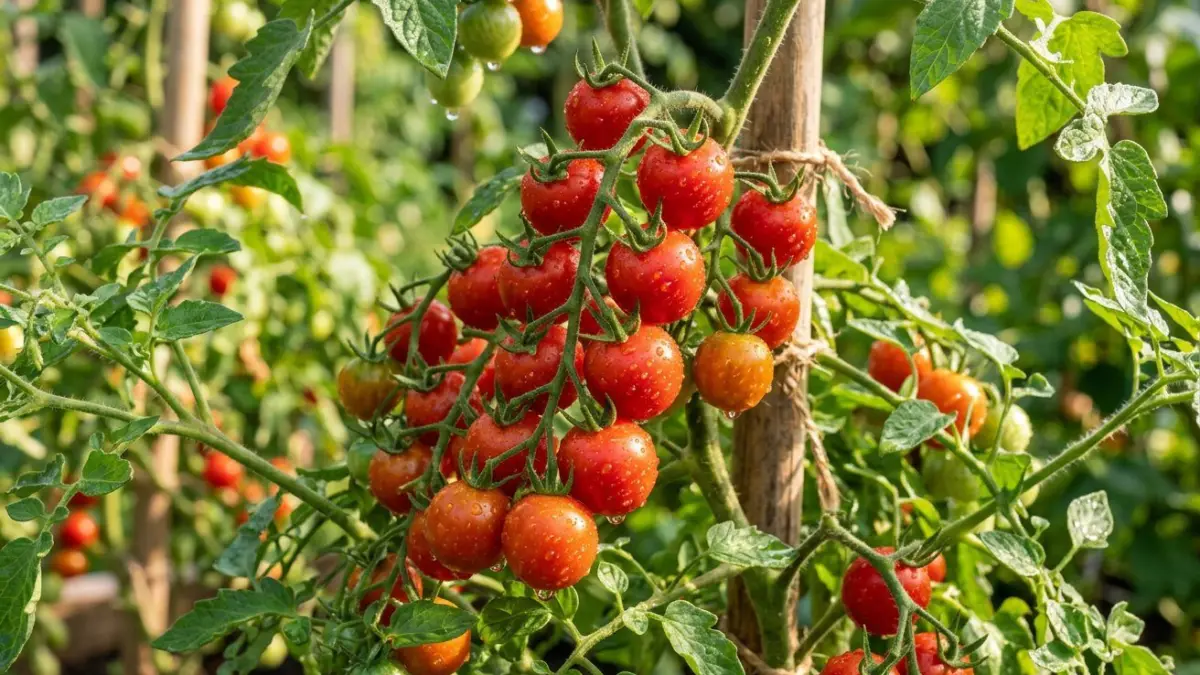
Quick answers
- Does companion planting really work?
- Partly. Pest and predator effects are best supported: flowering strips that feed hoverflies and parasitic wasps, trap crops, and dense French marigolds against root-knot nematodes. Many classic pairings, such as basil making tomatoes taste better, have little or no trial evidence. Judge each by its mechanism.
- Which plants should not be grown together?
- Keep tomatoes, peppers and potatoes well beyond the drip line of a black walnut, whose roots release juglone. Separate tomatoes from potatoes because they share late blight, and keep dill and fennel apart if you save seed, because they cross. Avoid pairing thirsty crops with drought-lovers in one pot.
- What flowers help a vegetable garden most?
- Sweet alyssum, dill, coriander left to flower, calendula and phacelia feed hoverflies and parasitic wasps. Plant them in or right beside the crop beds and keep something in bloom from spring to autumn. Nasturtium works as a trap crop for aphids, but only if you monitor it.
- Can I plant everything together in one bed?
- You can, if the plants share light, water and feeding needs. Tall crops will shade low ones, and heavy feeders such as squash and sweetcorn will starve neighbours in poor soil. Keep crop families grouped enough that you can still rotate them next year.
Key takeaways
- Best evidence: flower strips for predators, trap crops, dense marigolds for root-knot nematodes
- Weak evidence: basil improving tomato flavour, garlic repelling pests from roses
- Physical barriers (fleece, netting) beat scent-based protection for carrot fly
- Match water, light and feeding needs before chasing any "friendly" pairing
Table of contents10 sections
- Companion planting at a glance
- What the research on companion planting does and does not show
- Companion planting pairings graded by evidence
- Choosing flowers that feed the pest controllers
- Real companion planting conflicts to plan around
- How to build a companion planting mixed bed
- Three combinations worth trying
- Troubleshooting companion planting in a mixed bed
- Common mistakes
- Next steps
Companion planting asks what grows well together, and what the evidence says, because some pairings control pests while others only sound good in theory.
Companion planting works when it uses a real mechanism, such as feeding predatory insects, drawing pests to a sacrificial crop, or providing shade, and it fails when it relies on a folk rule. Pest and predator effects have the best support. Flavour, “chemical repellent” and root-communication claims mostly don’t. This guide sorts well-supported pairings from tradition, then shows how to build a mixed bed around the ones that hold up.
It sits within the Vegetables & Herbs guides. Planning a bed from scratch is covered in How to Start a Vegetable Garden from Scratch, and the insects that do the pest control are profiled in Beneficial Insects.
Companion planting at a glance
| Mechanism | Evidence | Typical example |
|---|---|---|
| Flowers that feed predators and parasitoids | Good, in field trials | Sweet alyssum, dill or calendula in or beside the bed |
| Trap crops | Moderate, needs management | Nasturtium for aphids, radish for flea beetle |
| Marigolds against nematodes | Good for root-knot, only if used as a full-season cover | French marigold, 15 to 20 cm (6 to 8 in) apart |
| Shade and shelter | Strong, simple physics | Lettuce under trellised beans in summer |
| Space sharing (fast crop between slow ones) | Strong | Radish sown between parsnip rows |
| Strong scent as pest camouflage | Weak to mixed | Onion rows beside carrots |
| Flavour or growth “boosting” | Little to none | Basil improving tomatoes |
What the research on companion planting does and does not show
Reviews of field trials generally find that mixed plantings carry fewer plant-eating insects and more natural enemies than single-crop blocks. Yield results are less consistent: sometimes higher, often unchanged, occasionally lower because plants compete. That is a useful baseline. Diversity helps with pests, but it doesn’t guarantee a bigger harvest.
Most individual pairings have not been tested properly. A gardener who plants basil beside tomatoes and sees a good crop has not tested anything, because the tomatoes might have done as well alone. When a pairing is untested, the decision rule is simple: it’s fine if both plants want the same conditions, and not worth a space if it replaces something proven.
Companion planting pairings graded by evidence
| Pairing | Claim | Verdict |
|---|---|---|
| Sweet alyssum or dill near lettuce, brassicas, beans | Nectar feeds hoverflies and parasitic wasps that cut aphids | Well supported; the flowers must be open when aphids arrive |
| French marigold (Tagetes patula) grown densely for a season | Suppresses root-knot nematodes | Supported for Meloidogyne species; useless as a single plant in a border |
| Nasturtium beside brassicas and beans | Pulls aphids and caterpillars away | Plausible; the trap plant becomes an aphid nursery unless you remove it |
| Corn, climbing beans and squash (“Three Sisters”) | Support, nitrogen and ground cover | A working traditional system; the nitrogen benefit is mostly to later crops |
| Lettuce or spinach in the shade of taller crops | Delays bolting | Strong in hot summers, since lettuce bolts readily above about 25 to 27°C (77 to 81°F) |
| Carrots with onions or leeks | Scent confuses carrot fly | Mixed; a fleece or mesh barrier 60 to 80 cm (24 to 32 in) high works better |
| Radish with cucumber or squash | Deters cucumber beetle | Mixed to weak; depends on the region |
| Basil with tomato | Deters pests, improves flavour | Little evidence; harmless, as both like sun and warmth |
| Garlic around roses or fruit trees | Repels aphids, prevents disease | Weak |
On nitrogen: beans and peas fix atmospheric nitrogen through root bacteria, but they use most of it themselves. Companions get a modest share, mainly after the plants die back. Cut the tops and leave the roots in the soil to benefit the next crop.
Choosing flowers that feed the pest controllers
The best-supported mechanism needs the most care to get right. Adult hoverflies and tiny parasitic wasps feed on nectar, and their larvae or offspring do the killing. Their mouthparts are short, so they can only reach nectar in small, open, shallow flowers. Showy double-flowered garden forms and deep tubular flowers are poor value for this job.
| Flower | Sow | Flowers from | Notes |
|---|---|---|---|
| Sweet alyssum | Spring, then again in early summer | About 6 to 8 weeks after sowing | Low edging; tolerates light frost; trim back after the first flush |
| Dill and coriander (left to bolt) | Every 3 to 4 weeks | 8 to 10 weeks | Umbels suit tiny wasps; stake dill in wind |
| Calendula (single-flowered types) | Spring or early autumn | About 8 weeks | Deadhead to keep it going; double forms offer less nectar |
| Phacelia or buckwheat | Anywhere there is a gap | 5 to 8 weeks | Quick cover for empty beds; cut before seed if you do not want it back |
| Borage | Spring | 8 to 10 weeks | Great for bees; it self-seeds freely, so site it at the edge |
A practical target is one flowering plant for every few vegetable plants, with the flowers at the bed edge or in the gaps rather than in a separate border across the garden. Predators can only protect what they can find.
Real companion planting conflicts to plan around
Some “bad neighbour” rules are real, others are tradition, and a few reflect competition rather than chemistry.
- Black walnut: roots and fallen leaves release juglone, which harms tomato, potato, pepper, aubergine and apple. The zone of damage reaches at least the drip line and often further, so raised beds on a barrier or a different spot are the fix.
- Tomatoes and potatoes: they get the same late blight, so a nearby infected crop is a source of spores. Separate them, and rotate.
- Dill and fennel: they cross-pollinate, which affects saved seed. The claim that fennel poisons all neighbours is poorly documented, but it grows 1.5 to 2 m (5 to 6 ft) tall and self-seeds, so give it its own corner.
- Onions with peas and beans: a long-standing rule with little trial backing. Onions are shallow-rooted and poor competitors, so the practical issue is weeds and shade, not chemistry.
- Heavy feeders side by side: squash, sweetcorn and tomatoes in one tight bed will compete for water and nutrients regardless of any “affinity”.
- Mint and lemon balm: they spread by runners, so plant in a pot (see Herb Garden Essentials).
How to build a companion planting mixed bed
- Choose crops by shared needs. Group sun-loving, thirsty crops (tomato, pepper, basil) apart from drought-tolerant herbs (thyme, rosemary, oregano).
- Set height layers. Trellised beans or tomatoes on the north side in the northern hemisphere (south side in the southern), medium crops in the middle, low leaves at the front.
- Add a flower line. Sow alyssum along bed edges and dill or calendula every 3 to 4 m (10 to 13 ft) so no crop is far from nectar.
- Fill gaps with fast crops. Sow radish or baby salad between slow crops. They finish in 25 to 45 days, before the slow crop needs the room.
- Keep families together. Put tomato-family plants in one zone and brassicas in another so rotation stays workable.
- Leave airflow. Crowding helps leaf diseases such as blight and powdery mildew spread. Follow the spacing on the seed packet, not the smallest gap that fits.
Flowers only help if they are in bloom when the pests arrive. Stagger sowings of alyssum and calendula by 3 to 4 weeks, so something is flowering from late spring to the first frosts.
Three combinations worth trying
- Tomato, basil, French marigold, alyssum: shared sun and water needs. The marigolds only reduce nematodes if used as a dense cover in infested soil, so treat them here as flowers. The tomato itself is covered in How to Grow Tomatoes.
- Brassicas, dill, nasturtium: dill supports parasitic wasps, nasturtium soaks up aphids. Inspect the nasturtium weekly and bin heavily infested plants.
- Carrots under fleece with calendula nearby: the barrier does the protecting, the flowers feed predators of aphids on other crops.
Troubleshooting companion planting in a mixed bed
| Symptom | Likely cause | Fix |
|---|---|---|
| Trap crop covered in aphids, spreading to the main crop | Trap plant left unmanaged | Remove and bin the infested trap plants, replant fresh ones |
| Low crops pale and leggy | Shaded by taller neighbours for more than half the day | Move or prune; leafy crops need about 4 hours of sun |
| Carrots forked or stunted among other crops | Root competition or compacted soil | Give roots 5 to 8 cm (2 to 3 in) spacing and loosen soil first |
| Marigolds flowering but root-knot still present | Too few plants or too short a season | Sow densely over the whole bed for a full season and dig the plants in |
| Flowers present but pest numbers still high | Flowers not in bloom when pests arrived, or wrong species | Plant small-flowered types (alyssum, dill, coriander) that predators can reach |
Common mistakes
- Treating companions as a substitute for barriers. Scent confusion is unreliable, so fleece and netting remain the dependable defence against carrot fly and cabbage white. Use both.
- Using one marigold as a nematode fix. The effect needs a dense planting across a full season, then digging in. A single plant does nothing measurable.
- Ignoring competition. If two plants want the same water and nutrients, “friendly” makes no difference. Space for the larger plant’s mature size.
- Planting a trap crop and never checking it. It then multiplies the pest. Inspect weekly and remove it when infested.
- Dropping rotation. Mixed beds still need rotation. Soil diseases build up in family groups, whatever grows beside them.
Next steps
Choose crops that reward a first mixed bed from 7 Easiest Vegetables to Grow, build the soil with Composting at Home, and learn which pests are worth the effort of controlling in Common Garden Pests and Organic Control. Back to the Vegetables & Herbs guides.
Frequently asked questions
Can I plant basil and tomatoes together?
Yes. Both like sun, warmth and regular water, so they share a bed easily. The idea that basil improves tomato flavour or repels pests has little trial evidence, so treat it as a handy kitchen pairing rather than a pest control method.
Do marigolds really keep pests away from vegetables?
Only in specific cases. Dense French marigolds grown for a full season can suppress root-knot nematodes. A few plants in a border do little against aphids or whitefly. Single-flowered types also feed hoverflies, which gives a modest benefit.
What is a trap crop in companion planting?
A trap crop is a plant that pests prefer, grown to draw them away from your main crop. Nasturtium for aphids and radish for flea beetle are examples. Remove or treat it once pests build up, or it becomes a nursery for them.
What are the Three Sisters in companion planting?
The Three Sisters are sweetcorn, climbing beans and squash grown together. Corn supports the beans, beans fix some nitrogen and squash leaves shade the soil. It is a traditional system that works in rich, moist soil, though the nitrogen benefit mainly helps later crops.
Does planting onions next to carrots stop carrot fly?
Not reliably. Onion scent may confuse carrot fly, but trial results are mixed. A fleece or mesh barrier 60 to 80 cm high works better, because the fly stays low. Sow thinly to avoid thinning, since bruised foliage gives off the scent that attracts it.
Can I plant herbs among my vegetables?
Yes, if their needs match. Basil, parsley, coriander and chives suit moist, richer beds. Thyme, rosemary and oregano want lean, dry soil, so grow them apart, and keep mint in a pot. Dill and coriander left to flower also feed hoverflies.
How close should flowers be to my vegetable beds?
Right at the bed edge or in gaps within the bed. Beneficial insects only protect crops they can find, so a flower border across the garden helps little. Aim for one flowering plant for every few vegetables, with something in bloom from spring to autumn.
Is it true that fennel harms nearby vegetables?
The claim is poorly documented. Fennel crosses with dill, which affects saved seed, and it grows 1.5 to 2 m (5 to 6 ft) tall and self-seeds freely. Give it its own corner rather than worrying about chemical effects on neighbours.
Do beans and peas feed neighbouring plants with nitrogen?
Only a little. They fix nitrogen through root bacteria but use most of it themselves. Neighbours get a modest share, mostly after the plants die back. Cut the tops and leave the roots in the soil to feed the next crop.
What can I grow near a black walnut tree?
Choose tolerant plants, because black walnut roots and leaves release juglone, which harms tomatoes, potatoes, peppers, aubergines and apples. Damage reaches at least the drip line. Grow vegetables elsewhere, or in raised beds on a barrier, and ask a local nursery about tolerant plants.
More in Vegetables & Herbs
Harvesting and Storing Vegetables: Timing, Curing and Keeping
Harvest signs for common crops, curing for onions, squash and potatoes, storage temperatures and safe preserving, so your harvest lasts for months.
Raised Bed Vegetable Gardening: Building, Filling and Planting Your Beds
How to size, build and fill a raised bed, which soil mix to use, how to plant it densely and how to water and feed a…
Best Raised Bed Kits
How to choose a raised bed kit: timber, steel and composite compared, ideal sizes and heights, board thickness, how much soil you need and how to…