
Quick answers
- How often should I scout the garden?
- Once a week in the growing season, and twice a week in warm, humid spells or when seedlings are small. Walk the same route and check 10 plants per bed, including leaf undersides and stem bases.
- How long should crop rotation be?
- A 3 to 4 year gap before the same plant family returns to a bed is the usual minimum. For club root and onion white rot, spores can last many years, so rotation alone will not clean an infected bed. See plant diseases.
- Do resistant varieties mean no disease?
- No. Resistance means the plant tolerates or slows a specific disease, usually specific strains of it, not every problem. Keep up spacing, watering and hygiene, because resistance can be overcome by new strains.
- When should I act on a pest I find?
- Act early on pests that multiply fast or are destructive in small numbers, such as slugs on seedlings or vine weevil. Tolerate small aphid colonies if ladybird or hoverfly larvae are present, and check again in 3 to 4 days. See beneficial insects.
Key takeaways
- Scout weekly on a fixed route, checking leaf undersides, stem bases and new growth
- Set action rules in advance: act at once on seedling losses and fast-breeding pests, wait on small aphid colonies with predators
- Rotate plant families on a 3 to 4 year cycle, longer for club root and white rot, and choose resistant varieties for your worst disease
- Time sowing, planting and pruning to dodge pest flights and infection windows
Table of contents10 sections
- Preventing garden problems at a glance
- A garden scouting routine that finds problems early
- Garden action thresholds you can use
- Resistant varieties: choose for the disease you actually have
- Garden crop rotation intervals
- Timing garden problems: dodge the peak
- Diagnosing the garden problem pattern
- How early habits prevent garden problems before they start
- Common mistakes
- Next steps
Preventing garden problems before they start is the master guide to healthy soil, spacing, watering and early checks.
The most effective prevention is a weekly 10 minute inspection with decisions made in advance: what you’ll tolerate, what you’ll act on, and when. Combine that with resistant varieties for your worst disease, a rotation gap of 3 to 4 years between plant families, and tasks timed to miss the main pest flights and infection periods. This guide covers the routine, thresholds, resistance, rotation intervals and calendar timing.
It belongs to the Pests & Diseases guides. The cleaning and disposal side is in Garden Hygiene, treatments are in Common Garden Pests and Organic Control, and keeping predators around is in Beneficial Insects.
Preventing garden problems at a glance
| Lever | Practical rule |
|---|---|
| Scouting | Weekly, same route, 10 plants per bed, 10 minutes |
| Seedling stage | Check every 2 to 3 days; losses of 1 in 10 plants in a week mean a barrier is needed |
| Rotation, most crops | 3 to 4 years between same family in the same bed |
| Club root and white rot beds | No host crops for many years; spores can last up to 15 to 20 years |
| Resistant varieties | Choose for your known problem disease, not in general |
| Quarantine | New plants isolated for 2 to 3 weeks |
| Records | One line per walk: date, what you saw, what you did |
A garden scouting routine that finds problems early
Most disease and pest outbreaks are cheap to stop in the first week and expensive in the fourth. Scouting turns that into a habit. Walk the same route on the same day, so you notice change. Spend 10 minutes, not an hour.
- Pick three to five stops such as the vegetable beds, the roses, the fruit trees and the greenhouse. Start each walk at the same place.
- Sample, don’t stare. At each stop turn over leaves on about 10 plants, including young growth, the lower leaves and the leaves in the shade. Check the stem at soil level for rot, chewing or webbing.
- Look for the early signs. Sticky honeydew or ants running up stems (aphids), fine stippling and webbing (spider mite), tiny holes in seedlings (flea beetle), orange egg clusters under brassica leaves, slime trails, and the first spotted or curled leaf.
- Use a hand lens or phone camera to confirm small pests such as thrips or mites. A white sheet of paper held under a shaken branch shows what falls off.
- Write one line down. A running note shows patterns across seasons, such as which bed gets mildew each August.
- Decide then and there. Remove, monitor or treat, using the rules below.
Yellow sticky traps, about 1 per 10 square metres in a greenhouse, show whitefly and fungus gnat trends before you can see them on plants. They are monitoring tools, not a control on their own, and they catch beneficial insects too, so use them under cover rather than outdoors.
Garden action thresholds you can use
Professional growers use formal thresholds for commercial crops. Home gardeners need simpler rules, which are practical guidelines rather than official figures. The principle: tolerate what natural enemies will handle, and act fast on what grows exponentially or destroys a plant at one stage.
| Situation | Decision rule |
|---|---|
| Aphids on a few shoot tips, predators or ladybird larvae present | Wait 3 to 4 days and recheck. Rub off or wash off if the colony grows and no predators appear. |
| Aphids curling the growing tips of most shoots on a young plant | Act now: water jet, hand removal or an appropriate organic spray (see the pest guide). |
| Slug damage on seedlings or lettuce | Act immediately. Seedlings can be destroyed in a night, so protect them before true leaves develop. |
| Caterpillars or eggs on brassicas | Hand-pick weekly. Cover with fine mesh if you find more than a few eggs per plant. |
| Vine weevil grubs, Colorado beetle, box tree moth | Act on the first sighting. They spread fast or kill the plant. |
| Mildew on a few lower leaves late in the season | Remove those leaves and keep going. Late mildew rarely reduces yield much. |
| Early blight or late blight spots on tomato or potato | Remove affected leaves, improve airflow and, for late blight, remove the plant if it keeps spreading in wet, mild weather. |
| Virus symptoms (mottled, distorted leaves) | Remove the plant, as virus has no cure. |
Tolerance has a limit, but it’s a real advantage. A garden with a few aphids feeds the ladybirds, lacewings and hoverflies that keep the next outbreak small.
Resistant varieties: choose for the disease you actually have
Resistance is a breeding trait that reduces damage from a specific pathogen. It’s most useful for diseases that are hard to manage by other means. Seed packets and catalogues use codes and descriptions.
| Crop and problem | What to look for | Limit |
|---|---|---|
| Tomato: Verticillium, Fusarium wilt, nematodes | Letters V, F and N after the variety name (for example VFN) | Resistance is to named strains, not all wilts |
| Tomato and potato late blight | Varieties bred for blight resistance, such as the tomato Defiant PhR or the potato Sarpo Mira | Resistance may break down as new blight strains appear, and flavour and growth habit vary |
| Cabbage family: club root | Club-root-resistant brassicas, for example the cabbage Kilaxy | Resistance can erode if grown repeatedly in infected soil |
| Cucumber, courgette and squash: powdery mildew | Described as mildew resistant or tolerant | Tolerance still shows some mildew late in the season |
| Apple: scab | Scab-resistant types such as Liberty | Other diseases still apply, and local rootstock choice matters |
Check your region’s extension service or a regional seed catalogue for which resistance genes are relevant locally. Resistance to one disease says nothing about another, so a blight-resistant tomato can still get blossom end rot, which is a watering problem covered in Watering Plants the Right Way.
Garden crop rotation intervals
Rotation starves pathogens and pests that depend on a specific plant family. It works best for problems that survive in soil for a limited time, and less well for long-lived resting spores. Divide the vegetable garden into at least three or four beds and move families around each year.
| Family | Examples | Typical gap | Main reason |
|---|---|---|---|
| Nightshades | Potato, tomato, pepper, aubergine | 3 to 4 years | Blight, wilts, potato cyst nematode |
| Brassicas | Cabbage, broccoli, kale, radish, turnip | 3 to 4 years (up to 20 where club root is present) | Club root, cabbage root fly, clubroot spores |
| Alliums | Onion, garlic, leek | 3 to 4 years (very long where white rot is present) | White rot, rust, onion fly |
| Carrot family | Carrot, parsnip, celery, parsley | 3 years | Carrot fly, canker, nematodes |
| Legumes | Peas, beans | 2 to 3 years | Root rots, pea moth, soil fatigue |
| Cucurbits | Courgette, cucumber, squash | 2 to 3 years | Mildew carry-over, wilt, viruses |
Rotation won’t clean a bed with club root or white rot. For those, avoid host crops entirely, raise soil pH to about 7.2 to 7.5 for club root where practical, grow susceptible crops in pots with fresh compost, and keep soil off boots and tools. In small gardens where rotation is impractical, grow a family in containers, change the compost each year and never reuse it for the same family.
Timing garden problems: dodge the peak
- Sow after soil warms. Seeds in cold, wet soil sit and rot, which invites damping-off. Most warm-season crops want soil above about 12 to 15°C (54 to 59°F) at sowing.
- Time carrots around carrot fly. In cool-temperate regions, the main egg-laying periods are typically late spring and again in late summer. Sowing a little later in spring or covering with fine mesh helps. A barrier 60 to 90 cm (24 to 36 in) high works because the fly stays low.
- Cover brassicas at planting, not after the first caterpillar. Fine mesh with edges buried or pinned stops cabbage white butterflies and cabbage root fly.
- Water before midday and early in the season while soil is cool.
- Prune in dry weather. Wet conditions spread spores into cuts. Stone fruit such as plums and cherries are usually best pruned in summer, in leaf, when silver leaf and bacterial canker are less active.
- Clear leaves in autumn from roses, apples and tomatoes before they harbour spores over winter.
- Harden off seedlings, since sudden cold, wind or sun stress makes plants more attractive to pests and disease.
Diagnosing the garden problem pattern
| Symptom | Likely cause | Fix |
|---|---|---|
| Same crop fails in same bed each year | Soil-borne disease or pest building up | Lengthen rotation, switch to resistant varieties, use containers for that crop |
| Seedlings vanish overnight | Slugs, snails or cutworm | Collar, cover or hand-check at dusk; see the pest guide |
| Problems appear only on plants bought recently | Pests or disease arrived on new plants | Quarantine for 2 to 3 weeks and inspect roots |
| Disease strongest in the centre of dense plantings | Poor airflow, leaves staying wet | Thin growth and re-space; see Garden Hygiene |
| Wilting with moist soil | Root rot or vascular wilt | See Troubleshooting Wilt and Yellowing |
How early habits prevent garden problems before they start
Healthy soil rich in compost and humus feeds plants and supports earthworm and microbe life, which controls many diseases. Mulch reduces weeds and holds moisture, so tomato and lettuce suffer less stress and fewer pests. A weekly walk spots aphid and slug while numbers are small, and you’ll act before damage spreads.
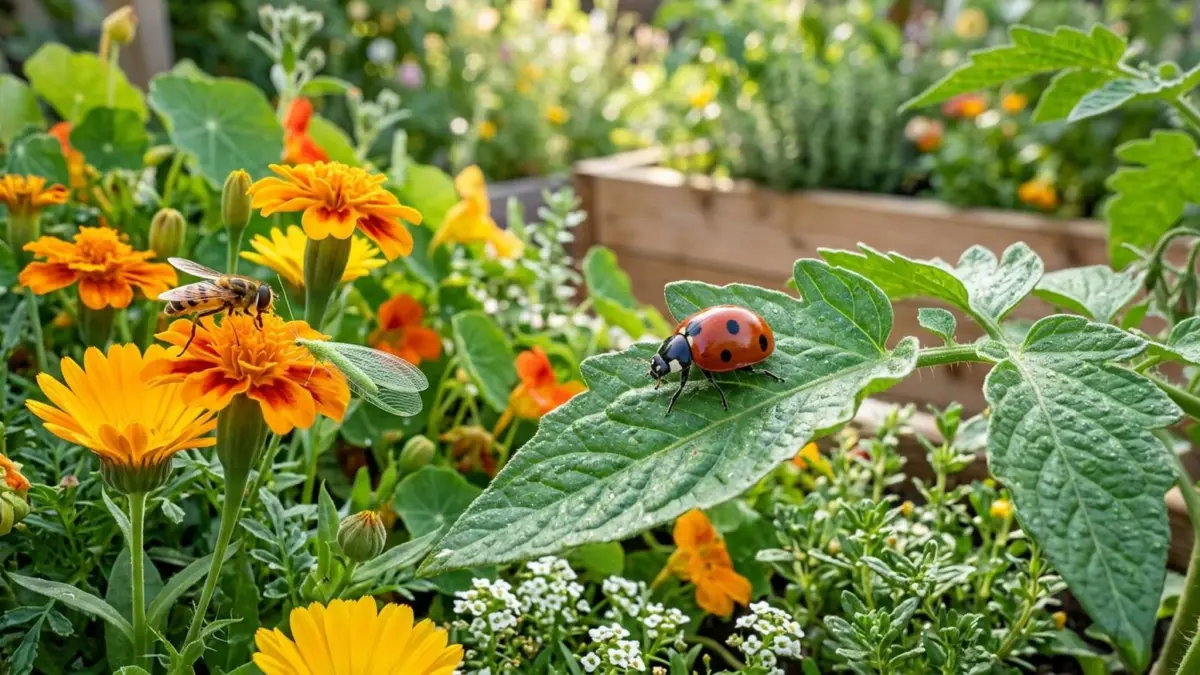
Crop rotation prevents club root, blight and nematode build-up, and resistant varieties protect tomato and potato from disease. Netting and fleece block caterpillar and carrot fly without chemicals. Good spacing of 30 cm improves airflow and reduces powdery mildew and botrytis. Water at the roots with a drip line and avoid wet leaves that encourage fungus. Look at the underside of leaves, because spider mite, whitefly and aphid hide there, and a hand lens helps. Marigold and borage attract hoverfly that controls aphid, and a bed of lavender feeds bee through July. Clean secateurs and pots stop virus spreading, and a compost heap above 55°C kills weed seeds. Soil tests every 3 years guide lime and fertiliser. Your local extension service issues pest alerts that help you time sprays and traps, and the garden hygiene guide shows the habits that matter.
Common mistakes
- Scouting only the tops of leaves. Most pests live under leaves and in new growth. Turn leaves over.
- Treating every pest on sight. Spraying wipes out predators that would have handled the aphids. Use thresholds and recheck in 3 to 4 days.
- Waiting to cover brassicas. By the time you see caterpillars, plants are damaged. Cover at planting.
- Rotating only tomatoes. Potatoes, peppers and aubergines are close relatives and carry the same problems. Rotate by family.
- Trusting resistance as total protection. It covers one disease. Keep up hygiene, spacing and watering.
- Planting out too early. Cold-stressed seedlings stall and become easy targets. Wait for the soil to warm.
Next steps
Put the habits into practice with Garden Hygiene for tool and waste routines, use Plant Diseases: Identify and Treat the Big Five to identify what you find, and read Protecting Your Garden from Birds, Deer, Cats and Critters for larger visitors. Back to the Pests & Diseases guides.
Frequently asked questions
What do the letters V, F and N mean on tomato seed packets?
They show resistance to Verticillium wilt, Fusarium wilt and nematodes. A variety marked VFN resists named strains of all three. Resistance is to specific strains, not every wilt, so rotation and good hygiene still matter. Check the seed packet or catalogue for the full code list.
Do yellow sticky traps help with monitoring pests?
Yes, under cover. About 1 trap per 10 square metres in a greenhouse shows whitefly and fungus gnat trends before you see them on plants. They also catch beneficial insects, so avoid hanging them outdoors, and treat them as a monitoring tool rather than a control.
How long can club root spores last in soil?
Club root and onion white rot spores can persist for up to 15 to 20 years. Rotation alone will not clean an infected bed, so avoid host crops for many years, improve drainage, and choose resistant varieties of brassicas where possible.
Why should I quarantine new plants before planting them out?
New plants can carry hidden pests and diseases from the nursery. Keep them apart for 2 to 3 weeks, check leaf undersides weekly, and only plant them out once they look healthy. It is a cheap way to protect established plants.
What should I write in a garden scouting diary?
One line per walk is enough: the date, what you saw, and what you did. Over several seasons it shows patterns, such as which bed gets mildew each August. That lets you time prevention before the problem returns. Add a quick photo if a problem is unclear.
How can I protect seedlings from slug damage?
Act immediately, because slugs can destroy seedlings overnight. Raise seedlings in pots and plant out when they are larger and tougher, and use barriers or traps. Check every 2 to 3 days. If you lose 1 in 10 plants in a week, add a barrier.
Should I remove mildew leaves late in the season?
Yes, but do not worry much. Remove the few affected lower leaves and carry on. Late mildew rarely reduces yield much. Keep air moving round plants and water the roots, and note which crops need earlier attention next year. Bin the leaves rather than composting them in a cool heap.
Does crop rotation work in containers and small plots?
In containers, use fresh compost each year and avoid growing the same family in the same pot repeatedly. In small plots, split the bed into groups and move families round. Even a shorter gap helps, though 3 to 4 years is the usual minimum.
Which vegetables belong to the same rotation family?
Brassicas include cabbage, kale and broccoli. The potato family includes tomato, potato, pepper and aubergine. Others include legumes, alliums, roots and cucurbits. Keep each family out of the same bed for 3 to 4 years to limit soil-borne pests and diseases.
Can too much nitrogen fertiliser cause more pests?
Yes. Heavy nitrogen feeding produces soft, sappy growth that suits aphids and spider mites. Feed at the rate on the label, and favour steady, balanced feeding. Healthy, slower growth tolerates pests better and attracts fewer sap-suckers. Overfed plants also tend to flop and rot more easily.
More in Pests & Diseases
Garden Hygiene: Sanitation That Prevents Problems
Disinfect tools with 70% alcohol or a 1 in 10 bleach mix, know which diseased waste goes in the bin, and water and space plants so…
Troubleshooting Wilt, Yellowing and Mystery Symptoms
A symptom-first diagnostic tree for wilting, yellowing, spots, curling and stunting: simple tests for water, light, nutrients, roots, pests and disease before you spray anything.
Slugs and Snails: Natural Control That Actually Works
How to find, trap and deter slugs and snails without harming wildlife: night patrols, barriers, traps, nematodes, resistant plants and safe use of pellets.