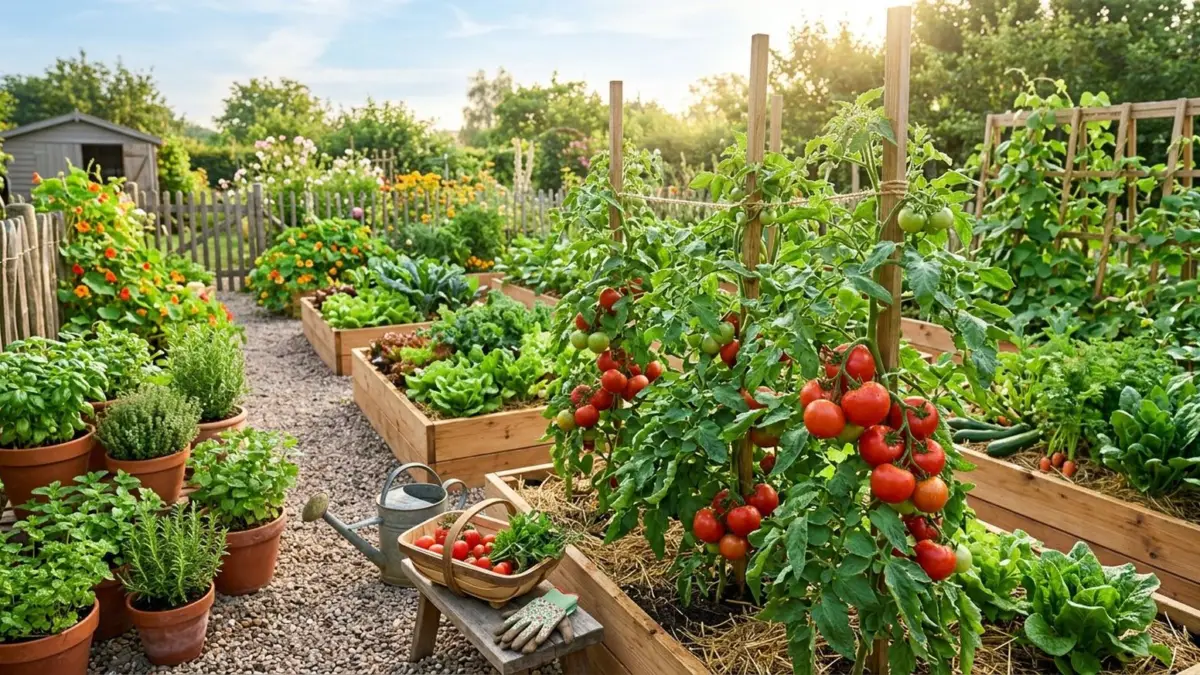
Quick answers
- How do I know when a vegetable is ready to pick?
- Use the crop-specific sign rather than a date: zucchini at 15 to 20 cm (6 to 8 in), beans when pods snap crisply, sweet corn when silks turn brown and a kernel releases milky juice, onions when the tops fall over. Check the harvest table in this guide for more crops.
- What is curing and which crops need it?
- Curing is a short period of controlled drying or warming that toughens skins and heals wounds so a crop stores longer. Onions, garlic, potatoes, winter squash and pumpkins all need it before storage.
- Should tomatoes go in the fridge?
- No. Chilling below about 10°C (50°F) dulls flavour and makes texture mealy. Keep ripe tomatoes on the counter and refrigerate only cut or overripe fruit you plan to use within a day or two.
- Is home canning safe for vegetables?
- Low-acid vegetables must be pressure canned following a tested recipe from a recognised authority, because boiling-water canning cannot kill botulism spores. Freezing, drying and fermenting with tested ratios are safer for beginners.
Key takeaways
- Harvest by sign, not by date, and pick in the cool of the morning
- Cure onions, garlic, potatoes and winter squash before storing
- Store each crop at its own temperature and humidity
- Use tested methods for freezing and canning, especially low-acid vegetables
Table of contents12 sections
- Harvest basics
- When each crop is ready
- Curing: the step most people skip
- Storage conditions by crop group
- Freezing: quick and forgiving
- Drying, fermenting and canning
- Plan harvests so nothing is wasted
- Food safety at harvest
- How harvest timing and storage protect flavour
- How harvest timing, curing and keeping protect your vegetables
- Common mistakes
- Next steps
Harvesting and storing vegetables depends on timing, curing and keeping them in the right conditions, so your crops stay fresh for weeks or months.
A good harvest can be wasted in a week by picking too early, bruising fruit or storing crops at the wrong temperature. Timing decides flavour, and storage decides how long you eat from the garden. This guide gives the signs for when each common crop is ready, how to cure and store it, and which preserving methods are safe.
It’s part of the Vegetables & Herbs guides and works with Start a Vegetable Garden, Easy Vegetables for Beginners and Succession Planting.
Harvest basics
- Pick in the cool of the morning when leaves and stems are full of water, and move produce to shade quickly.
- Use clean, sharp tools. Snip rather than pull to avoid damaging plants that will produce again.
- Pick regularly. Beans, zucchini, cucumbers and peas stop producing if mature fruit stays on the plant.
- Handle gently. Bruises are entry points for rot and shorten storage life.
- Don’t wash crops you’ll store. Brush off soil and wash just before use, except leafy greens you plan to refrigerate right away.
- Keep damaged items separate. Eat them first.
When each crop is ready
| Crop | Ready when | Notes |
|---|---|---|
| Tomato | Fully coloured and slightly soft; or at colour break to finish indoors | See How to Grow Tomatoes |
| Zucchini and summer squash | 15 to 20 cm (6 to 8 in) long, skin glossy | Pick every 1 to 2 days in summer |
| Green beans | Pods firm, snap cleanly, seeds still small | Pick every 2 to 3 days |
| Peas | Pods plump and bright green; sugar snaps before seeds bulge | Flavour turns starchy quickly |
| Sweet corn | Silks brown and dry; kernel puncture gives milky juice | Sugar converts to starch, so cook soon |
| Cucumber | Firm, uniform green, before seeds harden | Overripe fruit turns yellow and bitter |
| Lettuce and leafy greens | Outer leaves 10 to 15 cm (4 to 6 in) | Cut outer leaves to extend the harvest; bolting means bitter leaves |
| Carrots | Shoulder 1.5 to 2.5 cm across at soil level | Can stay in the ground until hard frost |
| Beetroot | 5 to 7.5 cm (2 to 3 in) across | Larger roots turn woody |
| Potatoes (new) | 2 to 3 weeks after flowering | Maincrop when foliage yellows and dies back |
| Onions and garlic | Tops fall over and begin to yellow (onions); lower third of leaves brown (garlic) | Lift on a dry day and cure |
| Winter squash and pumpkin | Rind hard, resists a thumbnail, stem corky | Harvest before hard frost, leave a 5 cm stem |
| Broccoli | Head firm and tight, before yellow flowers open | Side shoots follow |
| Herbs | Just before flowering for the strongest oils | Never take more than a third at once |
Curing: the step most people skip
Curing toughens the skins and seals cut stems, which slows rot and water loss. Skip it, and many crops fail within weeks.
| Crop | Cure | Then store |
|---|---|---|
| Onions | 10 to 14 days in a warm, dry, airy spot until necks are tight and papery | 0 to 4°C (32 to 40°F), low humidity; mesh bags or braids |
| Garlic | 2 to 4 weeks hung in shade with good airflow | Cool, dry, 10 to 15°C (50 to 60°F) |
| Potatoes | 1 to 2 weeks at 10 to 15°C (50 to 60°F), dark, high humidity | 4 to 10°C (40 to 50°F), dark, ventilated; not next to apples |
| Winter squash and pumpkin | About 10 days at 24 to 27°C (75 to 80°F) | 10 to 15°C (50 to 60°F), dry; butternut keeps longest |
| Sweet potato | 4 to 7 days warm (about 29°C or 85°F) and humid | 13 to 16°C (55 to 60°F); not the fridge |
Green or sprouting potatoes contain higher levels of glycoalkaloids (solanine). Store in the dark, discard green or bitter-tasting parts and avoid eating very green tubers.
Storage conditions by crop group
- Cold and very humid (0 to 4°C, 90 to 95% humidity): carrots, parsnips, beetroot, turnips, leeks, cabbage. Pack roots in slightly damp sand or sawdust in boxes or a cool garage, or leave carrots and parsnips in the ground under thick mulch in mild winters.
- Cold and dry (0 to 4°C, 60 to 70% humidity): onions, shallots.
- Cool and dry (10 to 15°C): garlic, winter squash, pumpkins.
- Cool and dark (4 to 10°C): potatoes.
- Room temperature: tomatoes, cucumbers, aubergines, peppers (short term). These are chilling sensitive.
- Refrigerator: leafy greens, broccoli, peas, beans, herbs such as parsley and coriander, which last longer with stems in water and a bag over the top. Basil blackens in cold, so keep it on the counter in water.
Apples and some pears release ethylene gas, which speeds ripening and sprouting in nearby vegetables. Store them apart from potatoes and carrots.
Check stored crops every one or two weeks and remove anything soft or mouldy. One rotting onion can spread decay through a whole bag.
Freezing: quick and forgiving
Most vegetables freeze better if blanched first, since the heat stops enzymes that cause off flavours. Blanch in boiling water, chill at once in iced water, drain well and freeze in a single layer before bagging.
| Vegetable | Blanch |
|---|---|
| Green beans | 3 minutes |
| Peas | 1.5 minutes |
| Broccoli florets | 3 minutes |
| Carrot slices | 2 to 3 minutes |
| Spinach and other greens | 1.5 to 2 minutes |
| Sweet corn kernels | 4 minutes on the cob, then cut off |
Tomatoes, peppers and herbs can be frozen without blanching. Chopped herbs frozen in oil or water cubes keep flavour for months. Label bags with the date and aim to eat within 8 to 12 months for best quality.
Drying, fermenting and canning
- Drying suits herbs, chillies, tomatoes and beans. Use a dehydrator at the recommended temperature or hang herbs in bunches in a warm, ventilated room until they crumble.
- Fermenting (sauerkraut, pickles) uses salt and time. Follow a tested ratio from a recognised food safety source, keep vegetables under the brine and discard anything that smells rotten or has fuzzy mould.
- Canning high-acid foods such as jams, pickles with enough vinegar and acidified tomatoes can be done in a boiling-water bath with tested recipes.
- Canning low-acid foods (plain vegetables, meat, beans) needs a pressure canner. Boiling water can’t reach the temperature needed to destroy botulism spores.
Don’t invent canning recipes or reduce vinegar or lemon in tested recipes. Use current guidance from your national food safety or extension service, and discard any jar with a bulging lid, spurting liquid or off smell without tasting it.
Plan harvests so nothing is wasted
A gluts-and-gaps pattern wastes food. Stagger sowings every two to three weeks for lettuce, radish, beans and carrots so crops mature across a longer window. Pick crops that ripen together, such as beans and sweet corn, at their peak and preserve the surplus the same day. Keep a notebook or phone list of sowing and first-harvest dates for each crop, because the data lets you plan better next season, as explained in Planning for Next Year.
- Eat first: leafy greens, peas, sweet corn, strawberries and tomatoes picked at peak flavour.
- Store next: roots, onions, garlic, potatoes and winter squash, once cured.
- Preserve: surpluses of beans, tomatoes, peppers, herbs and berries, within 24 hours of picking for best quality.
- Share: neighbours, food banks and community fridges welcome extra produce. Wash and label it clearly.
Frost timing also matters. Harvest tender crops such as tomatoes, peppers, basil and cucumbers before the first frost, and protect late crops using the methods in Frost Protection Methods.
Food safety at harvest
Home-grown food is generally very safe if you handle it sensibly. Wash your hands before picking, use clean knives and containers and keep produce out of contact with pet or wildlife droppings. If floodwater or heavy runoff has covered leafy crops or anything eaten raw, discard it, because contamination can’t be washed off reliably, and wait before replanting that bed. Where you have used manure, common guidance (for example in US organic rules) is to leave at least 90 days between application and harvest for crops whose edible part doesn’t touch the soil, and 120 days for crops that do, such as carrots, radishes and lettuce. Follow your local food-safety advice, which may differ.
- Wash just before use under cool running water, and scrub roots and squash with a clean brush.
- Chill leafy greens and cut produce promptly, since warm, moist leaves spoil and grow bacteria fast.
- Don’t eat mouldy produce. Cut away only from firm vegetables such as carrots, with a generous margin, and discard soft items entirely.
- Keep raw and cooked food apart when preparing garden produce for the kitchen.
How harvest timing and storage protect flavour
Picking courgette and bean young encourages more fruit, while leaving them to swell reduces the crop. Morning harvest keeps lettuce and spinach crisp because cool leaves hold moisture. Potato and onion need curing in a dry, airy place, which dries the skin and prevents rot in storage.
Frost sweetens kale and carrot, but it kills tomato and squash, so you should pick tender crops before the first frost. Garlic and onion need a cool, dry shed, while carrot and beetroot store in damp sand that holds humidity and stops shrivelling. A damaged potato spreads rot to its neighbours, so sort carefully and use bruised ones first. How do you know squash is ripe? A hard rind that you can’t dent with a fingernail and a dry stem show it’s ready. Your extension service publishes storage times for your region.
How harvest timing, curing and keeping protect your vegetables
Picking courgette and bean young encourages more fruit, while leaving them to swell reduces the crop by half. Morning harvest keeps lettuce and spinach crisp because cool leaves hold moisture. Potato and onion need curing for 10 to 14 days in a dry, airy place, which dries the skin and prevents rot in storage.
Frost sweetens kale and carrot, but it kills tomato and squash, so you should pick tender crops before the first frost. Garlic and onion need a cool, dry shed at 5°C to 10°C, while carrot and beetroot store in damp sand that holds humidity and stops shrivelling. A damaged potato spreads rot to its neighbours, so check the box every 2 weeks and use bruised ones first. Winter squash needs a hard rind that you can’t dent with a fingernail and a dry stem, and a week of curing in the sun improves its keeping by months. Tomato ripens indoors if frost threatens, and a banana beside the green fruit boosts ripening. Apple and pear store in crates at 1°C to 4°C, and mould spreads between touching fruit. Your extension service publishes storage times for your region, and the succession planting guide shows how to stagger harvests.
Common mistakes
- Waiting for “bigger.” Oversized zucchini, beans and cucumbers are tough and slow the plant. Pick young.
- Skipping curing. Uncured onions, garlic and squash rot quickly. Allow the time.
- Storing damaged produce. Eat bruised or cut items first, store only sound ones.
- Refrigerating everything. Tomatoes, basil, potatoes and squash suffer in the cold.
- Washing before storage. Moisture speeds rot. Brush soil off and wash at use.
- Forgetting to check. A weekly look at stored crops saves the rest of the batch.
Next steps
Match harvest and storage to what you grow. Learn to stagger sowings in Succession Planting, turn trimmings into soil in Composting at Home and plan for next year in Planning for Next Year. The Vegetables & Herbs guides holds every crop guide.
Frequently asked questions
Where is the best place to store onions and garlic?
A cool, dry, airy place, in mesh bags or braids and never sealed in plastic. Onions keep best at 0 to 4°C (32 to 40°F) with low humidity, and garlic at 10 to 15°C (50 to 60°F). Use any bulbs with soft necks first.
How long can carrots be stored after harvest?
Several months in cold, very humid conditions, at 0 to 4°C (32 to 40°F) and 90 to 95% humidity. Twist off the tops and pack roots in boxes of slightly damp sand. In mild climates, you can also leave carrots in the ground until hard frost.
Should I wash vegetables before storing them?
No, not crops you plan to store. Brush off dry soil and wash just before use, because extra moisture encourages rot. The exception is leafy greens for the fridge, which you can wash, dry well and refrigerate straight away.
Why do my potatoes turn green?
Light exposure. Green skin means higher levels of glycoalkaloids such as solanine, which taste bitter and can upset the stomach. Store potatoes in the dark, cut away small green patches and discard very green or bitter tubers.
Can I freeze garden vegetables without blanching them?
Most need blanching first. A short dip in boiling water stops enzymes that spoil flavour, colour and texture, then chill in ice water, drain and freeze in portions. A few, such as chopped onions and peppers, freeze raw. Follow a tested freezing chart for times.
How do I preserve herbs from the garden?
Cut stems just before flowering for the strongest oils, then hang small bunches in a warm, airy, shaded spot to dry. Soft herbs such as basil freeze better chopped in oil or water in ice cube trays. Store dried herbs in airtight jars away from light.
How long can I leave parsnips and carrots in the ground?
Carrots can stay until hard frost, and parsnips often stay all winter and taste sweeter after frost. In heavy, wet soil, lift them earlier to avoid slug damage and rot. In cold areas, cover the rows with a thick layer of straw.
Why do my zucchini grow huge overnight?
In warm weather they can grow several centimetres a day. Check plants every 1 to 2 days and pick at 15 to 20 cm. Oversized fruit is watery and seedy, and leaving it on the plant stops new fruit forming. Grate big ones for baking.
Do pumpkins and winter squash need to ripen fully on the vine?
Yes, until the rind is hard, resists a thumbnail and the stem is corky. Harvest before hard frost and leave a 5 cm stem. Then cure for about 10 days at 24 to 27°C (75 to 80°F) before storing.
How do I keep picked lettuce fresh?
Cut in the cool of the morning, wash in cold water and dry the leaves well. Store them in a container lined with paper towel in the fridge. They often keep for about a week, and wilted leaves can revive in cold water.
More in Vegetables & Herbs
Raised Bed Vegetable Gardening: Building, Filling and Planting Your Beds
How to size, build and fill a raised bed, which soil mix to use, how to plant it densely and how to water and feed a…
Best Raised Bed Kits
How to choose a raised bed kit: timber, steel and composite compared, ideal sizes and heights, board thickness, how much soil you need and how to…
How to Start a Vegetable Garden from Scratch
Choose a sunny site, size the plot honestly, build the soil and plant a first-season plan that works, a step-by-step start for new food growers.