Quick answers
- How big should a raised bed be?
- Keep beds 1.2 m wide so you can reach the middle from either side without stepping in. Length is up to you, and 15 to 30 cm deep suits most vegetables, with 30 cm better for carrots and parsnips.
- What should I fill a raised bed with?
- A mix of about 60% topsoil or loam, 30% compost and 10% coarse sand or grit works well for most vegetables. Avoid filling with pure compost, which sinks and can be too rich.
- Is it safe to use treated timber?
- Modern pressure-treated timber is generally considered acceptable, but old railway sleepers and CCA-treated wood are not. Untreated cedar, larch or recycled plastic boards are safe options. Check with your extension service if unsure.
- Why does a raised bed dry out faster?
- Raised soil drains freely and warms early, so it loses water faster than ground soil. A 5 cm mulch and drip lines or a soaker hose keep moisture steady.
Key takeaways
- Keep raised beds 1.2 m wide so you never need to walk on the soil
- Fill with about 60% loam, 30% compost and 10% grit rather than pure compost
- Raised beds warm early and drain well, so water and mulch them regularly
- Plant densely and rotate crops each year to use the space well
- Choose safe materials such as untreated cedar, larch or recycled plastic
Table of contents10 sections
- Raised bed vegetable gardening at a glance
- Where to put raised beds and what to build them from
- How to build and fill a raised bed step by step
- How raised bed soil affects vegetables, water and feeding
- Planting a raised bed densely
- Which crops suit raised beds best
- Protecting a raised bed from pests and weather
- Raised bed care through the year
- Common mistakes
- Next steps
Raised bed vegetable gardening gives you warmer, better-drained soil in a bed you never walk on, so building, filling and planting your beds well produces more food from less space.
A raised bed is simply a frame filled with good soil. It suits heavy clay, poor ground and small gardens, and it’s easy to reach and easy to protect. This guide covers the size, materials, soil mix, planting plan and care that make a raised bed vegetable garden productive. It’s general information, and your local extension service or the Royal Horticultural Society (RHS) can add advice for your soil and climate.
It belongs to the Vegetables and Herbs guides and works with How to Start a Vegetable Garden, Container Vegetable Gardening and Companion Planting.
If you only do one thing: keep the bed 1.2 m wide and fill it with loam, compost and grit, not compost alone.
Raised bed vegetable gardening at a glance
| Decision | Recommended choice | Why |
|---|---|---|
| Width | 1.2 m | You can reach the middle from both sides |
| Length | 2 to 3 m | Easy to cover with netting or a cloche |
| Depth | 20 to 30 cm | Enough for roots of most vegetables |
| Path width | 50 to 60 cm | Room for a wheelbarrow and kneeling |
| Soil mix | 60% loam, 30% compost, 10% grit | Drains well and still holds nutrients |
| Mulch | 3 to 5 cm of compost or straw | Reduces watering and weeds |
| Position | 6 to 8 hours of sun | Tomato, pepper and bean need strong light |
These are typical values. Your site and crops may need slightly different sizes, so check what suits your soil and climate.
Where to put raised beds and what to build them from
Choose a level spot with at least 6 hours of sun, shelter from strong wind and a tap within reach. Tomato, pepper and bean need sun, while lettuce and spinach tolerate partial shade. Avoid placing beds under large trees, because roots from willow, birch or maple invade and steal water. Cedar and larch resist rot for years, and recycled plastic boards last longest. Avoid old railway sleepers and wood treated with CCA, which can leach chemicals. A bed of 30 cm depth also suits root crops such as carrot and beetroot.
How to build and fill a raised bed step by step
- Mark and level. Peg out a 1.2 m wide rectangle and level the ground with a rake.
- Lay cardboard. A layer over the grass smothers weeds and rots down, while worms pull it into the soil.
- Build the frame. Screw boards at the corners with stakes of 5 cm wood inside. Use 20 to 30 cm height.
- Add coarse material at the base if you wish. A thin layer of small branches saves soil, but isn’t needed in a shallow bed.
- Fill with the mix. Use about 60% loam, 30% compost and 10% grit, in layers, and fork them together lightly.
- Water and settle. Let it rest for a week, then top up. Soil settles by 2 to 3 cm.
How raised bed soil affects vegetables, water and feeding
Loam holds water and feeds roots, while sand and grit drain heavy mixes, and compost feeds tomato, pepper and squash and improves clay and loam. Mulch protects soil and reduces evaporation by up to 50%. Raised soil warms early, so lettuce, spinach and pea sprout sooner, but it dries faster, which means deep watering twice a week. Bean and pea fix nitrogen that cabbage uses next year, and gravel or copper tape blocks slugs that damage lettuce and bean while ladybird controls aphid on bean.
Carrot needs deep, stone-free loam, whereas radish suits shallow soil, and onion and garlic need sun and loose ground. Basil attracts bee near tomato, marigold repels whitefly, and nasturtium draws aphid away from squash. Top up with 3 cm of compost each spring because plants feed on it and it settles, and rotate crops every 3 years because blight attacks tomato and potato in damp weather.
Planting a raised bed densely
| Crop | Spacing in a raised bed | Note |
|---|---|---|
| Lettuce | 20 to 25 cm | Sow every 2 weeks for steady picking |
| Carrot and beetroot | 5 to 8 cm | Need 25 to 30 cm of loose soil |
| Tomato | 45 to 60 cm | Stake or cage; feed weekly once fruiting |
| Bean (climbing) | 15 cm along a 1.8 m frame | Fixes nitrogen for the next crop |
| Courgette | 90 cm | One plant fills a corner |
| Onion and garlic | 10 to 15 cm | Plant in autumn or early spring |
Dense planting shades the soil and reduces weeds, but crowded plants need feeding and watering. Plan the bed on paper, with tall crops on the north side so they don’t shade the rest.
Which crops suit raised beds best
| Crop group | Best examples | Why raised beds help |
|---|---|---|
| Salad leaves | Lettuce, spinach, rocket | Early warm soil and easy cloche cover |
| Roots | Carrot, beetroot, radish | Loose, stone-free soil grows straight roots |
| Fruiting crops | Tomato, pepper, courgette | Warm soil and good drainage |
| Legumes | Bean and pea | Fix nitrogen and climb frames at the back |
| Alliums | Onion, garlic, leek | Free-draining soil prevents rot |
| Herbs | Basil, parsley, chive | Edge planting near the kitchen path |
Beans, courgettes and potatoes take more space, so give them their own bed or grow them upward on a frame. If you’re short of room, start with salad, herbs and a couple of tomato plants.
Protecting a raised bed from pests and weather
A hoop of 60 cm height with netting stops birds and cabbage white butterflies, and fleece of 30 g protects seedlings from a late frost. Copper tape or a gravel edge blocks slug and snail, and a frog pond nearby attracts frog that eat them. Marigold repels whitefly near tomato, and garlic repels aphid near rose and lettuce. Mulch reduces blight on tomato by stopping soil splash, and clean tools protect plants from disease. You can walk the beds each evening for 5 minutes, and you’ll catch most pests early.
Raised bed care through the year
- Spring: top up with compost, then sow lettuce, spinach and pea once the soil reaches 5°C.
- Summer: water deeply, mulch, and feed tomato and pepper every 2 weeks.
- Autumn: clear spent crops, sow garlic and cover bare soil with mulch or a green manure.
- Winter: protect crops with fleece or a cloche, and avoid walking on the soil.
A drip line of 2 litres per hour per emitter keeps moisture steady. You can check the soil with a finger 5 cm down, and you’ll water only when it feels dry. Your extension service or the RHS lists local sowing dates.
Common mistakes
- Making the bed too wide. You end up stepping on the soil and compacting it.
- Filling with pure compost. It sinks and burns young roots.
- Using unsafe timber. Avoid old sleepers and CCA-treated wood.
- Forgetting to water. Raised beds dry out fast in summer.
- Growing the same crop each year. Rotate families every 3 years to reduce disease.
For what to look for in a bed kit, see Best Raised Bed Kits.
Next steps
Mark out one bed this weekend and fill it before the planting season. Read How to Start a Vegetable Garden for crop choice, Companion Planting for pairings and Harvesting and Storing Vegetables for the payoff. The Vegetables and Herbs guides link every step.
Frequently asked questions
How deep should a raised bed be for carrots and parsnips?
Aim for about 30 cm of deep, stone-free soil. Shallower beds of 15 to 20 cm suit lettuce, radish and herbs. Stones and lumps make carrots and parsnips fork, so sieve the top layer or use loose, fine loam.
Can I use garden soil in a raised bed?
Yes, if it is healthy, free of perennial weeds and not contaminated. Mix it with compost and grit rather than using it alone, aiming for about 60% soil, 30% compost and 10% grit. If you are unsure of its history, test it first.
How often should I water a raised bed?
Water deeply about twice a week in summer, enough to wet the top 15 cm, and more often in heatwaves or sandy mixes. Check by pushing a finger 5 cm into the soil. A 3 to 5 cm mulch cuts how often you need to water.
How close can I plant vegetables in a raised bed?
Closer than in rows, so leaves just touch and shade the soil as plants mature. Plant in blocks and use the spacing on the seed packet in every direction. Leave more room for large crops such as zucchini and tomatoes.
Should I put logs or branches at the bottom of a raised bed?
It is optional. In a deep bed, coarse material such as small branches saves soil, but it rots and the level sinks, so top up. In beds of 30 cm or less, skip it and fill with the soil mix.
What should I plant first in a new raised bed?
Cool-season crops in early spring, such as lettuce, spinach, peas, radish and onions, because raised soil warms early. Once the last frost has passed, add beans, zucchini and tomatoes. Cover seedlings with fleece if a cold night is forecast.
How do I protect raised bed vegetables from pigeons and butterflies?
Cover the bed with netting on hoops, and pin or weight the edges so nothing can get underneath. Fine mesh keeps out cabbage white butterflies, which lay eggs on brassicas, and coarser netting stops pigeons. Check the netting regularly for gaps.
Do raised beds need crop rotation?
Yes. Move crop families to a new part of the bed each year, ideally on a 3 year cycle. Disease and pests build up faster in the small volume of soil in a bed, and tomatoes and potatoes share blight.
Can tree roots get into a raised bed?
Yes, because the base is open. Willow, birch and maple roots are especially invasive and steal water. Choose a spot away from large trees, which also cast shade, and place beds where they receive 6 to 8 hours of sun.
Do I need to add anything to raised bed soil each year?
Yes. Top up with 3 to 5 cm of compost each spring, because organic matter breaks down and the soil sinks. Settling of 2 to 3 cm in the first weeks is normal. A slow-release feed helps hungry crops such as squash and tomatoes.
More in Vegetables & Herbs
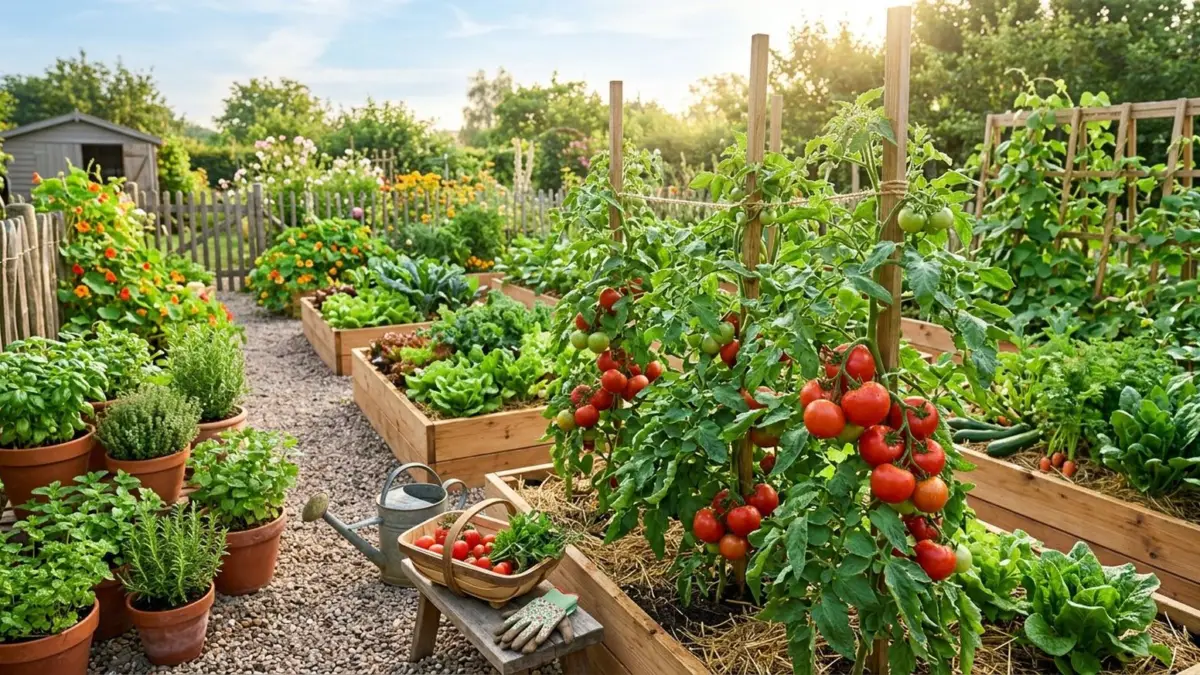
Best Raised Bed Kits
How to choose a raised bed kit: timber, steel and composite compared, ideal sizes and heights, board thickness, how much soil you need and how to…
How to Start a Vegetable Garden from Scratch
Choose a sunny site, size the plot honestly, build the soil and plant a first-season plan that works, a step-by-step start for new food growers.
7 Easiest Vegetables to Grow (and 3 to Skip for Now)
Seven forgiving crops with honest yields, weekly effort and days to harvest, plus three fussy ones to postpone. Plan a first bed that pays off within…