Quick answers
- What is a moon garden?
- A moon garden is planted for evening use: pale flowers and silver foliage that reflect low light, plus plants that release scent after dusk. Moonlight is faint, roughly 0.1 to 0.3 lux for a full moon, so pale colours and reflective leaves do most of the work.
- Which plants work best in a moon garden?
- For flowers, try Nicotiana sylvestris, white Cosmos 'Purity', Hydrangea arborescens 'Annabelle' and Lilium regale. For silver foliage, use lamb's ears, Artemisia 'Powis Castle' or dusty miller. Tender night-scented choices include tuberose and Cestrum nocturnum. Check hardiness and toxicity first.
- Do I need lighting in a moon garden?
- Usually very little. Light the steps and the route to the seat at 1 to 5 lux, warm white at 2700K or lower, shielded from above. See Garden Lighting Design for fixtures, and keep the rest of the garden dark so the pale plants stay visible.
- Will a moon garden attract wildlife?
- Yes, mostly moths, which visit pale, scented, tubular flowers after dusk. Bats and some birds feed on the moths. Avoid broad-spectrum insecticides, and do not leave bright lights on, because they pull moths away from the flowers.
Key takeaways
- Use pale cream, white and silver: red and deep blue vanish after dusk
- Place the bed where you sit and where the moon actually rises
- Plant scent in drifts of five or more, close to the seat
- Keep lighting warm, shielded and low; the sky stays dark
Table of contents11 sections
- Moon garden at a glance
- Site the bed for seating and for the moon
- Pale flowers that earn their place
- Silver and grey foliage for structure
- Night scent: what actually works
- Lighting without wrecking the sky
- Plan and plant
- When it does not work
- How creating a moon garden with white and silver plants makes a night glow
- Common mistakes
- Next steps
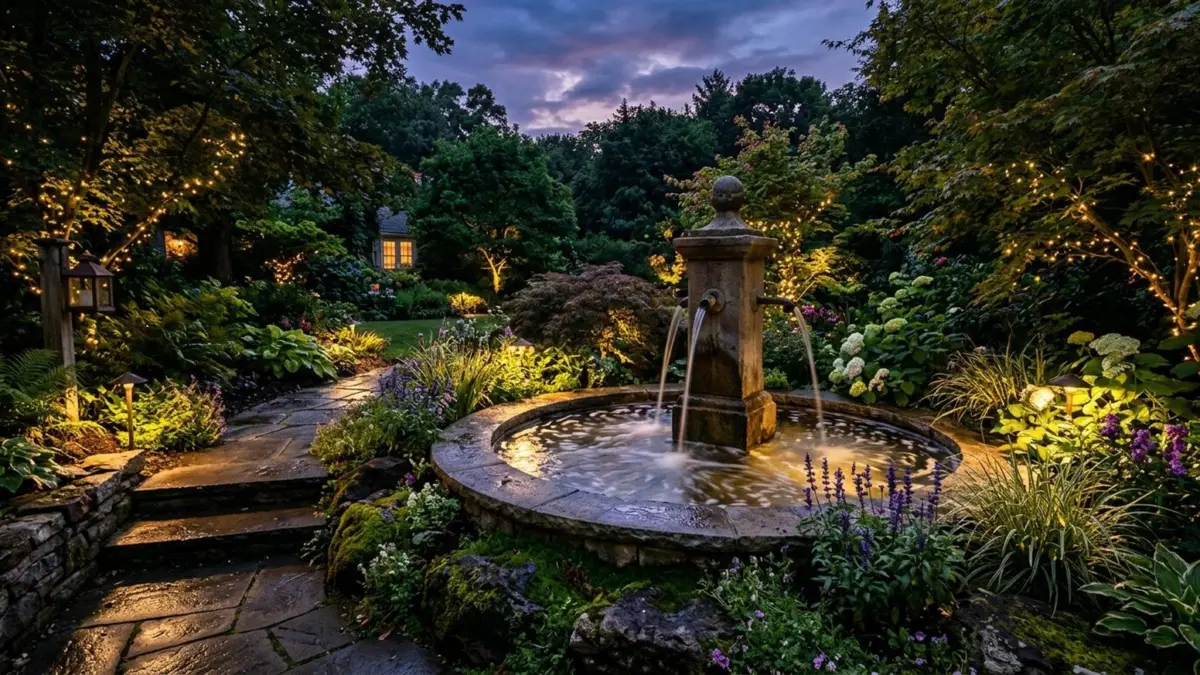
Creating a moon garden uses white and silver plants that glow at night, with scent and soft light to complete the effect.
A moon garden works because of how eyes behave in the dark, not because of any single plant. In low light your eyes switch to rod vision, which sees brightness but little colour, so white, cream and silver stay visible while reds and deep blues fade to dark grey. Plant mostly pale, add scent near the seat, and keep your own lights low. This guide covers site and moon position, plant choices with hardiness limits, scent, and lighting that doesn’t wash the effect out.
It sits in the Water Features & Lighting guides. For fixtures read Garden Lighting Design, and for the route to the seat see Lighting for Safety and Security.
Moon garden at a glance
| Question | Answer |
|---|---|
| Full moon brightness | Roughly 0.1 to 0.3 lux, against 10,000 or more on a bright day |
| Time for eyes to adapt | 20 to 30 minutes in the dark |
| Colours that survive | White, cream, pale yellow, silver, pale grey-green |
| Colours that vanish | Red, deep orange, dark purple, navy |
| Minimum drift size | Five or more of one plant, so the shape reads in the dark |
| Light needed on the seat route | About 1 to 5 lux, warm white (2700K or lower) |
| Scent peak | Dusk to midnight on warm, still evenings |
| Best background | Dark evergreen (yew, box) or a dark fence |
Site the bed for seating and for the moon
Put the bed within 3 to 4 m (10 to 13 ft) of where you sit in the evening. Scent carries only a short distance, and a moon garden you have to walk to is rarely used. A terrace edge or the view from a kitchen window works well.
Then check where the moon will be. A full moon sits opposite the sun, so in summer it rides low in the sky and can be hidden by a house or tall hedge, while in winter it climbs high and shines over almost anything. In the northern hemisphere it rises in the east or south-east and crosses the southern sky, and the reverse is true in the southern hemisphere. Watch one full moon from your seat before you commit.
Pale plants show best against something dark. A backdrop of yew, holly or a dark-stained fence makes whites pop, while a white wall behind white flowers makes both disappear. If you have only a pale wall, plant silver and mid-green foliage in front rather than all-white flowers.
Pale flowers that earn their place
Choose flowers that open wide, or that hang in large clusters, because small scattered blooms vanish. The list below is mixed for season and height. Hardiness figures are approximate minimums for established plants, so adjust for your zone.
| Plant | Season | Height | Notes |
|---|---|---|---|
| Nicotiana sylvestris | Summer to autumn | 1.2 to 1.5 m | Long white tubes, scented at dusk. Usually grown as an annual in cold zones. |
| Cosmos bipinnatus ‘Purity’ | Summer to frost | 90 to 120 cm | Annual, easy from seed, pale daisies, feathery foliage. |
| Hydrangea arborescens ‘Annabelle’ | Early summer to autumn | 1.2 to 1.5 m | Large pale heads that fade green. Tolerates cold to around -30°C. |
| Lilium regale | Midsummer | 1 to 1.5 m | Strongly scented white trumpets. Lilies are very dangerous to cats. |
| Phlox paniculata ‘David’ | Mid to late summer | 90 to 120 cm | White, scented, mildew resistant. |
| Anemone x hybrida ‘Honorine Jobert’ | Late summer to autumn | 90 to 120 cm | White single flowers, extends the season. |
| Gaura lindheimeri | Summer to autumn | 60 to 100 cm | Airy white, needs drainage and sun. |
| Narcissus ‘Thalia’ | Spring | 30 to 40 cm | Several creamy white flowers per stem, lightly scented. |
For a spring start, add white tulips such as ‘White Triumphator’ and honesty (Lunaria annua), whose papery silver seed discs are the original “moons”. For roses and climbers see How to Grow Roses; ‘Madame Alfred Carriere’ is a pale, scented climber, though it needs a sheltered wall in colder gardens.
Silver and grey foliage for structure
Flowers come and go, but leaves hold the scheme together from spring to winter. Silver foliage reflects light because of fine hairs or a waxy bloom, and that same adaptation means most of it comes from dry, sunny places.
- Lamb’s ears (Stachys byzantina): soft grey carpets 15 to 20 cm tall. Cut off melting, brown leaves after wet spells.
- Artemisia ‘Powis Castle’: feathery silver mounds 60 to 90 cm across. Hardy to roughly -15°C and rarely thrives on wet clay.
- Dusty miller (Jacobaea maritima): bright silver, tender in cold zones, usually replanted each year.
- Lavender and santolina: grey, scented and good for bees by day. They need sun and sharp drainage.
- Brunnera ‘Jack Frost’: silver-veined leaves for shade, where the sun-lovers fail.
Silver plants sulk in humid summers and heavy clay. If your soil stays wet, grow them in raised beds or large pots with 30 percent grit in the mix, or choose pale variegated hostas for shade instead.
Night scent: what actually works
Many flowers pollinated by moths release most of their scent after dusk. Warm, still air carries it; cold or windy nights keep it close to the petals. Plan scent near the seat, and combine two or three scents across the season rather than five at once.
- Jasminum officinale: a vigorous climber, hardy to about -10°C, in flower from early summer. It needs a wall or trellis.
- Trachelospermum jasminoides: evergreen star jasmine for sheltered spots, with the same hardiness limit as common jasmine.
- Honeysuckle (Lonicera periclymenum): a classic moth plant, strongest at night. Berries are toxic if eaten.
- Tuberose (Polianthes tuberosa): intensely scented, but tender. Plant after frost and lift the tubers in cold climates.
- Cestrum nocturnum (night-blooming jasmine, raat ki rani): suits zones 9 to 11 or a pot moved indoors. The scent can overwhelm a small space, and the berries are poisonous.
- Sweet rocket (Hesperis matronalis): a self-seeding biennial, evening-scented, in white or lilac.
- Night-scented stock (Matthiola longipetala): small, dull-looking flowers, but heavily scented after dark and cheap to sow near a seat.
Several famous night plants are toxic. Moonflower (Ipomoea alba) seeds, angel’s trumpet (Brugmansia and Datura) and foxglove are poisonous if eaten, and lily pollen is dangerous to cats. Where children or pets use the garden, choose safer options such as nicotiana, phlox and jasmine, or grow the risky ones out of reach.
Moonflower opens its 10 to 15 cm white trumpets at dusk and is grown as an annual in most climates. Soak the seeds overnight and sow after frost, because it needs warm soil. Evening primrose (Oenothera biennis) opens pale yellow at dusk, which suits a more relaxed, wild look.
Lighting without wrecking the sky
Moonlight is faint, so your eyes need the same dark. Every bright fitting makes the pale plants look dimmer by comparison. Use the minimum to get safely to the seat, and let the plants do the rest.
- Light only steps, thresholds and the path edge, at about 1 to 5 lux on the surface.
- Choose warm white (2700K or lower). Most dark-sky guidance suggests 3000K as the upper limit, and moths respond more to blue-rich light.
- Use fully shielded fixtures aimed down, so no beam reaches the sky or the boundary.
- Put lights on a timer or dimmer and switch them off when you go in.
- Use solar lights only where they get sun; see Installing Solar Garden Lights.
Try the scheme at dusk with your lights off first. Add one low fitting at a time, then stop as soon as you can find the seat without a torch. Most moon gardens need fewer lights than people expect.
Plan and plant
- Choose the viewing spot. Mark the seat, then stand there at dusk and note what you see and where the moon rises.
- Set the dark backdrop. Plant or paint a dark background behind the main pale display.
- Plant the foliage first. Place silver mounds about every 1 to 1.5 m as the anchor points.
- Add drifts of flowers. Plant groups of five to seven in three heights: front, middle, back.
- Place scent plants closest. Keep jasmine, honeysuckle and lilies within a couple of metres of the seat.
- Mulch pale. A layer of light gravel or crushed shell around silver plants reflects light and improves drainage.
When it does not work
| Symptom | Likely cause | Fix |
|---|---|---|
| Beds look flat and grey after dark | Too many mid-tone plants, no contrast | Add a dark backdrop and larger pale flowers |
| Silver leaves rot or turn green | Wet clay, humidity or shade | Raise the bed, add grit, give 6 hours of sun |
| No scent in the evening | Cold, windy night or plants too far away | Move scented plants within 3 m of the seat, add a windbreak |
| No moths | Bright lights or insecticide use | Dim lights, stop spraying, grow more tubular flowers |
| Flowers collapse in rain | Tall plants unsupported | Stake early or choose sturdier varieties |
| Cosmos and nicotiana flower late | Sown or planted too late | Sow under cover 6 to 8 weeks before the last frost |
How creating a moon garden with white and silver plants makes a night glow
White cosmos, jasmine, lily and nicotiana reflect moonlight, while silver lavender and sage hold a soft glow. Night-scented jasmine and evening primrose attract moth that pollinate after dark. Pale paving and white gravel boost brightness, and a mirror or pond doubles it.
A low-voltage led path light with warm white around 2700 kelvin protects the dark mood and reduces glare. Solar panel lights suit sunny spots, and uplighting a white birch highlights the bark. Dark yew or box backdrops make white hydrangea and cosmos stand out. White flowers show dead heads, so deadheading boosts blooms and keeps the scheme clean. Fragrance carries on damp, still evenings, so you should plant jasmine and nicotiana near seating. Moth and bat visitors benefit from dim lighting of under 100 lumens, which controls glare and lets wildlife feed. A transformer steps mains down to 12 V, and an electrician should fit a gfci or rcd for any outdoor circuit. A pond with a water lily doubles the moon’s reflection, and a pump keeps the surface moving. Silver lamb’s ear and artemisia tolerate drought and need sharp drainage, and mulch of gravel keeps their crowns dry. Compost feeds white tulip and lily bulbs in autumn. Your extension service lists white varieties suited to your climate, and the garden lighting design guide shows how to place each light.
Jasmine attracts moth and moth pollinate lily after dark, while cosmos feeds bee by day, so a white border works around the clock. Lavender tolerates drought and suits gravel mulch, mulch protects tulip bulbs and reduces weeds around hosta, and birch reflects moonlight and shades the fern below. Yew absorbs glare and makes white rose stand out, compost improves loam and feeds lily and hyacinth, and sage tolerates dry loam while lavender needs full sun.
Common mistakes
- Using only white flowers. A single bright white flower reads as a glare spot, and pure white against a pale wall disappears. Mix cream, pale yellow and silver foliage, and give each a darker background.
- Planting singles. One plant of each is invisible at night. Plant groups of five or more so the shapes are readable.
- Over-lighting. Floodlights make the garden look flat and tire your eyes. Use a few low, warm, shielded fittings and dim them.
- Placing the bed where you never sit. The scent and glow are wasted. Site it near the evening seat.
- Ignoring toxicity. Several night-scented plants are dangerous to pets and children. Check each plant before you buy.
- Relying on tender plants without a plan. Tuberose and Cestrum die in frost. Grow them in pots you can move, or treat them as annuals.
Next steps
- Choose fittings and layers with Garden Lighting Design.
- Light the way to the seat with Lighting for Safety and Security.
- Draw in moths and bees by day with Flowers That Attract Pollinators.
For the full picture of lighting and water together, return to the Water Features & Lighting guides.
Frequently asked questions
What is the best time of day to enjoy a moon garden?
Dusk to about midnight is best, especially on warm, still evenings. Scented flowers release most fragrance then, and pale petals still show against the darkening sky. Allow 20 to 30 minutes outdoors so your eyes adapt, and keep nearby lights off or low.
Are white flowers the only choice for a moon garden?
No. Cream, pale yellow, soft pink and silver-grey foliage also glow well in low light. Dark reds, deep blues and purples fade to grey after dusk, so use them sparingly. Mix in plenty of silver leaves for shape, which lasts longer than flowers.
Can I make a moon garden in containers on a patio?
Yes. Large pots of white petunias, nicotiana, white pelargoniums and lamb's ears suit a sunny patio or balcony. Use pots at least 30 cm wide, and group them near the seat. Water often in summer, because containers dry out quickly.
Do moon garden plants need full sun?
Many do, such as lavender, Artemisia and white cosmos, which need 6 or more hours of sun. For shade, choose white hostas, white foxgloves, Hydrangea arborescens and variegated shrubs with pale edges. Check each plant label, because light needs vary.
Are moon garden plants poisonous to cats and dogs?
Some are. Lilies are very dangerous to cats, and Nicotiana, Cestrum and Datura are toxic to pets and people. Check every plant with a vet or a trusted toxicity list before planting, and choose safer silver foliage if animals roam your garden.
Why do some flowers smell stronger at night?
Many night-scented flowers rely on moths for pollination, so they release fragrance at dusk when moths fly. Cool, damp air holds scent close to the ground, while hot dry wind carries it away. Plant them in a sheltered spot near where you sit.
Can a moon garden look good in winter?
Yes, if you include evergreen silver and pale plants. Lavender cotton, Stachys, silver-leaved Artemisia and white-barked birch hold shape in cold months. Add pale gravel or white stems of dogwood for light. Remember that hardiness varies, so check the plant label for your zone.
Is a moon garden hard to maintain?
No, it is usually easy. Silver-leaved plants prefer lean, well-drained soil and little feeding. Deadhead white flowers often, because brown spent blooms show up badly at night. Cut back sprawling plants after flowering to keep the pale shapes tidy. Water new plants well in their first season, then reduce watering.
Can I use solar lights in a moon garden?
Yes, if they are warm white, low and well shielded. Aim for soft pools of light at steps and along the route to the seat. Avoid bright or cool blue-white lights, which wash out the pale plants and drown the quiet effect.
Which night-blooming plants open at dusk?
Evening primrose (Oenothera), Nicotiana sylvestris, four o'clock flower and moonflower (Ipomoea alba) open in the evening. Moonflower is tender and grown as an annual in cool climates, and its seeds are toxic. Check each plant's hardiness and safety before buying.
More in Water Features & Lighting
Outdoor Electrical Safety: GFCI, Weatherproofing and When to Call a Professional
Garden electrics need RCD or GFCI protection, the right IP rating, safe leads and a licensed electrician for anything fixed or buried. Here are the rules…
Seasonal Garden Lighting Displays: Plan, Power and Stay Safe
Plan festive and seasonal lighting with LED loads, outdoor-rated cords, timers and weather ratings, and protect plants, wildlife and neighbours.
Pumps for Ponds and Fountains: Sizing, Power and Maintenance
How to choose a pond or fountain pump: flow rate and head height, solar versus mains, safe installation, filters and the yearly maintenance that keeps it…