Quick answers
- Which garden style is cheapest to maintain?
- Mediterranean and gravel gardens, modern minimalist plots with few plant types, and well-established wildlife gardens need the least routine work once they are settled. Formal and cottage gardens demand the most, usually weekly attention from spring to autumn.
- Which garden style costs the most to create?
- Modern and Japanese-inspired gardens, because hard materials, large stones and mature specimen plants account for most of the budget. Cottage and wildlife gardens are cheapest to build because plants can be grown from seed, divisions and cuttings.
- Can I mix garden styles in one plot?
- Yes, if one style clearly dominates (roughly two thirds of the area) and the others sit in separate zones divided by a hedge, gate or change of level. Repeat one paving material and a small colour palette across all of them.
- How do I choose a style for a shady or wet garden?
- Shade suits Japanese-inspired and woodland-leaning wildlife planting, while Mediterranean planting fails in shade or wet clay. Match the style to light and drainage first, because forcing the wrong plants into a site is the costliest mistake.
Key takeaways
- Choose by site first (light, drainage, climate), then by house, then by taste
- Formal gardens trade high upkeep (clipping two to three times a year) for a crisp, calm look
- Mediterranean and Japanese-inspired styles each need specific conditions: sharp drainage and sun, or shelter and shade
- Keep one dominant style and link zones with repeated materials and colours
Table of contents11 sections
- Six garden styles at a glance
- Cottage gardens: generous and demanding
- Formal gardens: order that has to be earned
- Mediterranean gardens: drainage decides everything
- Modern gardens: quality of materials
- Wildlife gardens: informal on purpose
- Japanese-inspired gardens: restraint takes work
- Choosing a garden style: a decision order
- Combining garden styles without a clash
- Common garden style mistakes
- Next steps
Garden styles explained: cottage, formal, Mediterranean, woodland and modern gardens each rely on different plants, materials and upkeep.
The best garden style is the one your site, house and spare time can support: sun and sharp drainage for Mediterranean planting, shelter and some shade for Japanese-inspired schemes, an hour a week or more for cottage and formal gardens. Choose on those facts first and taste second. This guide compares six popular styles by their plants, upkeep and cost, then shows how to combine them without making a muddle.
Style sits on top of the structural thinking in Garden Design Principles, and works with Garden Paths & Hardscaping and Garden Color Theory. It’s part of the Garden Design guides.
Six garden styles at a glance
| Style | Signature plants | Upkeep rhythm | Set-up cost | Best site |
|---|---|---|---|---|
| Cottage | Roses, delphiniums, hardy geraniums, foxgloves, aquilegia | Weekly in season: staking, deadheading, editing self-seeders | Low to medium | Moist, fertile soil; sun to part shade |
| Formal | Yew, box alternatives, clipped hedges, lawn, standard shrubs | Clip 2 to 3 times a year; mow and edge weekly | Medium to high | Level, open ground; period or symmetrical houses |
| Mediterranean | Lavender, rosemary, cistus, santolina, thyme, olive | Light: annual trim, little watering once established | Medium | Full sun, very free-draining soil, mild winters |
| Modern | Ornamental grasses, clipped evergreens, a few sculptural specimens | Low to medium: tidying, occasional pressure washing | High | Contemporary houses; small or urban plots |
| Wildlife | Native shrubs, seed-rich perennials, hedgerow mixes, long grass | Low and seasonal: one or two grass cuts, winter cut-back | Low | Almost anywhere; best with a mix of habitats |
| Japanese-inspired | Japanese maples, pines, moss, bamboo (clumping), azaleas | Medium: raking, pruning, moss care | High | Sheltered, partly shaded, moist but drained |
Costs here are relative. Local prices vary widely, but in nearly every region stone, paving and mature plants are the main expense, while seed, divisions and cuttings are cheap.
Cottage gardens: generous and demanding
A cottage garden packs plants densely, mixes flowers with herbs and vegetables, and lets self-seeders find their own places. The look needs humus-rich soil, so compost the beds well, and it relies on tall plants that flop, so delphiniums and lupins need staking before they reach about 60 cm (2 ft). Foxgloves and aquilegias are biennials or short-lived and persist only if you leave a few seedheads. Foxgloves are poisonous if eaten, which matters if small children use the garden.
The trade-off is editing: a cottage garden left alone for a summer turns weedy. Cost is low if you raise plants from seed and divide perennials every 3 to 4 years. See How to Grow Roses for the classic centrepiece.
Formal gardens: order that has to be earned
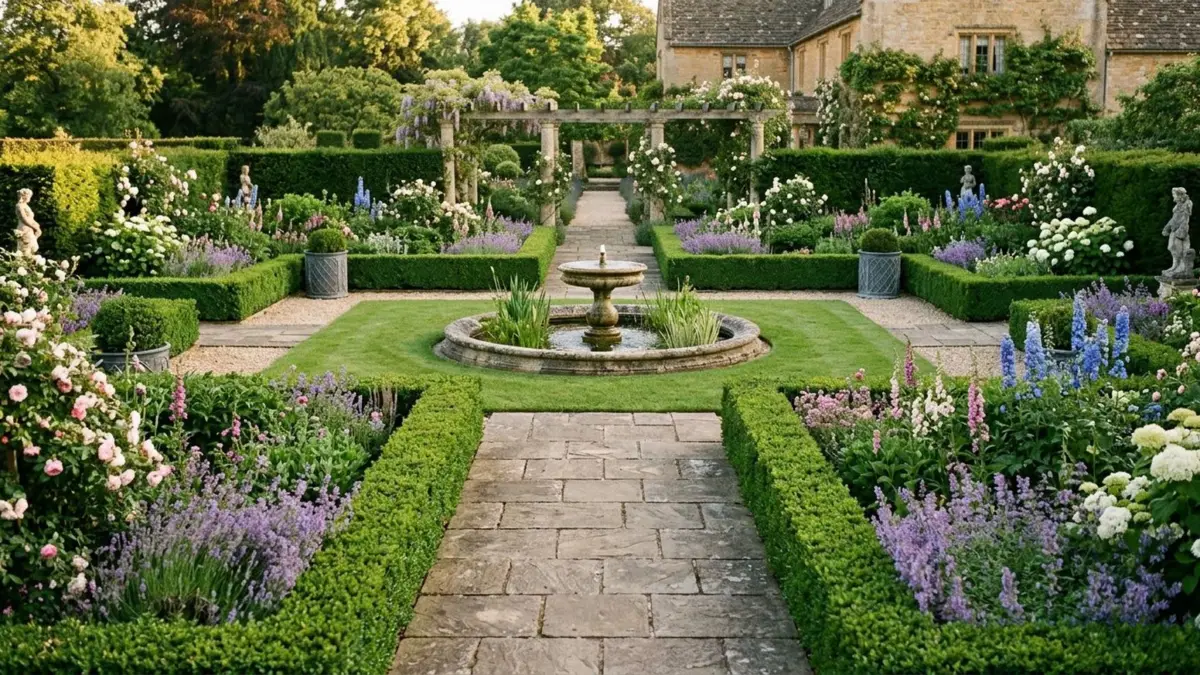
Formal design depends on symmetry, straight lines and clipped evergreen. The mistake is building the geometry and underestimating the clipping. Yew is clipped once a year in late summer. Fast hedges such as privet or hornbeam need two to three cuts. Box (Buxus) is the traditional edging, but box blight and the box tree moth have made it risky in many regions, so consider yew, dwarf Japanese holly (Ilex crenata) or Euonymus japonicus instead.
Lawns carry the style, and a formal lawn means weekly mowing in growing weather, with edges cut crisply, as covered in Lawn Care Basics. Costs run high at the start because hedging is bought in bulk and paths need proper bases. If you want the look with less work, keep the geometry and soften the planting: a clipped hedge frame with loose perennials inside.
Mediterranean gardens: drainage decides everything
Lavender, rosemary, cistus, santolina and thyme come from dry, lean, sunny hillsides. What kills them in cooler climates is usually not cold but cold wet roots in winter. Heavy clay is the main problem: either plant on a raised mound with plenty of grit mixed in, or choose another style. Use a gravel mulch 5 cm (2 in) deep to keep the necks of plants dry, and avoid bark and compost, which hold moisture. Lavender and rosemary survive about -10°C (14°F) when drained, but cistus and some olives are less hardy, so check local cultivars.
Once established (typically after one or two seasons) these plants need little water, but pots and new plantings need regular watering. Plan irrigation early with Drip Irrigation & Smart Watering. Trim lavender lightly after flowering and never cut into old brown wood, which often fails to resprout.
Modern gardens: quality of materials
A modern garden uses few materials, repeats them, and keeps planting to a restrained palette: grasses, evergreens, perhaps one tree or multi-stem specimen. Because the planting is simple, the construction shows. Poorly laid paving, uneven joints or thin timber all read as mistakes. Expect hard landscaping to take the larger share of the budget.
The maintenance is lower, but it isn’t zero: large paved surfaces grow algae in shade, ornamental grasses need cutting back once in late winter, and a sparse planting scheme leaves weeds nowhere to hide. Rain gardens and permeable paving, covered in Garden Paths & Hardscaping, suit this style well.
Wildlife gardens: informal on purpose
A wildlife garden aims for habitat first. Mix native shrubs, nectar and seed-rich perennials, a log pile, and some water. Plant for continuous flower from early spring to autumn with the choices in Flowers That Attract Pollinators. Leave seedheads and hollow stems through winter, and cut back in late winter rather than autumn.
To make a small meadow, mow or cut once in late summer, remove the clippings so the soil gets leaner (wildflowers fail in rich soil), and expect the first year or two to look scruffy. Avoid pesticides entirely, since they remove the insects the style exists to support. It’s the cheapest style to create and the one most likely to annoy neighbours with a tidy view, so a mown edge and a bench make it look intentional.
Japanese-inspired gardens: restraint takes work
A Japanese-inspired garden uses few elements with space between them: stones, water, gravel, moss, evergreens and a maple. A genuine Japanese garden follows centuries of tradition, so call a home version “inspired” and focus on the principles you can use: asymmetry, odd-numbered groupings, borrowed views and empty space.
- Light and shelter: Japanese maples scorch in hot sun and drying wind. Plant them in dappled shade with shelter.
- Moss: it needs shade, steady moisture and acidic, compacted soil; it won’t establish on rich, limy or dry soil.
- Raked gravel: needs re-raking after rain and leaf fall, and leaves should be removed by hand.
- Pruned pines and cloud shapes: take years of skilled work; for a quicker effect, buy pre-trained specimens, which are expensive.
- Bamboo: choose clumping types only. Running bamboo can escape across a boundary within a couple of seasons.
Water is optional, and the sound and light reflection a small basin provides are covered in Water Features & Garden Lighting.
Choosing a garden style: a decision order
- Read the site. Note hours of sun, wind exposure, and whether the soil drains. Use Understanding Your Soil Type for the test. Drainage rules out Mediterranean on wet clay.
- Read the house. Symmetrical period fronts suit formal or cottage planting; flat-roofed and glass-fronted houses suit modern lines.
- Count your hours. Be honest: if you have 30 minutes a week, eliminate cottage and formal.
- Set a budget split. If most of the money goes on hard landscaping, choose a style that makes it the star (modern, Japanese-inspired); if planting is the budget, choose cottage or wildlife.
- Pick one dominant style for about two thirds of the garden and treat the rest as a separate zone.
Pull out the plants and materials first. If you can’t name five plants and two surfaces that define the style, you don’t yet have a plan. Visiting a public garden in your climate shows what actually thrives.
Combining garden styles without a clash
Mixed styles work when they are separated and tied together. Separate them with a hedge, a pergola, a gate or a change of level so no one sees two styles in one view. Tie them with a single paving material, one pot colour and a repeated plant or two. A formal courtyard leading to a wildlife meadow works because the transition is deliberate, whereas cottage borders running into minimalist paving without a link look accidental. Scale matters too: in a garden under about 100 square metres (1,000 sq ft), one style is usually enough, as discussed in Small Garden Design Ideas.
Common garden style mistakes
- Choosing a style for the photo, not the site. Mediterranean planting on wet clay dies in the first winter. Test drainage and light first.
- Building formal geometry with a cottage time budget. Clipped hedges look worse neglected than no hedges. Pick a looser style or simplify the layout.
- Using too many styles in a small garden. The eye has no rest. Limit a small plot to one style and a single accent.
- Skipping the structure. Planting alone doesn’t create a style. Paving, edging and focal points do much of the work.
- Calling neglect “wildlife gardening”. Habitat needs planning, with native plants, water and cover. Overgrown weeds feed few species.
Next steps
Build the layout with Garden Paths & Hardscaping, plan colour with Garden Color Theory, and add an evening layer with Water Features & Garden Lighting. Back to Garden Design & Landscaping.
Frequently asked questions
What is a cottage garden and how does it look?
A cottage garden is a dense, informal mix of flowers, herbs and sometimes vegetables, with self-seeders allowed to find their own spots. Typical plants include roses, foxgloves, delphiniums and hardy geraniums. It looks relaxed but needs regular staking, deadheading and editing to avoid turning weedy.
What makes a garden look Japanese-inspired rather than just Asian?
A few carefully chosen elements with space between them: stones, gravel, moss, evergreens, a maple and sometimes water. Principles such as asymmetry, odd-numbered groups and borrowed views matter more than copying features. Call a home version inspired, because genuine Japanese gardens follow centuries of tradition.
Is box still a good choice for formal hedging?
In many regions it is risky, because box blight and the box tree moth can wreck box hedges. Alternatives for a clipped formal edge include yew, dwarf Japanese holly (Ilex crenata) and Euonymus japonicus. Ask a local nursery which one performs best in your area and soil.
Can I grow a Mediterranean garden in a cold, wet climate?
Sometimes, but drainage decides success. Lavender and rosemary fail mostly from cold wet roots in winter, not cold alone. Plant on a raised mound with plenty of grit, mulch with 5 cm of gravel and avoid heavy clay unless you improve it.
What is a wildlife garden and how do I start one?
A wildlife garden is designed for habitat first. Mix native shrubs, nectar and seed-rich perennials, a log pile, some water and a patch of long grass. Avoid pesticides, leave seed heads through winter and plan for flowers from early spring to autumn.
Is bamboo safe to plant in a garden?
Clumping bamboo is generally safe to plant, but running types can escape across a boundary within a couple of seasons. If you want a running bamboo, grow it in a large container or behind a proper root barrier. Check the variety before buying.
How much time does a cottage garden need each week?
Plan on at least an hour a week during the growing season, and more in early summer. Jobs include staking tall plants before they reach about 60 cm, deadheading, and removing unwanted self-seeders. If you only have 30 minutes, choose a lower-maintenance style.
How do I make a small meadow in my garden?
Cut or mow once in late summer and remove the clippings, so the soil becomes leaner, because wildflowers do poorly in rich soil. Expect the first year or two to look scruffy. A mown edge or path makes the meadow look intentional.
What garden style suits a modern house?
Modern gardens suit contemporary houses, with few materials, clean lines and restrained planting such as grasses and clipped evergreens. Because the planting is simple, the construction shows, so good paving and neat joints matter. Expect the hard landscaping to take the bigger share of the budget.
Are foxgloves poisonous to children and pets?
Yes, foxgloves are toxic if eaten, and all parts of the plant are affected. Consider this if small children or pets use the garden, and wash hands after handling them. If anyone swallows part of the plant, contact a doctor or vet straight away.
More in Garden Design
Privacy Screens and Hedges: Plants, Fences and Layout
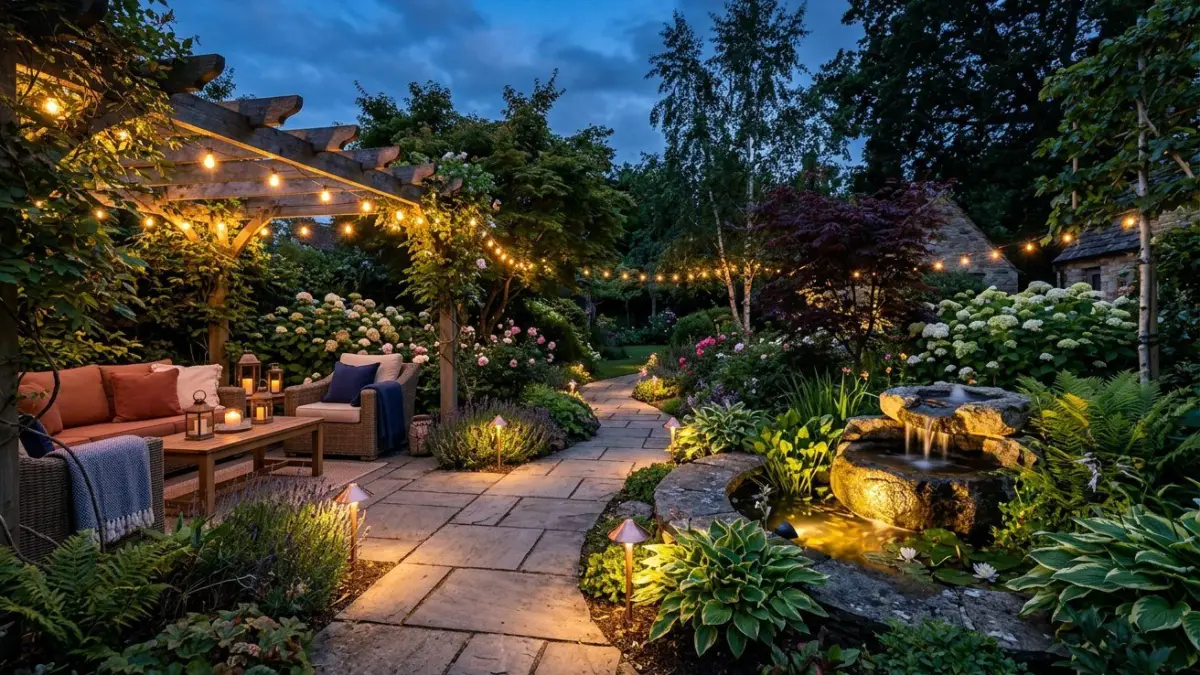
How to plan a garden privacy screen with hedges, trellis, fences and tall plants: heights, spacing, fast and evergreen choices, and how to plant and trim…
Best Garden Edging Materials
How to choose garden edging: metal, timber, brick, stone and plastic compared for cost, life and curves, plus depth, installation steps and how to edge lawns…
Small Garden Design Ideas: 10 Tricks That Double Your Space
Diagonal lines, hidden views, walls as planting space and right-sized pots, with the measurements that make a small garden feel larger and work harder.