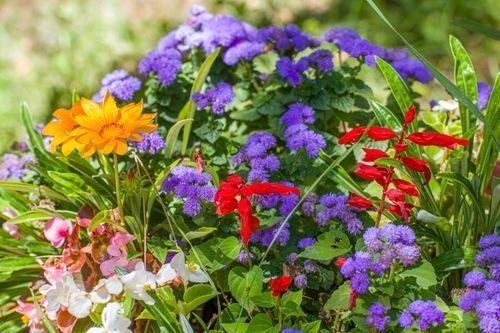
Quick answers
- What flowers do best in full sun?
- Zinnia, cosmos, marigold, sunflower, portulaca, vinca, salvia, echinacea, rudbeckia, lavender, lantana and bougainvillea. They flower on six or more hours of direct light and tolerate dry spells once their roots are established.
- Which full-sun flower blooms the longest?
- Zinnia, marigold and vinca flower from early summer to frost if deadheaded or given a light trim. In frost-free climates lantana and bougainvillea bloom in repeated flushes through most of the year.
- How often should sun-loving flowers be watered?
- Soak the root zone once or twice a week rather than sprinkling daily. Beds need roughly 2.5 cm (1 inch) of water weekly in summer. Pots in full sun may need water daily in hot weather.
- Why do my sun flowers wilt at midday?
- Midday wilting on a hot day is often just heat stress and recovers by evening. If leaves are still limp the next morning, the soil is either too dry or waterlogged, so check a finger depth down.
Key takeaways
- Full sun means 6+ hours of direct light, checked at 9 a.m., noon and 3 p.m.
- Water deeply once or twice a week and mulch 3 to 5 cm to keep roots cool
- Go easy on nitrogen: lush leaves mean fewer flowers on cosmos, zinnia and bougainvillea
- Deadhead annuals weekly and shear salvia and catmint by one third for a second flush
- Match the plant to the climate: lavender hates humid heat, vinca loves it
Table of contents13 sections
- What full sun really means
- Twelve plants compared
- Plant-specific notes that change results
- Choosing by climate
- Planting for months of colour
- Watering and feeding rules
- Troubleshooting sun-plant problems
- Deadheading and cutting back for repeat bloom
- Heat from walls, paving and pots
- Why full sun flowers thrive in heat and need less water
- Why flowering plants that laugh at full sun survive heat
- Common mistakes and what causes them
- What to read next
These 12 flowering plants laugh at full sun, because deep roots, silver leaves and tough stems let them keep blooming through summer heat.
The best flowers for full sun are zinnia, cosmos, marigold, sunflower, portulaca, vinca, salvia, echinacea, rudbeckia, lavender, lantana and bougainvillea. All of them flower on six or more hours of direct light and shrug off dry spells once their roots have settled in. The skill is less about getting bloom and more about keeping plants tidy and productive through July and August heat.
This guide is for anyone planting a bright, exposed bed or pot and sits in the Flower Gardening guides. It gives plant-by-plant detail, climate-specific swaps, a planting method and a troubleshooting table, so you can match plants to your conditions instead of buying whatever is in flower at the nursery.
What full sun really means
Full sun is six or more hours of direct light, not six hours of brightness. Check the spot at 9 a.m., noon and 3 p.m. on a clear day and count the hours when no shadow touches it. Four to six hours is partial sun, where many sun plants still grow but flower less and flop more.
Reflected heat is the hidden variable. A bed against a south or west wall, or beside paving or a metal fence, can run several degrees hotter than open ground and dry out much faster. Treat those spots as hot-dry sites and choose from the tougher end of the list below, such as portulaca, lavender and lantana, even if the plain sun hours look ordinary.
Twelve plants compared
| Plant | Type | Height | Blooms | Water once settled | Key detail |
|---|---|---|---|---|---|
| Zinnia | Annual | 30 to 100 cm | Summer to frost | Moderate | Sow after frost; narrow-leaved types resist mildew |
| Cosmos | Annual | 60 to 150 cm | Summer to frost | Low | Rich soil gives leaves, not flowers |
| Marigold (Tagetes) | Annual | 20 to 60 cm | Summer to frost | Low to moderate | Edges and pots; deadhead weekly |
| Sunflower | Annual | 0.6 to 3 m | Summer | Moderate | Branching types flower for weeks |
| Portulaca | Annual | 10 to 20 cm | Summer | Very low | Blooms close on dull days |
| Vinca (Catharanthus) | Annual or tender perennial | 20 to 40 cm | Summer to autumn | Low | Loves heat; hates cold, wet soil |
| Salvia (perennial types) | Perennial | 40 to 90 cm | Early summer, repeats | Low | Shear after the first flush |
| Echinacea | Perennial | 60 to 100 cm | Summer | Low | Leave seed heads for finches |
| Rudbeckia | Perennial | 50 to 100 cm | Late summer to autumn | Low to moderate | Some types are short-lived but self-seed |
| Lavender | Shrub | 40 to 80 cm | Summer | Very low | Needs sharp drainage and dry air |
| Lantana | Shrub | 50 to 120 cm | Spring to autumn | Low | Weedy in some warm regions, check locally |
| Bougainvillea | Climbing shrub | 2 to 6 m | Repeated flushes | Low | Lean soil and a dry spell trigger colour |
Plant-specific notes that change results
Zinnia and cosmos are the fastest route to colour from seed. Zinnias dislike cold soil, so wait until nights stay above about 10°C. In humid summers common zinnia foliage browns with powdery mildew, so give plants 30 cm of space and water the soil, not the leaves. Cosmos blooms best in poor soil: feed it generously and you get a tall green hedge with few flowers.
Portulaca and vinca are the answers for pots and hot paving. Portulaca stores water in its leaves and flowers only when the sun is on it. Vinca keeps flowering above 35°C, but in cool wet springs the roots rot, so plant it only once the soil is warm.
Salvia, echinacea and rudbeckia form the perennial backbone. Echinacea cultivars with unusual colours are often shorter-lived than the plain purple species, so divide or replace them every three to four years. Rudbeckia hirta behaves as a short-lived perennial or biennial but reseeds freely.
Lavender is the one plant on the list that fails in humid heat. English lavender suits cool and dry summers; in warm humid climates choose French or Spanish types and plant them on a mound with gravel worked in. Bougainvillea flowers best slightly stressed: restrict water between flushes, avoid nitrogen and don’t disturb the roots when planting.
Choosing by climate
| Climate | Best choices | Watch for |
|---|---|---|
| Cool temperate | Echinacea, rudbeckia, salvia, lavender, cosmos, sunflower | Late frosts on zinnia and vinca; start these indoors |
| Hot and dry | Portulaca, gazania, lantana, bougainvillea, marigold, cosmos | Leaf scorch on young plants; give 3 days of shade after planting |
| Humid subtropical | Vinca, marigold, zinnia (spaced widely), salvia, lantana | Mildew and root rot; raise beds and water at the base |
| Humid tropical | Bougainvillea, vinca, portulaca, ixora-type shrubs, sunflower | Heavy rain flattening tall stems; stake or choose dwarf forms |
Planting for months of colour
- Loosen the soil to 20 to 25 cm and mix in about 5 cm of compost. In heavy clay, plant on a low mound or add grit, because sun plants rot before they scorch.
- Time it by frost. Plant half-hardy annuals after the last frost and perennials in spring or autumn, as mapped in the seasonal planting calendar.
- Space to the mature width, usually 20 to 30 cm for annuals and 40 to 60 cm for perennials. Tight planting looks full for a month and then invites mildew.
- Water in thoroughly, then shade new transplants for two or three days with a sheet or board propped on the sunny side.
- Mulch 3 to 5 cm and keep it off the stems. The method is detailed in Mulching Mastery.
- Pinch annuals at about 20 cm to force branching, which can double the number of flowers.
Watering and feeding rules
Water by decision rule, not by habit. If the top 5 cm of soil is dry and the plant is a perennial or shrub, water slowly until the top 20 cm is damp, then leave it. That usually means once or twice a week in beds. If leaves are limp in the morning, the plant is truly dry or the roots are drowning, so check by finger before adding water. Drip lines save effort here, as covered in Drip Irrigation and Smart Watering.
For feeding, the main rule is restraint. Nitrogen builds leaves, and cosmos, bougainvillea and lantana all respond to excess by growing leafy and flowering less. Beds with compost mulch need little else. Pots drain nutrients away, so a diluted balanced or flower feed every two to three weeks is reasonable.
Troubleshooting sun-plant problems
| Symptom | Likely cause | Fix |
|---|---|---|
| Wilting at 2 p.m., fresh by evening | Heat stress, normal | No action; water deeply in the morning |
| Still limp next morning | Dry soil or waterlogging | Finger test; water slowly or improve drainage |
| White coating on leaves | Powdery mildew in crowded, humid air | Thin plants, water at the base, choose resistant types |
| Lots of leaves, few flowers | Excess nitrogen or rich soil | Stop feeding; plant in leaner soil next time |
| Flowers stop in midsummer | Seed set or heat stall | Deadhead, trim by one third, water deeply |
| Bleached or crisp leaf edges | Sun scorch on soft new growth | Harden off plants and mulch |
Deadheading and cutting back for repeat bloom
Most full-sun annuals and many perennials flower for longer if you stop them setting seed. Zinnias, cosmos, marigolds and petunias bloom again if you pinch or snip spent flowers back to the next set of leaves every week or so. Salvia, catmint and many hardy geraniums benefit from a hard trim by about a third once the first flush fades, which usually brings a second flowering six to eight weeks later. Lavender is the exception: cut it lightly just after flowering, staying in green growth, because old bare wood rarely reshoots. Leave the seed heads of echinacea and rudbeckia standing from late summer, since goldfinches and other seed eaters use them and the structure looks good in frost.
Heat from walls, paving and pots
Full sun is hotter next to a south-facing wall, a gravel drive or a paved patio, because the surface stores and reflects heat. Plants there can run 5 to 10°C (9 to 18°F) above the air temperature on a hot afternoon. Choose the toughest species for those spots, such as lantana, portulaca, bougainvillea and lavender, and avoid tender-leaved plants that scorch. In containers, use a pot at least 30 cm (12 in) wide so the root ball doesn’t bake, pale-coloured pots reflect more heat than dark ones, and group pots so they shade each other’s sides. Expect to water pots daily in a heatwave, and check by pushing a finger 5 cm (2 in) into the mix rather than judging by the surface.
Why full sun flowers thrive in heat and need less water
Echinacea, rudbeckia and salvia tolerate drought, because deep roots reach moisture that shallow plants miss. Lavender and sunflower need sharp drainage, and grit or sand improves heavy clay and prevents the root rot that kills them in winter. Mulch holds moisture and cools the soil, so zinnia and cosmos keep flowering in a heatwave.
Too much nitrogen encourages leafy growth and reduces blooms, so you shouldn’t feed these plants heavily. Deadheading boosts new buds on zinnia and echinacea, while leaving some seed heads feeds finches and supports the garden. Bee and hoverfly are attracted by salvia and lavender, which controls aphid on nearby roses. Do they need watering? A deep soak weekly suits established plants, but pots dry quickly and need checking daily. Your extension service lists sun-loving varieties proven in your region.
Why flowering plants that laugh at full sun survive heat
Echinacea, rudbeckia and salvia tolerate drought, because deep roots reach moisture that shallow plants miss. Lavender and sunflower need sharp drainage, and grit or sand improves heavy clay and prevents the root rot that kills them in winter. Mulch holds moisture and cools the soil, so zinnia and cosmos keep flowering through a heatwave of 35°C.
Silver leaves on lavender and sage reflect sun and reduce water loss, while hairy leaves on lamb’s ear trap humid air close to the surface. Too much nitrogen encourages leafy growth and reduces blooms, so you shouldn’t feed these plants heavily. Deadheading boosts new buds on zinnia and echinacea, while leaving some seed heads feeds finch and supports garden wildlife. Bee and hoverfly are attracted by salvia and lavender, and hoverfly larvae control aphid on nearby rose. A deep soak of 10 litres per plant once a week suits established plants, but pots dry quickly and need checking daily. Poor, stony loam suits catmint and sedum better than rich compost, and a thin mulch of gravel keeps their crowns dry. Your extension service lists sun-loving varieties proven in your region, and the low maintenance border guide shows how to combine them.
Common mistakes and what causes them
- Cause: choosing “part sun” plants for a reflective wall bed. Fix: pick from the hot-dry column above and test hours of direct sun first.
- Cause: light evening sprinkling. It wets only the top centimetres and encourages shallow roots and mildew. Fix: soak the soil early in the morning.
- Cause: feeding for “more flowers” with a high-nitrogen product. Fix: use compost in beds and a low-nitrogen flower feed in pots.
- Cause: skipping deadheading, so plants set seed and shut down. Fix: cut spent heads back to a leaf or bud weekly.
- Cause: planting lavender in rich, damp soil. Fix: use lean, gritty soil on a mound.
What to read next
Decide how many of these plants should be annual or perennial in Annuals vs Perennials, build a bed that needs little upkeep with Low-Maintenance Flower Borders, and feed bees and butterflies with Flowers That Attract Pollinators.
Frequently asked questions
Which sun-loving flowers are best for pots?
Portulaca, vinca, marigold and lantana cope well with heat in containers. Use a pot at least 30 cm (12 in) wide so the root ball does not bake, and group pots so they shade each other. Check by pushing a finger 5 cm into the mix, and expect daily watering in a heatwave.
Why does my cosmos have lots of leaves but few flowers?
Rich soil or too much nitrogen makes leaves at the expense of flowers. Cosmos blooms best in lean soil. Stop feeding, plant in poorer ground next time and make sure it gets at least 6 hours of direct sun. Pinching at about 20 cm encourages branching.
Can lavender grow in humid climates?
It struggles in humid heat. English lavender suits cool, dry summers, so in warm humid areas choose French or Spanish types and plant them on a mound with gravel worked in. Sharp drainage matters as much as sun, because wet roots rot before the plant scorches.
When should I cut back salvia and catmint?
Shear them by about a third once the first flush fades. This usually brings a second flowering six to eight weeks later. Lavender is the exception: cut it lightly just after flowering, staying in green growth, because old bare wood rarely reshoots.
How do I stop new plants scorching in strong sun?
Water them in thoroughly and shade new transplants for two or three days with a sheet or board propped on the sunny side. Harden off plants raised indoors first. Mulch 3 to 5 cm, keeping it off the stems. Scorch shows as bleached or crisp edges on soft new leaves.
Is it OK to feed full-sun flowers regularly?
Go lightly. Excess nitrogen gives leaves over flowers on cosmos, bougainvillea and lantana. Beds with a compost mulch need little else. Pots lose nutrients through drainage, so a diluted balanced or flower feed every two to three weeks is reasonable.
Which flowers cope with heat reflected from walls and paving?
Lantana, portulaca, bougainvillea and lavender are the toughest choices. Surfaces beside a south-facing wall or patio can run 5 to 10°C (9 to 18°F) above air temperature. Avoid tender-leaved plants there. Lantana is weedy in some warm regions, so check local advice.
Should I leave echinacea and rudbeckia seed heads standing?
Yes, from late summer. Goldfinches and other seed eaters use them, and the structure looks good in frost. Cut them back in late winter. Unusual-coloured echinacea cultivars are often shorter-lived than the plain purple type, so plan to divide or replace them every three to four years.
How far apart should I plant sun-loving flowers?
Space them to their mature width: usually 20 to 30 cm for annuals and 40 to 60 cm for perennials. Tight planting looks full for a month, then invites mildew in humid air. Check the label, and water the soil rather than the leaves.
What does full sun actually mean for flowers?
It means six or more hours of direct light, not six hours of brightness. Check the spot at 9 a.m., noon and 3 p.m. on a clear day and count the hours with no shadow. Four to six hours is partial sun, where many plants flower less and flop more.
More in Flower Gardening
Shade-Loving Flowers: What Actually Blooms Where the Sun Does Not Reach
Dry shade, moist shade and dappled light need different plants. Learn to read your shade and choose flowers and foliage that perform in it.
How to Grow Roses: The Complete Care Cycle
When to prune roses in your climate, how to tell black spot from its look-alikes, and a feeding rhythm that matches how roses actually grow.
Flower Bulbs 101: Planting for Year-Round Bloom
Plant at about three times the bulb's height, match chill needs to your winter, and sequence true bulbs, corms and tubers so something flowers nearly every…