
Quick answers
- How long does it take for natural predators to control aphids?
- Expect a lag of 1 to 3 weeks after an aphid colony starts, because predators arrive only once prey is visible. If you can tolerate that delay and have flowers nearby, colonies often collapse without a spray. Where they do not, start with a water jet and hand removal.
- Should I buy ladybirds to release?
- Rarely. Adult ladybirds usually disperse within days of release. Planting nectar and pollen flowers and leaving leaf litter keeps wild populations in place longer than a bag of beetles will.
- When is it safest to spray if I have to?
- Spray in the evening after bees have stopped flying, never on open flowers, and choose the narrowest product that suits the pest. Contact products such as soap and oils kill predators they touch, so spot-treat the worst shoots only.
- What are the white or bronze lumps on my aphids?
- Bronze or tan swollen aphids with a round exit hole are mummies, each holding a parasitoid wasp. Leave them alone. They mean a natural enemy is already working on that colony.
Key takeaways
- Predators arrive 1 to 3 weeks after pests do, so a small aphid colony is bait, not an emergency.
- Adult hoverflies, lacewings and parasitoid wasps need open, shallow flowers, from spring to autumn.
- Spray only in the evening, never on open blooms, and spot-treat instead of covering whole plants.
- Bronze, swollen aphids and spiky grey larvae are allies. Do not squash or spray them.
Table of contents11 sections
- At a glance
- Learn to recognise them at every stage
- Plants that keep adult predators in your garden
- Habitat: shelter, water and the untidy corner
- Spraying without wrecking the team
- Counting what is working
- When buying insects makes sense
- Diagnosing what you see
- How beneficial insects protect your garden as hired hands
- Common mistakes
- Next steps
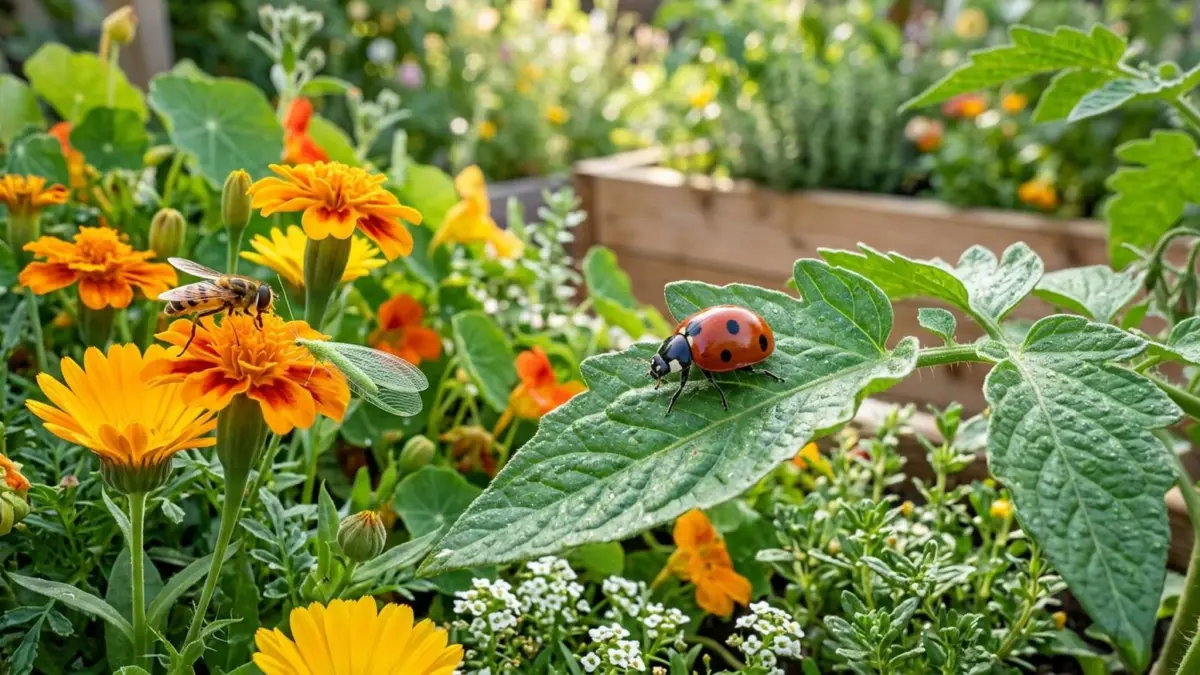
Beneficial insects are your garden’s best hired hands, because ladybirds, hoverflies and wasps control pests without sprays.
Most garden pests are held down by a small group of predators and parasitoids that you can recognise, feed and keep alive. Aphids, caterpillars, mites and slugs all have natural enemies, but those enemies arrive late, need flowers as adults and die easily from sprays. This guide covers who they are, which plants feed them, how to read the signs of their work and how to time any treatment so it spares them.
It belongs to the Pests and Diseases guides. For the pests themselves see Common Garden Pests and Organic Control, and for treatments that do the least damage to allies read 7 Natural Remedies Every Gardener Should Know How to Make.
At a glance
| Ally | What it kills | Life stage that works | What the adult eats |
|---|---|---|---|
| Ladybird (ladybug) | Aphids, scale, mites | Larvae and adults | Prey, plus pollen |
| Hoverfly | Aphids | Larvae only | Nectar and pollen |
| Green lacewing | Aphids, thrips, mites, small caterpillars | Larvae | Nectar, pollen, honeydew |
| Parasitoid wasps (Aphidius, Cotesia) | Aphids, cabbage caterpillars | Larvae inside the host | Nectar from tiny flowers |
| Ground beetles | Slug eggs, small slugs, cutworms | Larvae and adults, mostly at night | Prey |
| Spiders and rove beetles | Flies, small insects, mites | All stages | Prey |
Learn to recognise them at every stage
Larvae look nothing like adults, which is why they are so often squashed. A ladybird larva is a small grey or black alligator-shaped grub with orange or yellow spots, and it can eat hundreds of aphids before it pupates. Adult ladybirds feed on aphids too, but they fly off when food runs short.
Hoverfly larvae are legless, slug-like and green, cream or brown, often tucked into the middle of an aphid colony. The adults are the striped flies that hang motionless over flowers. Lacewing larvae are tan, bristly and shaped like tiny pincered crocodiles, while the eggs hang on thin silk stalks under leaves.
Parasitoids leave signs rather than bodies. Aphid mummies are swollen, tan or bronze shells, each with a neat round hole if the wasp has already emerged. A cabbage white caterpillar surrounded by small yellow cocoons has been parasitised by Cotesia wasps, so leave it where it’s. The caterpillar is already doomed, and the next wasp generation is inside those cocoons.
Before treating any infestation, spend one minute counting allies on the worst shoot. If you see two or more larvae or a handful of mummies, wait five to seven days and recount. Treat only if aphids still outnumber allies and damage is growing.
Plants that keep adult predators in your garden
The adults of hoverflies, lacewings and many parasitoid wasps feed on nectar and pollen, and they need it within easy reach. Hoverflies and tiny wasps have short mouthparts, so deep tubular flowers such as foxgloves are useless to them. Choose shallow, open or clustered flowers.
- Umbellifers: dill, fennel, coriander allowed to flower, wild carrot and Ammi. Their flat flower heads suit tiny wasps and hoverflies.
- Daisy types: cosmos, calendula, yarrow, single marigolds and coneflower.
- Low edging: sweet alyssum and phacelia, which flower fast from seed and sit right beside crops.
- Succession: aim for something in bloom from early spring to first frost, because gaps in flowering are gaps in protection.
Double-flowered cultivars often have their nectar bred out and the reachable parts hidden, so choose singles. Edge vegetable beds with a strip at least 30 to 50 cm (12 to 20 in) wide, and place flowers within a few metres of crops. A broader pollinator planting is covered in Flowers That Attract Pollinators, and plant partnerships that help in the vegetable bed are in Companion Planting.
Habitat: shelter, water and the untidy corner
Allies need somewhere to spend the winter and somewhere to hide by day. Ladybirds and hoverfly larvae overwinter in leaf litter, grass tussocks and hollow stems. Ground beetles live under stones, boards and dense mulch, and hunt after dark. Leave some stems standing until spring, keep a log pile or stone heap in a quiet corner, and mulch beds so ground beetles have cover.
A shallow dish of water with stones to land on helps all of them. Purpose-built insect hotels and lacewing boxes have uneven evidence for improving pest control, so treat them as optional. A varied border does far more.
Ants are the exception. They farm aphids for honeydew and chase off ladybirds and lacewings. If you see ants running up a shoot, deal with the ants first by trapping them at the stem base with a band of sticky barrier on trunks of fruit trees, and the aphids often decline once their guards are gone.
Two more habits help. Leave a small patch of stinging nettle in a sunny corner if you can: it hosts aphid species that don’t attack garden plants, and ladybirds breed on them early in spring, before your crops have any aphids at all. And avoid slug pellets where you can. Ground beetles eat poisoned slugs and can die from them, so reach for a beer trap, a night-time torch patrol or a ferric phosphate product used exactly as labelled instead.
Spraying without wrecking the team
Broad-spectrum insecticides kill predators faster than pests, because predators are fewer and reproduce more slowly. A pest population can rebound within weeks, while an ally population may take a season. Use the following rules if you must act.
- Identify the pest and the stage before choosing anything. Tools such as Bt (Bacillus thuringiensis kurstaki) only affect caterpillars, while soap and oil sprays affect anything soft-bodied they touch.
- Spot-treat. Spray the infested shoot tips, not the whole bed, so untouched plants stay a refuge.
- Spray in the evening once bees and hoverflies have stopped flying, and when temperatures are below about 28°C (82°F) to avoid leaf scorch.
- Skip open flowers. Remove or avoid spraying any plant in bloom.
- Read the label for the pre-harvest interval and bee warnings and follow them exactly.
- Recount after 5 to 7 days. A second spray should be a decision, not a schedule.
Systemic insecticides move into pollen and nectar, so avoid them on anything that flowers. Always read and follow the product label, keep sprays away from ponds and edible crops outside their stated use, and store products out of reach of children and pets. Don’t climb ladders to spray or prune near power lines; hire a qualified arborist.
Counting what is working
Judge your garden by trend, not by single visits. Once a week through spring, look at the same three or four shoots at the same time of day and note aphid numbers, larvae, mummies and eggs. A healthy pattern is aphids rising for two weeks, then larvae and mummies appearing, then the colony shrinking. If aphids keep growing for a third week and no allies show up, the cause is usually missing flowers nearby or a recent spray, so fix those rather than reaching for another product. Yellow sticky traps catch hoverflies and parasitoid wasps along with pests, so avoid them in open beds.
When buying insects makes sense
Purchased control works best in enclosed spaces. In a greenhouse, the parasitic wasp Encarsia formosa for whitefly and the predatory mite Phytoseiulus persimilis for spider mites do well once temperatures are consistently warm, usually above about 18°C (64°F). Beneficial nematodes for vine weevil grubs and slug nematodes are watered onto moist soil that’s warm enough, with the minimum temperature set by the product, so check the pack.
In open beds, released adult ladybirds and lacewings mostly leave, and wild-collected ladybirds can carry diseases or alter local populations. Improving habitat is a longer-lasting investment.
Diagnosing what you see
| What you see | Likely cause | What to do |
|---|---|---|
| Dense aphids, no predators after 2 weeks | No nearby nectar plants, or recent spraying | Add flowers, stop broad sprays, wash off aphids with a water jet |
| Sticky leaves and ants on stems | Ants tending aphids | Block ants at the base of the plant, then reassess aphids |
| Spiky grey larvae among aphids | Ladybird larvae | Do nothing and keep the colony |
| Bronze, swollen aphids | Parasitoid wasps (mummies) | Leave them alone |
| Pests rebound days after spraying | Predators killed, pests survived | Stop spraying and restock habitat |
How beneficial insects protect your garden as hired hands
Ladybird and lacewing larvae eat aphid and control outbreaks on rose and bean, while hoverfly larvae also feed on aphid and the adults pollinate. Parasitic wasp lays eggs in caterpillar and whitefly, which kills pests without spraying. Ground beetle hides under mulch and eats slug and cutworm.
Dill, fennel, marigold and catmint attract hoverfly and lacewing, because small open flowers supply nectar. Bee needs lavender and borage, and a log pile hosts overwintering beetle. Pesticide kills these allies as well as pests, which means you shouldn’t spray unless a problem gets serious. A shallow dish of water supports them in a heatwave of 30°C. Predators follow pests, so you’ll see aphid first and ladybird a week or two later. A bug hotel with hollow stems of 10 cm hosts solitary bee, and earwig feeds on aphid at night in a pot of straw. Nematode watering controls vine weevil and slug in damp soil at 12°C, and a compost heap hosts frog and hedgehog that eat slug. A strip of clover and borage 1 m wide holds predators near your tomato and cabbage. The RHS and your extension service both advise patience before you reach for a spray, and the organic pest control guide shows what to use when numbers climb.
Common mistakes
- Squashing unfamiliar larvae. Most grubs among aphids are predators. Learn the larval forms first, then act.
- Spraying at the first aphid. Predators need prey to arrive, so a clean plant attracts none. Tolerate a small colony for a week.
- Growing only double flowers. They look generous, but the pollen and nectar are often unreachable. Choose single or open forms.
- Spraying open blooms in daylight. This hits bees, hoverflies and wasps together. Wait until evening and skip flowering plants.
- Clearing every leaf in autumn. Overwintering allies live in the litter. Clear diseased material only, as described in Garden Hygiene.
Next steps
Build a routine around what you have learned with Preventing Garden Problems Before They Start, check the pests you actually face in Common Garden Pests and Organic Control, and pick the gentlest tool from natural remedies. Return to the Pests and Diseases guides.
Frequently asked questions
What do ladybird larvae look like in the garden?
Ladybird larvae look like tiny grey or black alligators with orange or yellow spots. They are not pests. A single larva can eat hundreds of aphids before it pupates, so leave them in place and avoid squashing them or spraying the shoot they are working on.
Which flowers attract hoverflies and lacewings to the garden?
Shallow, open flowers work best, such as dill, fennel, cosmos, calendula, yarrow, sweet alyssum and phacelia. Hoverflies and tiny wasps have short mouthparts, so deep tubular flowers are no use to them. Choose single flowers rather than doubles, and aim for something in bloom from early spring to first frost.
Do hoverflies sting or bite people?
No. Hoverflies have no sting and do not bite, even though many wear yellow and black stripes that mimic wasps. The adults feed on nectar and pollen, and their legless larvae eat aphids. If a striped fly hangs motionless over a flower, it is almost certainly a hoverfly.
Are green lacewings good for the garden?
Yes. Lacewing larvae are tan, bristly and shaped like tiny crocodiles, and they eat aphids, thrips, mites and small caterpillars. Adults feed on nectar, pollen and honeydew. Their eggs hang on thin silk stalks under leaves, so look closely before you wipe or spray a shoot.
How do I attract ground beetles to my vegetable beds?
Give them daytime cover. Ground beetles hide under stones, boards and dense mulch, then hunt slug eggs, small slugs and cutworms at night. Keep a log pile or stone heap in a quiet corner, leave some long grass at the edges, and avoid slug pellets that poison their food.
Should I leave dead stems and leaves in the garden over winter?
Yes, at least in part. Ladybirds and hoverfly larvae overwinter in leaf litter, grass tussocks and hollow stems. Leave some stems standing until spring and tidy only the beds that need it. Remove leaves showing disease, such as black spot, and bin them.
Do ants stop ladybirds from eating aphids?
Yes, often. Ants farm aphids for sticky honeydew and chase away ladybirds and lacewings. If you see ants running up a shoot, deal with the ants first. On fruit trees, a band of sticky barrier on the trunk stops them climbing, and aphid numbers often fall afterwards.
Are insect hotels worth building for pest control?
They are optional. Evidence that insect hotels and lacewing boxes improve pest control is uneven, so do not rely on them. A varied border with flowers through the season, leaf litter, a log pile and a shallow water dish does far more to keep predators around.
Does Bt spray harm ladybirds and hoverflies?
Bt targets caterpillars, so it is far gentler on ladybirds and hoverflies than broad-spectrum insecticides. It can still harm butterfly and moth caterpillars that eat treated leaves. Use it only on the plants affected, check that it is approved where you live, and follow the label.
Is a patch of stinging nettles good for ladybirds?
Yes. A small nettle patch in a sunny corner hosts aphid species that do not attack garden plants, and ladybirds breed on them early in spring, before your crops have any aphids. Keep it contained, cut it back after flowering, and wear gloves when you handle it.
More in Pests & Diseases
7 Natural Remedies Every Gardener Should Know How to Make
Soap spray, neem, bicarbonate, garlic-chili and more: honest efficacy, mixing ratios, test-patch and timing rules, and the bee, fish and pet risks of "natural".
Protect Your Garden from Wildlife: Humane Methods That Work
Deer, rabbits, moles, squirrels and birds each need a different answer. Fence heights, burial depths and realistic expectations for repellents.

Preventing Garden Problems Before They Start (The Master Guide)
A weekly scouting routine, action thresholds, resistant varieties, crop rotation intervals and timing rules that stop most pest and disease outbreaks early.