Quick answers
- What are the safest organic pest control products?
- Physical controls are the safest: mesh, fleece, sticky traps, barriers and hand picking. Biological controls such as nematodes come next, and sprays such as insecticidal soap need more care.
- Do organic sprays harm bees?
- Some do. Pyrethrum and some soaps can harm bees and other beneficial insects, so spray in the evening, avoid open flowers and read the label. Choose physical controls when you can.
- What mesh size stops carrot fly and flea beetle?
- A fine insect mesh with holes of about 1 mm stops flea beetle and many flying pests. For carrot fly, a barrier 60 cm high around the bed also helps.
- Are organic products legal everywhere?
- Rules vary by country. Some products such as neem oil are restricted or unapproved in places, so check with your extension service and the label before you buy.
Key takeaways
- Start with physical controls such as mesh, fleece and traps, which are the safest choice
- Biological controls such as nematodes work well on slugs and vine weevil in warm, moist soil
- Spray soaps and oils in the evening and avoid open flowers to protect bees
- Fine mesh of about 1 mm stops many flying pests, and a barrier of 60 cm helps with carrot fly
- Read the label, follow local rules and keep pets and children away
Table of contents15 sections
- Best organic pest control products at a glance
- How to choose organic pest control products
- How pest products, wildlife and plants affect each other
- A worked example: protecting a brassica bed
- Using sprays and baits safely
- Timing organic pest control through the season
- Which product for which pest
- Building a pest plan instead of buying a product
- Suggested picks to check
- Related guides
- Common mistakes
- Next steps
The best organic pest control products start with physical barriers and traps, add biological controls such as nematodes, and use soaps or oils only when needed, so you protect your plants and the bees, birds and pets around them.
Shelves of sprays make it hard to know what actually works. This guide compares the main organic pest control products, explains how to match each to a pest, and shows how to use them safely around bees, pets and edible crops. It’s general information, and your local extension service or the Royal Horticultural Society (RHS) can advise on approved products in your area. Links on this site may earn a commission, and that never changes what we recommend.
It belongs to the Pests, Diseases and Natural Care guides and works with Common Garden Pests: Organic Control, Slugs and Snails: Natural Control and Beneficial Insects.
Always read the label on any pest product, keep it away from children and pets, and never store it in a food container. If a person or pet swallows a product, call a doctor, a vet or a poison helpline at once.
Best organic pest control products at a glance
| Product | Targets | Notes |
|---|---|---|
| Insect mesh (1 mm) | Flea beetle, cabbage white, aphid, leaf miner | Physical, safe, reusable for years |
| Sticky traps | Whitefly, fungus gnat, thrips | Yellow for whitefly and gnat, blue for thrips |
| Copper tape and grit | Slug and snail | Best on pots; wet bridges break it |
| Nematodes | Slug, vine weevil larvae | Water into moist soil above 5 to 12 °C |
| Insecticidal soap | Aphid, whitefly, red spider mite | Spray in the evening; avoid open flowers |
| Bacillus thuringiensis (Bt) | Caterpillars | Targets caterpillars, check local approval |
| Ferric phosphate pellets | Slug and snail | Use sparingly and follow the label |
These are typical uses. Weather and pest numbers vary, so combine two or three methods and check plants weekly.
How to choose organic pest control products
- Identify the pest. Check the leaf, stem and soil first, because the wrong product wastes money and can harm helpful insects.
- Start physical. Fit mesh, fleece or a barrier before the pest arrives, because prevention beats a spray.
- Add traps. Use sticky traps or beer traps to track numbers and catch adults.
- Try biological controls. Nematodes and predatory insects work best in warm, moist conditions.
- Use sprays last. Choose soap or oil, test on one plant first and spray at dusk.
- Check the rules. Confirm that a product is approved where you live.
How pest products, wildlife and plants affect each other
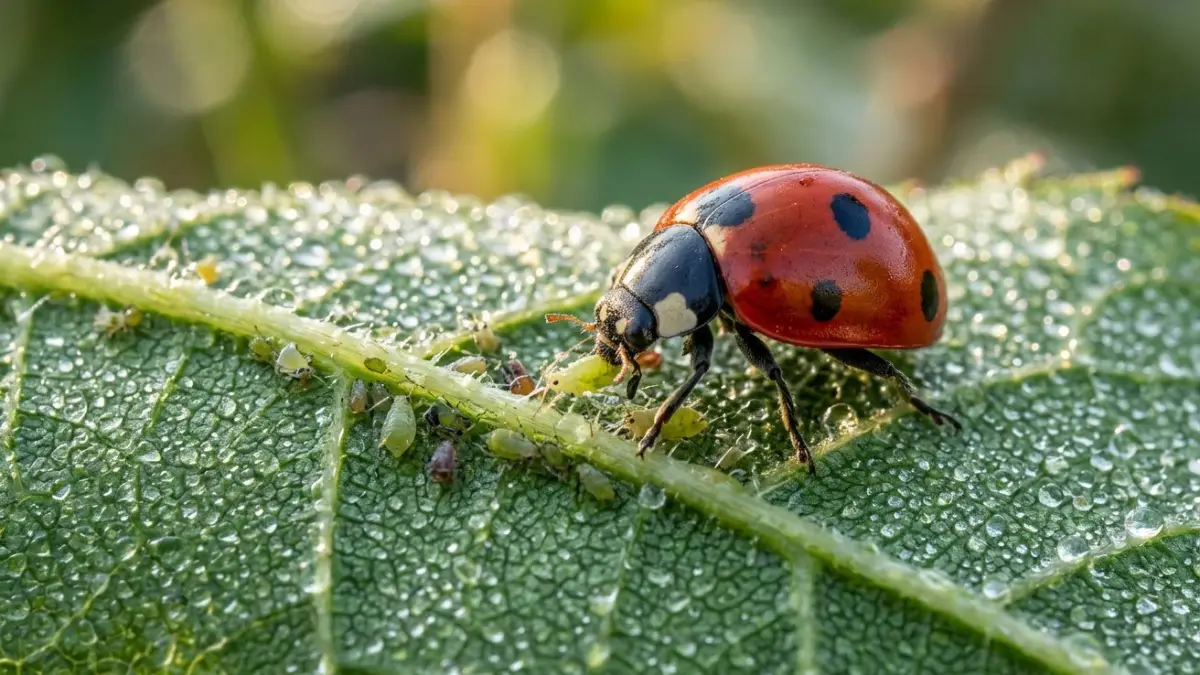
Insect mesh stops cabbage white and flea beetle reaching brassicas, and fleece protects carrot from carrot fly when set 60 cm high. Ladybird and lacewing eat aphid, hoverfly controls aphid on lettuce, and frog and hedgehog eat slug and snail. Broad sprays kill these helpers along with the pest, so soap works best on a small area. Garlic repels aphid near rose, and marigold repels whitefly near tomato.
Slug damages hosta and lettuce, and gravel or copper tape blocks it on pots. Mulch protects soil and reduces weeds but gives slug cover, so keep it thin near seedlings. Blight attacks tomato and potato in damp weather, and watering the base of the plant rather than the leaves reduces it. Powdery mildew attacks squash and rose in dry spells, and airflow reduces it. A pond within 5 m attracts frog, and a log pile shelters beetle. Your extension service or the RHS lists local pests and safe products.
A worked example: protecting a brassica bed
For a bed of 1.2 m by 2 m with cabbage and kale, erect hoops 60 cm high and cover them with insect mesh of 1 mm, burying the edges so butterflies can’t crawl underneath. Place two yellow sticky traps beside the bed to see whether whitefly arrive. Water nematodes into the soil in spring when it’s above 5 °C if slug damage was heavy last year. Hand pick any caterpillars that slip through, and spray Bt where it’s approved if the numbers rise. Rotate brassicas to a new bed each year to reduce club root and pests that overwinter in soil. After 3 weeks you’ll see far less damage, with no spray on the leaves you eat.
Using sprays and baits safely
- Read the label: follow dose, timing and the interval before harvest.
- Spray at dusk: bees are less active, and leaves are less likely to scorch.
- Avoid open flowers: keep spray off blossom and flowering weeds.
- Protect water: keep products away from ponds, drains and streams.
- Store safely: keep products in original containers, out of reach of children and pets.
Timing organic pest control through the season
In spring, aphid builds up on rose and bean from about 10 °C, so check shoots weekly and spray soap at 5 ml per litre on small colonies only if ladybird and hoverfly haven’t arrived. In early summer, cabbage white lays eggs on kale and cabbage, and mesh of 1 mm fitted by April keeps most of the damage away. Slug feeds hardest after rain, so water nematodes in when soil is above 5 °C and repeat every 6 weeks.
In late summer, red spider mite attacks dry plants, and humidity of 50% reduces it. In autumn, remove fallen leaves within 2 weeks, because old leaves shelter blight spores and slug eggs. In winter, clean pots and canes, and check mesh for holes wider than 2 mm, since a small gap lets pests in.
Which product for which pest
| Pest | Organic option | How it works |
|---|---|---|
| Slugs and snails | Nematodes or ferric phosphate pellets | Nematodes infect slugs in moist soil above 5 °C |
| Aphids | Insecticidal soap or a water jet | Soap breaks down the soft body, and water knocks colonies off |
| Caterpillars on brassicas | Fine mesh or Bt spray | Mesh of 1 mm blocks egg laying, and Bt affects caterpillars only |
| Vine weevil | Nematodes in pots | Apply when soil is above 12 °C in late summer |
| Red spider mite | Humidity and predatory mites | Mites thrive in dry air, so misting and predators reduce them |
Organic doesn’t mean harmless. Read the label, spray in the evening when bees have gone, and never spray open flowers. Keep products out of reach of children and pets, and store them in the original container.
Building a pest plan instead of buying a product
Healthy plants resist pests better, so water at the roots, feed lightly and give each plant room. Check plants weekly, because a few aphids on one shoot are easier to remove than a colony on the whole bush. Planting flowers such as alyssum and calendula brings hoverfly and ladybird, and these predators eat aphids all season. Birds, frogs and hedgehogs also help, so leave a log pile and a shallow water dish in a quiet corner.
Use a product only when damage passes what the plant can bear, and choose the narrowest option that fits, such as nematodes for slugs, rather than a broad spray that kills helpful insects too.
Suggested picks to check
We have not tested these products ourselves. They are suggestions that match the criteria above, so check the current size, specification and price on the seller’s page before you buy.
For aphids and mites
Safer Brand insecticidal soap
A ready to use soap spray for soft bodied insects such as aphid and spider mite. Spray in the evening and read the label.
Good
- Breaks down quickly
- Suits many plants
Not so good
- Must touch the pest to work
For slugs
Nemasys slug killer nematodes
Microscopic nematodes that you water into moist soil to infect slugs. Use when the soil is above 5 °C.
Good
- Wildlife safe
- Targets slugs
Not so good
- Needs moist, warm soil
For caterpillars
Monterey B.t. caterpillar killer
A spray with Bacillus thuringiensis that affects caterpillars after they eat treated leaves. Check availability in your country.
Good
- Targets caterpillars
- Organic
Not so good
- Spray only on infested leaves
Related guides
Use this guide with Common Garden Pests Slugs & Snails Beneficial Insects Natural Remedies Prevent Problems Early Garden Hygiene.
Common mistakes
- Spraying before identifying the pest. The product may not work, or may harm helpers.
- Treating “organic” as harmless. Some natural products still harm bees and fish.
- Using nematodes in cold soil. They need warmth and moisture.
- Leaving mesh gaps. Pests find any opening at the edge.
- Forgetting hygiene. Remove old leaves, because they shelter pests and spores.
Next steps
Identify the pest, fit a physical barrier first and keep sprays for the last resort. For common pests read Common Garden Pests: Organic Control, for slugs read Slugs and Snails: Natural Control and for helpers read Beneficial Insects. The Pests, Diseases and Natural Care guides link every step.
Frequently asked questions
How do I choose the right insect mesh for vegetables?
Match the hole size to the pest. A fine mesh with holes of about 1 mm stops flea beetle, cabbage white and many flying pests. Pick a width that covers the hoops with spare for burying the edges, and check for tears wider than 2 mm each season.
Are yellow sticky traps safe for bees and ladybirds?
Not entirely. Sticky traps also catch beneficial insects, so use them under cover, such as in a greenhouse, rather than outdoors. Yellow cards suit whitefly and fungus gnat, and blue cards suit thrips. Treat them mainly as a way to see numbers, not as a complete control.
When should I water nematodes into the soil?
Apply them when the soil is moist and warm enough, typically above 5 to 12 °C depending on the product, so check the label. Slug nematodes are usually repeated every 6 weeks from spring to autumn. Water the soil well before and after, and use the pack quickly.
How long does insecticidal soap take to work?
Soap works on contact, so soft-bodied pests such as aphids and whitefly dry out within hours. It has no effect once dry and does not kill eggs. Repeat the spray after 5 to 7 days, for two or three rounds, and always follow the label.
Can I eat vegetables soon after using an organic spray?
Check the label for the interval before harvest, because it varies by product. Even with gentle sprays, wash leafy crops and fruit before eating. Where the label gives no interval for edible crops, choose a physical control such as mesh or hand picking instead.
How should I store organic pest control products at home?
Keep them in their original labelled containers, out of reach of children and pets, in a cool, dry place away from food. Never decant them into drink bottles or food containers. Check the label for storage and shelf life, since nematodes and biological products are short-lived.
Is neem oil safe around cats and dogs?
Use caution. Neem oil can make cats and dogs ill if they lick or eat it, and it is toxic to fish. Keep pets away until leaves are dry, store the bottle securely, and follow the label. If a pet swallows any garden product, call a vet at once.
Does copper tape really stop slugs and snails?
It helps most on pots, where a clean band of tape around the rim can deter slugs from climbing. It is less reliable in beds. Slugs cross wet or bridged barriers, so keep leaves and soil from touching the tape and combine it with other methods.
Should I wear gloves when applying organic pest sprays?
Yes. Natural ingredients can still irritate skin and eyes, so wear gloves and eye protection when you mix or spray, and wash your hands afterwards. Use a sprayer reserved for pest products, and keep the spray away from ponds, drains and open flowers.
What is the difference between contact sprays and biological controls?
Contact sprays, such as soap, kill pests they touch and then stop working. Biological controls, such as nematodes or predatory insects, are living organisms that find and attack the pest over time. Biological controls are more selective but need the right temperature and moisture to work.
More in Pests & Diseases
Common Garden Pests & Organic Control That Actually Works
Identify aphids, whitefly, mites, caterpillars, slugs and fruit flies by the damage they leave, then pick the mildest control that works, in the order that works.
Plant Diseases: Identify and Treat the Big Five
Tell fungal, bacterial and viral disease apart by symptom pattern, then match the response: what to spray, what to prune and when to pull the plant.

Beneficial Insects: Your Garden’s Best Hired Hands
Learn to recognise ladybird larvae, hoverflies, lacewings and parasitoid wasps, feed them with the right flowers, and time any spray so you stop killing your own…