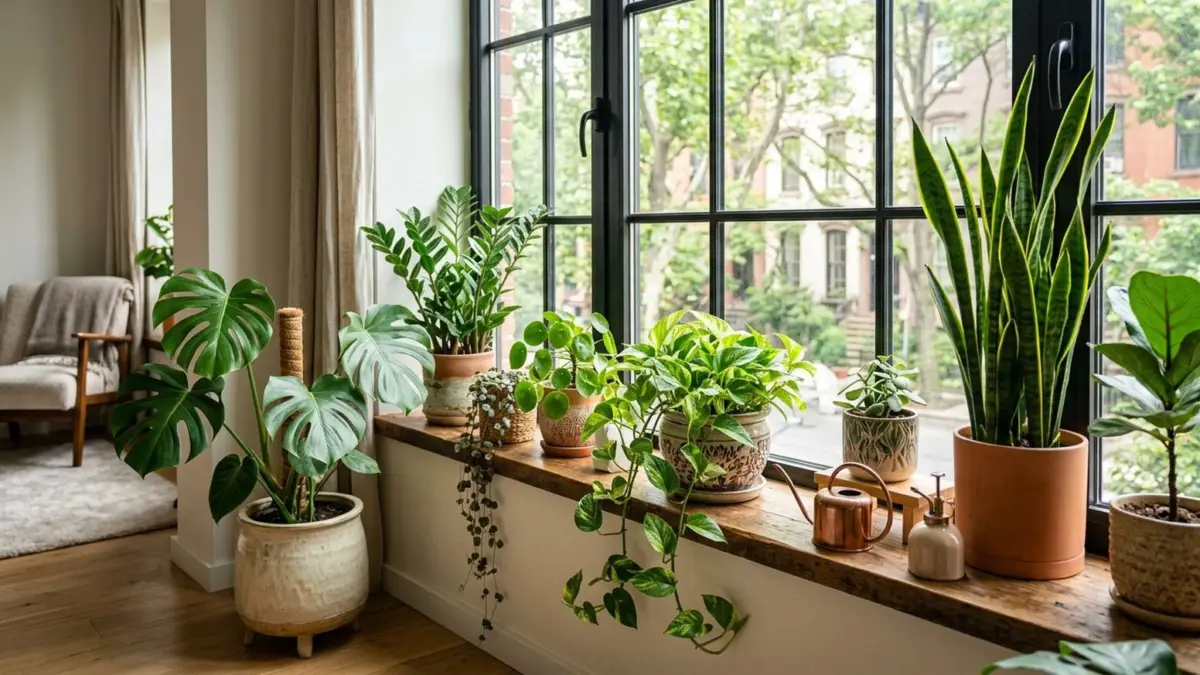
Quick answers
- Which houseplants are safe for cats and dogs?
- Commonly listed as non-toxic include spider plant, Boston fern, areca palm, parlor palm, calathea, prayer plant, peperomia, African violet, haworthia and Phalaenopsis orchids. Verify any plant against the ASPCA toxic and non-toxic plant database before buying.
- Does non-toxic mean my pet can eat it?
- No. Non-toxic means serious poisoning is unlikely, but chewing leaves can still cause vomiting or diarrhoea, and a pet that eats a lot may choke or block its gut. Treat any plant as a chew toy to discourage.
- Which houseplants are the most dangerous?
- Lilies (Lilium and Hemerocallis) can cause fatal kidney failure in cats, and sago palm is highly toxic to dogs and cats. Oleander, dieffenbachia, peace lily and philodendron also cause significant illness.
- What should I do if my pet eats a toxic plant?
- Remove plant material from the mouth, identify the plant, and call your vet or an animal poison helpline straight away, such as the ASPCA Animal Poison Control Center in the US. Do not induce vomiting unless a professional tells you to.
Key takeaways
- Check every plant against a trusted database, because common names are confusing
- Lilies and sago palm are the highest-risk plants for pets
- Non-toxic does not mean harmless to chew
- If a pet eats a plant, call a vet or poison helpline immediately
Table of contents12 sections
- Pet-safe plants at a glance
- Plants to avoid or place out of reach
- Which houseplants protect pets and which put them at risk
- Common names cause mistakes
- How to reduce risk at home
- What to do if a pet chews a plant
- Designing a pet-friendly plant collection
- Reading the signs of plant poisoning
- Safe alternatives for popular toxic plants
- Soil, mulch and plant care products
- Common mistakes
- Next steps
Pet-safe houseplants include non-toxic choices for homes with cats and dogs, and a clear list of plants to avoid.
Many popular houseplants are mildly or seriously toxic to cats and dogs, and the same common name can refer to completely different species. This guide lists widely used non-toxic plants, the ones that carry real risk, the practical steps that reduce accidents and what to do if your pet chews a leaf. It’s general information, not veterinary advice, so confirm any plant with your vet or a recognised poison database.
It belongs to the Indoor Plants guides and works with Best Low-Light Houseplants, Styling with Indoor Plants and Houseplant Problems and Fixes.
If your pet has eaten a plant and shows drooling, vomiting, tremors, weakness or collapse, contact a vet or animal poison helpline immediately. Don’t wait for symptoms to worsen and don’t induce vomiting unless a professional tells you to.
Pet-safe plants at a glance
| Plant | Light | Water | Why it works indoors |
|---|---|---|---|
| Spider plant (Chlorophytum comosum) | Bright indirect to medium | When top 3 cm dry | Tough and forgiving; cats may chew the leaves, which can upset the stomach |
| Boston fern (Nephrolepis exaltata) | Bright indirect | Keep evenly moist | Lush foliage; needs humidity |
| Areca or parlor palm | Medium to bright indirect | When top 2 to 3 cm dry | Architectural, slow growing |
| Calathea and prayer plant (Maranta) | Medium indirect | Evenly moist, soft water | Patterned leaves; fussy about dry air |
| Peperomia | Medium to bright indirect | Let dry between waterings | Compact; many leaf styles |
| African violet (Saintpaulia) | Bright indirect | Water at the base | Flowers year round |
| Haworthia and Echeveria | Bright | Soak, then dry out | Small succulents for sunny sills |
| Phalaenopsis orchid | Bright indirect | Weekly soak, drain | Long-lasting flowers |
| Christmas cactus (Schlumbergera) | Bright indirect | Moderate | Winter flowers |
| Ponytail palm (Beaucarnea) | Bright | Let dry fully | Drought-tolerant caudex |
Plant lists change as databases are updated, and sensitivity varies between animals, so use this as a starting point and verify against the ASPCA toxic and non-toxic plant database or your local equivalent before buying.
Plants to avoid or place out of reach
| Plant | Main concern |
|---|---|
| True lilies (Lilium) and daylilies (Hemerocallis) | Cats: even small amounts, including pollen or vase water, can cause acute kidney failure |
| Sago palm (Cycas revoluta) | Highly toxic to dogs and cats; seeds are especially dangerous and can cause liver failure |
| Dieffenbachia and philodendron | Calcium oxalate crystals cause mouth pain, drooling and swelling |
| Pothos (Epipremnum), peace lily (Spathiphyllum), monstera | Same oxalate irritation: drooling, vomiting, pawing at the mouth |
| Oleander | Heart toxins; serious poisoning possible |
| Aloe vera, jade plant, snake plant (Sansevieria) | Gastrointestinal upset such as vomiting or diarrhoea |
| English ivy (Hedera) | Irritation and gastrointestinal upset |
| Azalea and rhododendron | Can affect heart and nervous system |
Cut flowers also matter. Lily bouquets are one of the commonest causes of poisoning in cats, so leave them out of any home with a cat.
Which houseplants protect pets and which put them at risk
Spider plant, calathea, boston fern and areca palm are listed by the ASPCA as non-toxic to cats and dogs, so they suit homes with pets. Pothos, philodendron, peace lily and snake plant cause mouth irritation or stomach upset when chewed, and lilies can seriously harm cats. A hanging pot keeps foliage away from curious animals and protects both plant and pet.
Fertiliser and some pesticides add risk, because pets lick leaves and soil, so you should keep sprays off any plant they reach. A saucer that holds standing water encourages fungus gnat and mould that pets may drink. If a pet chews a plant, a veterinarian or the ASPCA Animal Poison Control Center can advise you quickly, and you should keep the plant’s name and a leaf to show them. Non-toxic doesn’t mean harmless, because large amounts of any leaf can upset a stomach, so a pot of cat grass of 15 cm gives a cat a safe alternative. Perlite and bark chips on top of the mix discourage digging, and a heavy terracotta pot stops a puppy tipping it. Orchid and african violet tolerate a bright shelf 1 m above the floor, and a hygrometer shows if fern and palm need humidity above 50%. Check labels on plants from shops, because common names overlap and a lily isn’t always a peace lily. The air purifying plant guide lists which of those species are toxic.
Spider plant tolerates low light and suits cats, and areca palm needs humidity and protects air quality. Calathea prefers shade and feeds nothing harmful to dogs. Cat grass in a pot of 15 cm protects your other plants from chewing. A vet can confirm which species cause problems, and the ASPCA list helps you check labels.
Spider plant tolerates dry air, and calathea needs humidity. Orchid suits bright windows, and palm protects a corner with height.
Common names cause mistakes
- “Palm” isn’t always a palm. The sago palm is a cycad and highly toxic, while areca and parlor palms are true palms and listed as non-toxic.
- “Lily” covers many plants. Peace lily, calla lily and lily-of-the-valley have different toxins from true lilies, but all can cause problems. Treat any plant with “lily” in its name as risky until checked.
- “Money tree,” “ivy” and “fern” each describe several species. Boston fern is considered non-toxic while asparagus fern isn’t.
- Always use the botanical name when checking a database, and read it from the label, not from memory.
How to reduce risk at home
- Audit your plants. List each botanical name and check it. Remove or relocate the high-risk ones first.
- Raise plants out of reach. Hanging baskets and tall plant stands help, but cats can climb, so consider closing a room instead for dangerous species.
- Give pets something to chew. A pot of cat grass (oat, wheat or barley) gives cats a safe alternative.
- Fix the drainage saucer problem. Water in saucers can contain fertilizer and plant residues. Empty saucers promptly.
- Watch fertilizer and pesticides. Slow-release granules, bone meal and many sprays are harmful if eaten. Store them out of reach.
- Keep a poison helpline number and your vet’s emergency number where everyone can see them.
What to do if a pet chews a plant
- Move the pet away from the plant and take any plant pieces out of its mouth.
- Identify the plant. Take a photo or a leaf and note the botanical name if you know it.
- Call your vet or an animal poison helpline at once, such as the ASPCA Animal Poison Control Center (US) or your national service. Some charge a consultation fee.
- Don’t induce vomiting at home unless a professional tells you to. Some plants cause more harm on the way back up.
- Note symptoms and timing so you can report them accurately.
Designing a pet-friendly plant collection
Pet-safe doesn’t have to mean boring. Combine a large areca or parlor palm for height, calathea and prayer plants for pattern, a trailing Boston fern or a spider plant in a hanging basket and a few peperomias on a shelf. Add a pot of cat grass at floor level. Group plants by light need, as explained in Best Low-Light Houseplants, and use matching pots to unify the look, as described in Styling with Indoor Plants.
Humidity-loving ferns and calatheas do best with the methods in Humidity for Houseplants, and the watering rules in How to Water Houseplants apply to every plant on the list.
Reading the signs of plant poisoning
Symptoms depend on the plant and the animal. Calcium oxalate plants such as pothos, philodendron, monstera and peace lily cause immediate mouth pain: drooling, pawing at the face, head shaking, lip smacking and sometimes vomiting. These signs usually appear within minutes and are rarely life-threatening, but a swollen mouth or throat needs veterinary attention.
Other toxins act more slowly and are more dangerous. Cats that have chewed a lily may seem fine for several hours, then vomit, stop eating and become lethargic as the kidneys fail. Sago palm can cause vomiting, bloody diarrhoea and later liver damage. Because a delay in treatment sharply lowers the chance of recovery, waiting to see what happens is the wrong approach with any plant you can’t confirm is safe.
- Early signs: drooling, vomiting, diarrhoea, loss of appetite, restlessness.
- Serious signs: tremors, seizures, weakness, laboured breathing, collapse, very pale gums.
- Cat-specific warning: any lily exposure is an emergency, even without symptoms.
Safe alternatives for popular toxic plants
If you love the look of a plant on the risk list, there’s usually a similar pet-friendlier option.
| Instead of | Consider | Why |
|---|---|---|
| Pothos in a hanging basket | Spider plant or Boston fern | Same trailing, arching shape |
| Snake plant or ZZ plant | Ponytail palm or haworthia | Sculptural, drought tolerant |
| Monstera | Large areca palm or a Kentia palm | Big, dramatic leaves |
| Peace lily | Phalaenopsis orchid or African violet | Flowers in low to medium light |
| Aloe vera on the windowsill | Haworthia or echeveria | Rosette form, sun-loving |
| Cut lilies | Roses, sunflowers, snapdragons | Much lower risk for cats, though check before buying |
Always confirm substitutions in a database, as some cultivars and look-alikes behave differently.
Soil, mulch and plant care products
The plant isn’t the only hazard. Cocoa-shell mulch contains theobromine and is toxic to dogs, so avoid it on pots and beds they can reach. Moist potting mix can grow mould that some dogs will eat, and slow-release fertilizer pellets look like treats. Cover bare soil with a layer of large pebbles, which also stops digging, and keep systemic insecticides and rooting powders in a closed cupboard. If you use a houseplant spray, read the label for pet warnings and let leaves dry before pets return to the room.
Common mistakes
- Trusting a common name. Verify by botanical name against a recognised database.
- Assuming “non-toxic” means edible. Large amounts can still cause stomach upset or blockage.
- Forgetting cut flowers and vase water. Lilies are deadly to cats even in small amounts.
- Believing a hanging basket is safe. Cats jump and climb. Use a closed room for risky plants.
- Waiting for symptoms. Call early. Treatment works best before signs appear.
Next steps
Audit your plants this week, then rebuild your collection around safe choices. For care and styling see Repotting Houseplants, Air-Purifying Indoor Plants and Styling with Indoor Plants. The Indoor Plants guides lists every houseplant guide.
Frequently asked questions
Is pothos poisonous to cats and dogs?
Yes, pothos is listed as toxic to cats and dogs. Chewing it releases calcium oxalate crystals that cause mouth pain, drooling and sometimes vomiting. Signs usually appear within minutes and are rarely life-threatening, but a swollen mouth or throat needs a vet.
Is aloe vera safe for dogs and cats?
No, aloe vera can cause vomiting or diarrhoea in cats and dogs if eaten. Haworthia and echeveria are listed as non-toxic alternatives for a sunny sill. If a pet has chewed aloe, contact your vet for advice.
Are lilies really that dangerous to cats?
Yes. True lilies and daylilies can cause acute kidney failure in cats, even from pollen or vase water. A cat may seem fine for hours before it vomits and turns lethargic. Treat any lily exposure as an emergency and call a vet straight away.
Is a hanging basket enough to keep plants away from cats?
Not always. Cats jump and climb, so a hanging pot reduces access but does not remove it. For high-risk plants, use a closed room or choose a safer species. Spider plant and Boston fern are better choices if a cat does reach the basket.
Is cocoa shell mulch safe around dogs?
No. Cocoa shell mulch contains theobromine, which is toxic to dogs, so avoid it on pots and beds they can reach. Cover bare mix with large pebbles instead, which also stops digging. Keep fertiliser pellets, bone meal and systemic insecticides in a closed cupboard.
How can I stop my cat chewing my houseplants?
Offer a pot of cat grass (oat, wheat or barley) at floor level as a safe alternative, and move tempting plants out of reach. Confirm that every plant in the room is non-toxic. Heavy pots and pebbles on the mix also discourage digging and tipping.
What are the signs that a pet has been poisoned by a plant?
Early signs include drooling, vomiting, diarrhoea, loss of appetite and restlessness. Serious signs are tremors, seizures, weakness, laboured breathing, pale gums and collapse. Some toxins, such as lilies in cats, act slowly, so call your vet or a poison helpline early rather than waiting.
Is it safe to use houseplant sprays when I have pets?
Only with care. Read the label for pet warnings, keep pets out of the room until leaves are dry, and never let them lick treated plants or soil. Wiping leaves with a damp cloth avoids most risk. Store all products in a closed cupboard.
Is a spider plant safe for cats if they chew it?
Spider plant is listed as non-toxic to cats and dogs, but large amounts of any leaf can still upset a stomach. Cats often find the leaves irresistible, so hang the plant or offer cat grass as an alternative.
Which pet-safe plant can replace a snake plant or monstera?
Try ponytail palm or haworthia for a sculptural look like snake plant, and a large areca or kentia palm for a monstera-style shape. Both are commonly listed as non-toxic. Confirm each plant by botanical name in the ASPCA database, as cultivars and look-alikes can differ.
More in Indoor Plants
Succulents and Cacti Indoors: Light, Watering and Potting
How to keep succulents and cacti healthy indoors: how much light they need, how and when to water, the right gritty potting mix, and how to…
Best Grow Lights for Houseplants
How to choose grow lights for houseplants: LED versus fluorescent, wattage, light intensity, colour temperature, distance, timers and which plants need which level of light.
15 Best Low-Light Houseplants (That Actually Thrive)
Fifteen houseplants that cope with north windows and dim rooms, what low light really means in numbers, and how to care for them so they do…