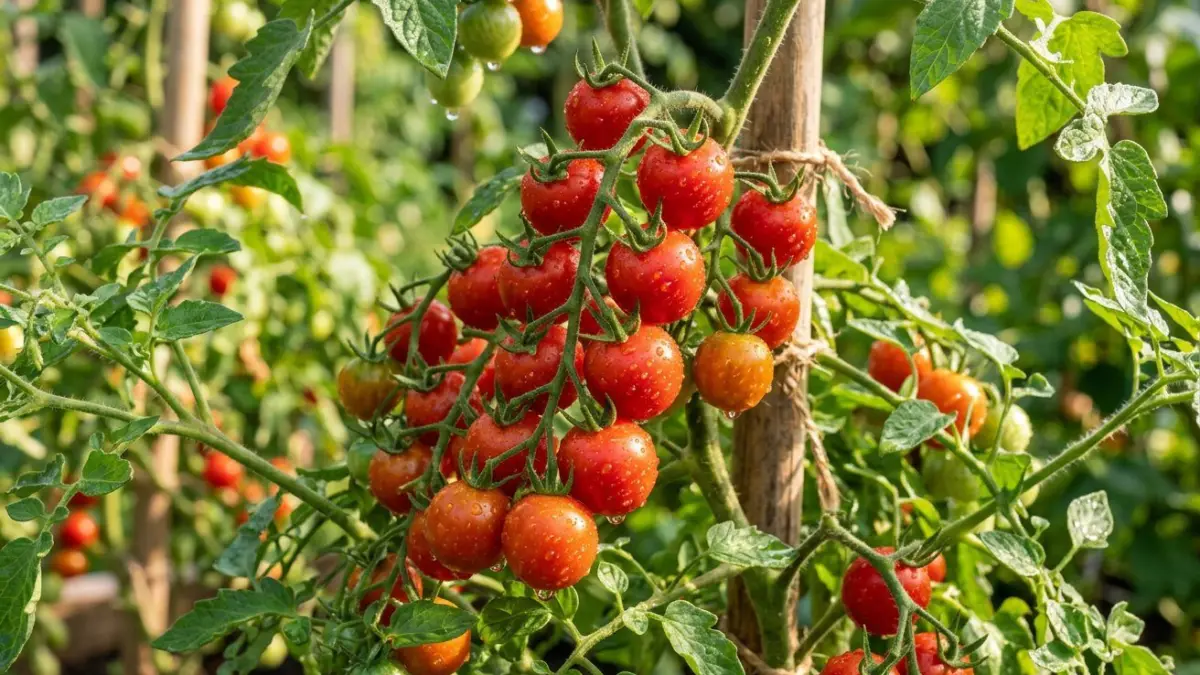
Quick answers
- How big a pot does each vegetable need?
- Roughly 5 L for salad leaves, radishes and spring onions, 10 to 20 L per plant for chard, peppers and bush beans in groups, and 30 to 40 L for a tomato or aubergine. A zucchini needs 40 to 60 L. Smaller pots work but crop less and dry out daily.
- How often should I water vegetables in pots?
- In summer, check every morning and water once a day in pots over 20 L, and sometimes twice a day in small pots in sun and wind. Push a finger 3 cm into the mix: if it is dry, water until 10 to 20% of the volume runs out of the base.
- When do container vegetables need feeding?
- Most potting mixes carry only 4 to 6 weeks of nutrients. After that, feed fruiting crops every 7 to 14 days with a liquid feed at label strength, or use controlled-release granules at planting. Leafy crops do well on half-strength feed every 2 weeks.
- How do I stop pots overheating in summer?
- Keep root-zone temperature below about 30°C (86°F) by using light-coloured or double pots, shading the pot sides rather than the leaves, and mulching the surface 3 to 5 cm deep. Move cool-season crops such as lettuce to afternoon shade once days pass 25°C (77°F).
Key takeaways
- Volume per plant matters more than pot width: 5 L for leaves, 15 to 20 L for peppers, 30 to 40 L for tomatoes
- Pots lose nutrients with every watering, so start liquid feeding about 4 to 6 weeks after planting
- Roots above about 30°C stall, so shade the pot sides and mulch the surface
- Water until some drains out, and check by finger rather than by calendar
Table of contents9 sections
Container vegetable gardening lets you grow food anywhere, from a balcony to a patio, if you choose the right pot, mix and watering routine.
You can grow a surprising amount of food in pots, provided each plant gets enough volume: about 5 litres for salad leaves, 15 to 20 L for a pepper, and 30 to 40 L for a tomato. The two things that decide success after that are water and feed, because a pot holds only a few days of either. This guide gives pot volumes crop by crop, a watering and feeding routine built for containers, and ways to cope with heat on balconies and patios.
It sits in the Vegetables & Herbs guides. For the pot materials and mix itself, read Choosing Pots and Potting Mix. For floor loading and wind on upper floors, see Balcony & Terrace Gardens.
Container vegetable pot volumes at a glance
| Crop | Minimum volume | Minimum depth | Plants per container |
|---|---|---|---|
| Lettuce, rocket, baby leaf | 5 L per 30 cm of trough | 15 cm | Sow thinly, cut and regrow |
| Radish, spring onion | 5 L | 15 cm | 20 to 30 in a 30 cm pot |
| Basil, parsley, coriander | 3 to 5 L | 15 to 20 cm | 1 to 3 |
| Strawberry | 3 to 5 L | 20 cm | 1 per 4 L |
| Swiss chard, kale | 10 to 15 L | 25 cm | 1 to 2 |
| Bush beans | 20 L trough | 25 cm | 4 to 6 |
| Short carrots, beetroot | 10 L | 25 to 30 cm | 8 to 12 |
| Peppers, chillies | 10 to 20 L | 25 to 30 cm | 1 |
| Cucumber (trellised) | 20 to 30 L | 30 cm | 1 |
| Potatoes (grow bag) | 30 to 40 L | 35 cm | 2 to 3 seed tubers |
| Tomato, aubergine | 30 to 40 L | 35 cm | 1 |
| Zucchini, courgette | 40 to 60 L | 35 cm | 1 |
These are floors, not targets. A plant in a pot at the minimum will grow and crop, but it will want watering daily from midsummer. Going one size up costs little and buys you a day of slack when you forget.
Why volume beats width in container gardening
A wide, shallow bowl and a tall narrow bucket can hold the same litres and behave very differently. Carrots, parsnips and potatoes need depth. Lettuce, radish and strawberries need surface area but little depth. Tomatoes and zucchini need both, plus mass to buffer heat.
Volume also governs how fast water runs out. A 5 L pot of mix holds roughly 1 L of usable water, which a tomato in full sun can use in a single hot afternoon. A 40 L pot holds eight times that and drops far more slowly. If you can only manage one big pot, put the thirstiest plant in it.
Tomato specifics, such as stakes, side shoots and feeding for fruit, are covered in How to Grow Tomatoes, so this guide treats them only for pot size.
Be honest about return per square metre of floor. Leaves, radishes, herbs and spring onions give the most food for the least pot, because you harvest within 4 to 8 weeks and can resow. Zucchini and potatoes take the most space for the least variety, so choose them only if you have room for a 40 L pot or bag. Group pots by thirst: put the daily-watering crops together, and keep drought-tolerant herbs such as thyme and rosemary apart, so one routine suits each cluster.
Watering a container vegetable garden
Garden soil is a reservoir. A pot is a cup. In July a 30 L pot with a mature pepper may need water every day, and a 10 L pot may need it twice. Judge by the mix, not the calendar.
- Check each morning. Push a finger 3 cm into the mix. Dry at that depth means water now. Also lift the pot: a dry one feels startlingly light.
- Water slowly until it drains. Stop when 10 to 20% of what you poured runs from the base. That flushes salts and wets the whole root ball, not just the top.
- Water in the morning. Plants then enter the hot part of the day fully hydrated, and leaves dry before night, which lowers mildew risk.
- Rescue a bone-dry pot. Peat-based mix repels water once it dries out completely, and water runs down the sides. Stand the pot in a bucket of water for 15 to 30 minutes until the surface darkens.
- Mulch the surface. A 3 to 5 cm layer of bark, straw or compost slows evaporation noticeably.
Self-watering containers with a reservoir buy 2 to 4 days of cover for thirsty crops, but they can keep mix wet for leafy crops that dislike it and they don’t remove the need to feed. A drip line on a timer is the better fix if you travel, as described in Drip Irrigation & Smart Watering.
Irregular watering causes more fruit problems than any single nutrient. Tomatoes crack and develop blossom end rot, cucumbers turn bitter and carrots split when a dry spell is followed by a soak. A timer or a fixed morning routine fixes more than any product.
Feeding container vegetables in pots
Bagged potting mix usually contains starter fertiliser that lasts roughly 4 to 6 weeks. Frequent watering then washes the rest out through the base. After that point the plant eats only what you add.
Two workable systems
- Controlled-release granules: mix into the pot at planting at the label rate. They release over about 3 to 4 months, faster in heat. Simple, but top up if the label duration ends before the crop does.
- Liquid feed: from week 4 to 6, feed every 7 to 14 days. Use a balanced feed for leaves and roots. Switch to a higher-potassium feed (a tomato feed is the usual one) once fruiting crops start to flower.
Leafy crops such as lettuce and chard take half-strength feed every 2 weeks. Beans fix some of their own nitrogen, so give them a light potassium feed only after flowers appear. Never feed a dry pot: water first, then feed, or you can burn roots. If you see a white crust on the surface or rim, salts are building up. Flush with water equal to about twice the pot volume and skip one feed.
The difference between organic and synthetic feeds is covered in Organic vs Synthetic Fertilizers. In pots, organic granules release more slowly in cool weather, so a liquid supplement is often needed early in the season.
Heat and container vegetable gardening on balconies
Hot pots hurt more than hot air. Root growth slows above roughly 30°C and damage starts around 35°C, and a dark plastic pot against a south-facing wall can be well above that in direct sun. Walls and glass reflect heat, so a balcony can run several degrees hotter than the open garden.
| Threshold | Crop effect | What to do |
|---|---|---|
| Above about 25°C | Lettuce, spinach and radish bolt or turn bitter | Afternoon shade; sow again in autumn |
| Above about 32°C by day | Tomato and pepper flowers drop | Shade cloth at midday; steady water |
| Mix above about 30 to 35°C | Roots stall, plants wilt even when wet | Light pots, double potting, shade the sides |
Practical cooling steps: choose white, cream or terracotta-coloured pots, or slide a pot inside a larger one with an air gap. Group pots so they shade one another’s sides. Keep leaves in the sun but the pot walls in shade. Terracotta and fabric pots lose water through the walls, so they cool by evaporation but need more frequent watering. Avoid standing pots on hot tile or concrete without a spacer. Stand them on a rack or wooden slats.
Troubleshooting container vegetables
| Symptom | Likely cause | Fix |
|---|---|---|
| Wilts every afternoon, recovers overnight | Pot too small or too hot | Move up a size; shade the sides; mulch |
| Yellow lower leaves, plants stunted | Nutrients washed out after 5 to 6 weeks | Begin regular liquid feed |
| Plenty of leaf, few fruit | Too much nitrogen, or too little sun | Switch to a potassium feed; check for 6 hours of sun |
| Tomato bases black and sunken | Uneven watering limiting calcium uptake | Water on a fixed routine; mulch |
| Soggy mix, gnats, yellowing | Poor drainage or saucer left full | Empty saucers; unblock holes; use free-draining mix |
| White crust on surface | Salt build-up from feed | Flush with twice the pot volume of water |
Common mistakes
- Pots too small for the crop. Little mix means little water, so plants swing between drought and soaking. Use the volumes above as a floor.
- Using garden soil. It compacts in a pot and drains badly. Use potting mix and see the pot guide for blends.
- Skipping drainage holes. Water pools at the base and roots rot. Always drill at least one hole.
- Feeding on a calendar and never checking. Underfed plants look pale, overfed ones scorch. Start at 4 to 6 weeks and follow the label.
- Overcrowding. Five tomatoes in one trough compete for water and invite disease. One plant per large pot.
- Dark pots in full sun. Roots cook while the leaves look fine. Use light colours or shade the pot sides.
If you have the space, a raised bed holds more than pots, as explained in Raised Bed Vegetable Gardening.
Next steps
Pick crops that reward beginners in 7 Easiest Vegetables to Grow, add pot-friendly herbs from Herb Garden Essentials, and plan what to do with the crop in Harvesting and Storing Vegetables. Back to the Vegetables & Herbs guides.
Frequently asked questions
What is the best potting mix for vegetables in containers?
Use a good-quality multipurpose or vegetable potting mix, not garden soil. Garden soil compacts and drains badly in pots. Look for a free-draining mix with some compost, and refresh or replace it each year to avoid disease build-up.
Can I reuse last year's potting mix for vegetables?
Yes, if the plants were healthy. Remove old roots, then mix in fresh compost or about one third new potting mix and a slow-release feed. Replace it completely after crops that had disease, such as blight-affected tomatoes.
Which vegetables grow best in pots for beginners?
Salad leaves, radishes, spring onions, bush beans, chard, herbs and cherry tomatoes. Most suit modest pots and give a harvest within 4 to 12 weeks. Start with a few containers of different sizes and group the thirstiest crops together.
Do vegetable pots need drainage holes?
Yes. Without holes, water pools at the base, roots rot and fungus gnats appear. Drill at least one hole, preferably several, and raise pots on feet or slats. Empty saucers after watering so roots never sit in standing water.
Why do my container plants wilt when the mix is wet?
Usually hot roots or waterlogging. Roots stall above about 30 to 35°C and cannot take up water, so shade the pot sides. If the mix is soggy, improve drainage and empty saucers. Wilting that recovers overnight often means the pot is too small.
Can I grow vegetables on a balcony with little sun?
Yes, with the right crops. With about 4 hours of sun, grow salad leaves, spinach, kale, chard, radish and herbs such as mint and parsley. Fruiting crops need 6 to 8 hours. Pale walls reflect extra light onto the pots.
How do I grow potatoes in a container?
Use a bag or bucket of 30 to 40 L with drainage holes and plant 2 to 3 seed tubers. Add mix as the shoots grow so tubers form higher up. Water evenly, and harvest new potatoes after flowering or maincrops once the foliage dies back.
Are self-watering containers good for vegetables?
Yes, especially for thirsty crops such as tomatoes, where a reservoir gives 2 to 4 days of cover. They can keep mix too wet for leafy crops that dislike it, and you still need to feed. Top up the reservoir and flush the mix occasionally.
How many tomato plants can I grow in one pot?
One plant per 30 to 40 L pot. Crowding makes plants compete for water and invites disease. A long trough can hold several only if each plant still has about the same volume of mix, and small bush types need at least 20 L.
Can I grow vegetables in buckets or recycled containers?
Yes, if the container is clean and food-safe. Drill drainage holes and avoid anything that held chemicals, paint or fuel. Choose a size that suits the crop, and shade dark sides in summer, because they heat up quickly in sun.
More in Vegetables & Herbs
Composting at Home: Turn Kitchen Waste into Garden Gold
Get the carbon to nitrogen balance right, choose hot or cold composting, know what never goes in the bin, and use the finished compost safely on…
Companion Planting: What Grows Well Together (and What the Evidence Says)
Which companion pairings have real evidence (trap crops, flower strips, marigolds against nematodes) and which are folklore, plus a bed plan built on the proven ones.
Harvesting and Storing Vegetables: Timing, Curing and Keeping
Harvest signs for common crops, curing for onions, squash and potatoes, storage temperatures and safe preserving, so your harvest lasts for months.