Quick answers
- What are the best low-light houseplants?
- Snake plant, pothos, ZZ plant, cast iron plant, and Chinese evergreen are the most forgiving low-light options. They grow slowly in low light but remain healthy.
- How often should I water my houseplants?
- There is no universal schedule. Water when the top 2-5 cm of soil is dry, depending on the plant. Most houseplants are killed by overwatering, not underwatering.
- Why are my houseplant leaves yellowing?
- Yellow leaves usually mean overwatering (the most common cause), but can also indicate underwatering, nutrient deficiency, or natural aging.
- Do houseplants need fertilizer?
- Yes, but lightly. During active growth, feed every 2-4 weeks with half-strength balanced fertilizer. Reduce in winter.
Key takeaways
- Light is the most important factor. Match the plant to the light you have, not the light you wish you had.
- Water by need, not by schedule. The finger test works for most houseplants. When in doubt, wait.
- Drainage is non-negotiable. Every pot needs a hole. No hole means root rot waiting to happen.
- Humidity matters more for some plants than others. Tropicals want humidity; succulents are fine with dry air.
- Fertilize lightly during growth, rest during dormancy. Half-strength every 2-4 weeks in spring and summer.
- Observe before you act. A yellow leaf might be normal, or it might signal a problem. Check the pattern.
- Repot when roots circle the pot, not on a schedule. Most houseplants are happy being slightly root-bound.
- Pet safety matters. Know which plants are toxic before bringing them home. Check the ASPCA database.
Table of contents28 sections
- What to read for each situation
- Light: the first decision
- Watering: where most plants are lost
- Humidity and temperature
- Pots, mix and repotting
- Diagnosing problems
- Air-purifying claims, honestly
- Styling and pets
- How indoor plants respond to light, water and humidity
- What questions does this guide answer?
- What does each guide cover?
- Low light: 15 best low-light houseplants
- Watering: How to water houseplants correctly
- Repotting: Repotting houseplants without stress
- Problems: Houseplant problems and fixes
- Air: Air-purifying indoor plants
- Styling: Styling with indoor plants
- Humidity: Humidity for houseplants
- Pets: Pet-safe houseplants
- Succulents: Succulents and Cacti Indoors: Light, Watering and Potting
- Lights: Best Grow Lights for Houseplants
- How much light does each window give?
- How should you water each plant type?
- How do you pick a repotting size and time?
- How do the indoor plant choices affect each other?
- Key terms
- Common mistakes with houseplants
- Where to go next
Indoor plants thrive when you match each plant to the light, water and humidity in your rooms, so this guide shows you how to choose, water and repot them.
Indoor plant care is the practice of matching each houseplant to the light, water, humidity and pot it needs: bright or low light by window position, watering when the mix has dried to the right depth, adequate humidity, and a pot with drainage that’s repotted only when roots demand it.
Houseplants thrive when four things match their origin: the light they get, the way they are watered, the humidity around them, and the pot and mix they sit in. This guide organises the indoor plant guides by problem and decision, from picking plants for a dim room to keeping them safe around pets.
Quick answer: check the mix with a finger before every watering, water thoroughly until it drains, empty the saucer, and place each plant by its light needs. Overwatering kills more houseplants than anything else.
Most houseplants come from forest floors or warm, humid regions, so they cope with indoor shade and steady warmth but struggle with dry air, cold draughts and overwatering. Overwatering is the most common cause of loss, so the watering guide is the first place to look if a plant is declining. Roots, pests and growing mix connect to the plant growing guides and the pests and diseases guides.
What to read for each situation
| Situation | Guide |
|---|---|
| Dim room, little window light | Best low-light houseplants |
| Not sure how often to water | How to water houseplants |
| Roots circling or water running straight through | Repotting houseplants |
| Yellow leaves, brown tips, drooping or pests | Houseplant problems and fixes |
| Want plants for cleaner air | Air-purifying indoor plants |
| Arranging plants in a room | Styling with indoor plants |
| Dry air in winter or with heating | Humidity for houseplants |
| Cats or dogs at home | Pet-safe houseplants |
Light: the first decision
Light drives growth, so it’s the first thing to match. Bright direct light, such as a south or west facing window in the northern hemisphere, suits succulents, cacti and many flowering plants. Bright indirect light suits most foliage plants. Low light, meaning a few metres from a window or a north-facing room, suits a short list of tough species. Plants in too little light grow slowly, stretch toward the window and lose variegation, while plants in too much direct light scorch. As a rough test, if you can read comfortably without a lamp the light is moderate, and if shadows are sharp the light is strong. The list of tolerant species is in best low-light houseplants.
Watering: where most plants are lost
Roots need air, and a pot kept constantly wet drives out the air, so the roots rot and the plant wilts, which looks like thirst. The reliable method is to check the mix with a finger or a wooden skewer, water thoroughly until water drains from the bottom when the mix has dried to the right depth for the plant, and empty the saucer afterward. Succulents want the mix to dry fully, while ferns and calatheas prefer it lightly moist. Water volume and frequency vary with light, pot size, season and temperature, so a fixed weekly schedule will fail sooner or later. How to water houseplants sets out the method and the signs of too much and too little.
| Sign | Often means too much water | Often means too little water |
|---|---|---|
| Leaves | Yellow, soft, drooping with wet mix | Crisp, dry, drooping with dry mix |
| Stems | Mushy at the base | Shrivelled |
| Mix | Wet for many days, sour smell | Pulling away from the pot edge |
| Fungus gnats | Common | Rare |
Humidity and temperature
Many popular houseplants come from tropical forests where the air is humid, while indoor air in heated homes can be very dry. Dry air shows as brown, crisp leaf tips and edges. Grouping plants, using a tray of pebbles and water below the pot (not touching the base), or running a humidifier raises humidity locally, while misting gives only a brief effect. Keep plants away from radiators, air conditioners and cold glass, since sudden swings stress them. See humidity for houseplants for realistic targets by plant type.
Pots, mix and repotting
A houseplant needs repotting when roots circle the pot, push out of the drainage holes, or when water runs straight through without wetting the mix. Move up only one pot size, usually 2 to 5 cm wider, because a much larger pot holds excess wet mix around a small root system. Spring and early summer, when growth is strongest, is the usual time. A free-draining mix for the plant type matters as much as the pot, as explained in repotting houseplants and, more generally, choosing pots and potting mix.
Diagnosing problems
| Symptom | Likely cause | Fix |
|---|---|---|
| Yellow lower leaves | Overwatering or natural ageing | Check mix moisture and drainage |
| Brown tips | Dry air, salt build-up or irregular watering | Raise humidity, flush the mix with water |
| Leggy, pale growth | Too little light | Move closer to a window |
| Sticky leaves, tiny insects | Aphids, mealybugs or scale | Isolate, wipe off, treat repeatedly |
| Tiny flies around the soil | Fungus gnats in wet mix | Let the top dry out between waterings |
The full visual guide is houseplant problems and fixes, and the pests section links to the pests and diseases guides.
Air-purifying claims, honestly
Plants do remove small amounts of airborne chemicals in sealed laboratory chambers, but a normal home exchanges air with the outdoors far faster than plants can clean it, so houseplants aren’t a substitute for ventilation. They remain worth growing for mood, humidity and appearance. The evidence is reviewed in air-purifying indoor plants.
Styling and pets
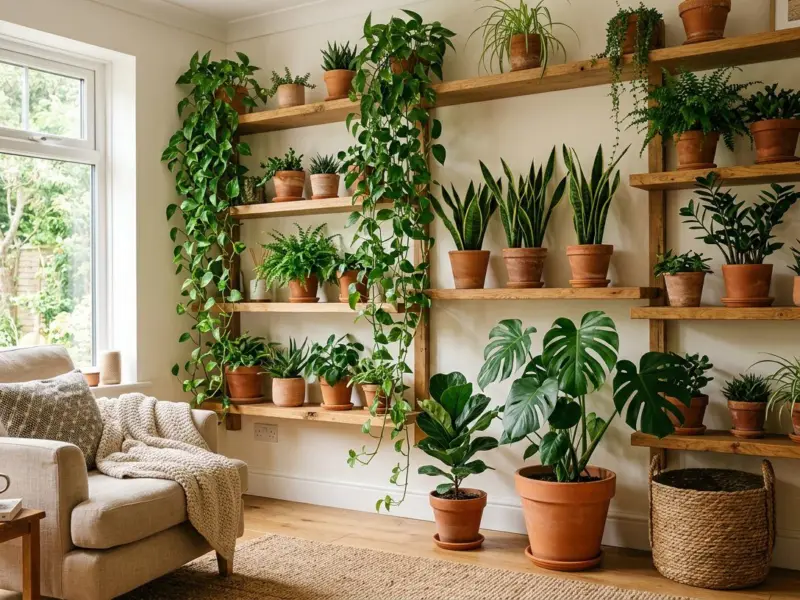
Groups of plants in odd numbers, a mix of heights and a consistent pot palette look intentional, and placing plants where their light needs are met comes before any design choice, as shown in styling with indoor plants. If you share the home with cats or dogs, check each plant before buying, because many common species, including lilies (very dangerous to cats), sago palm and dieffenbachia, are toxic. The pet-safe houseplants guide lists safer choices, and your vet or a pet poison helpline is the right call if a pet has chewed something.
How indoor plants respond to light, water and humidity
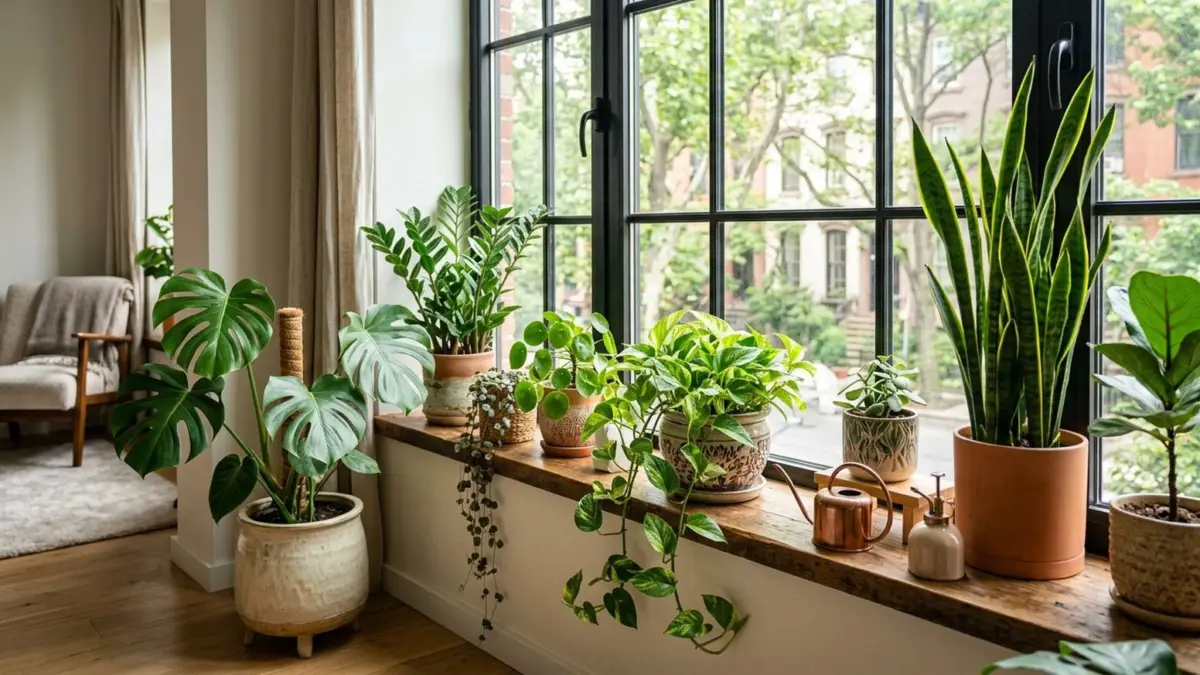
Monstera needs bright light, pothos tolerates shade, and snake plant tolerates low light and dry soil. Spider plant tolerates dry air, but calathea needs humidity, and a humidity of 50% suits it, with a pebble tray adding a little. Peace lily needs water weekly while cactus needs a dry spell, orchid needs bark, succulent needs sand, and aloe and jade store water in their leaves, so they suit a south window.
A window facing south gives about 6 hours of light, while a north window gives about 2. Perlite drains water and prevents root rot, and overwatering causes rot, so a pot with drainage prevents it. Fungus gnat is attracted to wet compost, so let the top layer dry, and a wipe with water removes the mealybug and spider mite that attack dry plants. Repot every 18 months into a pot 2 cm wider because roots need room, though palm and rubber plant tolerate tight pots and pothos needs room. Check the soil 3 cm down and you’ll water only when it feels dry, and your vet or the aspca lists plants that harm pets.
What questions does this guide answer?
Quick answers to the questions people ask most, each linked to the guide that answers it in full.
| Type | Question | Short answer | Full answer |
|---|---|---|---|
| What | What is bright indirect light? | Strong light without the sun landing directly on the leaves, such as near an east window or a few metres back from a south window. | Low-light plants |
| How | How do I know when to water? | Push a finger or skewer into the mix. Water when it has dried to the depth that suits the plant, then soak until water drains out. | Water houseplants |
| How | How do I raise humidity? | Group plants, use a humidifier or pebble tray. Misting helps for only minutes. | Humidity |
| When | When should I repot? | When roots circle the pot, emerge from drainage holes or water runs straight through. Spring is usual. | Repotting |
| Why | Why are the leaf tips brown? | Dry air, salt build-up from feeding or irregular watering. Check humidity and flush the mix. | Problems and fixes |
| Why | Why does my plant droop with wet soil? | Roots are rotting from lack of air, so the plant cannot take up water. Check the roots and improve drainage. | Water houseplants |
| Which | Which plants are safe for pets? | Many ferns, spider plant and calathea are generally listed as non-toxic, but check each one before buying. | Pet-safe plants |
| Which | Do plants really clean indoor air? | Only in small sealed test chambers. In a normal home, ventilation matters far more. | Air-purifying plants |
What does each guide cover?
Low light: 15 best low-light houseplants
The guide lists tough species for dim rooms, explains how little light they can tolerate and warns that no plant grows well in complete darkness.
Watering: How to water houseplants correctly
The guide sets out the finger test, bottom watering, how pot size and light change water needs and how to rescue an overwatered plant.
Repotting: Repotting houseplants without stress
The guide covers signs a plant needs a bigger pot, how much larger to go, how to loosen roots and how to water afterward.
Problems: Houseplant problems and fixes
A visual guide to yellow leaves, brown tips, drooping, pests and mould, with the likely cause and a fix for each.
Air: Air-purifying indoor plants
The guide reviews the evidence honestly, explains the gap between laboratory and home results and still recommends plants for other benefits.
Styling: Styling with indoor plants
The guide shows grouping by height and shape, pot palettes and how to place plants where they also get the right light.
Humidity: Humidity for houseplants
The guide gives realistic humidity targets by plant type and explains which methods help and which don’t.
Pets: Pet-safe houseplants
The guide lists safer species, explains which common plants are toxic and what to do if a pet chews a plant.
Succulents: Succulents and Cacti Indoors: Light, Watering and Potting
The guide explains light levels, a dry-out watering routine, gritty potting mix and fixes for stretching, rot and pests.
Lights: Best Grow Lights for Houseplants
The guide compares LED and fluorescent lights, explains how to read light intensity and coverage, and gives distances and hours for common houseplants.
How much light does each window give?
Directions below are for the northern hemisphere. In the southern hemisphere, swap north and south.
| Position | Light level | Suitable plants |
|---|---|---|
| South window, close | Bright, direct sun | Succulents, cacti, many flowering plants |
| East window | Bright, gentle morning sun | Most foliage plants, orchids |
| West window | Bright, hot afternoon sun | Sun-tolerant plants, sheer curtain for others |
| North window or 2 to 3 m from a window | Low to moderate | Snake plant, ZZ plant, pothos, peace lily |
| Interior room, no window | Very little | Grow lights or rotate plants outward |
How should you water each plant type?
| Plant type | Water when | Examples |
|---|---|---|
| Succulents and cacti | Mix is dry all the way through | Echeveria, jade, aloe |
| Drought-tolerant foliage | Top half of the mix is dry | Snake plant, ZZ plant, rubber plant |
| Most tropical foliage | Top 2 to 3 cm is dry | Pothos, monstera, philodendron |
| Moisture lovers | Top is just starting to dry | Ferns, calathea, peace lily |
How do you pick a repotting size and time?
| Sign | Meaning | Action |
|---|---|---|
| Roots circling the pot or from drainage holes | Root bound | Repot one size up, 2 to 5 cm wider |
| Water runs straight through | Little mix left or roots dominate | Repot and refresh the mix |
| Plant tips over | Top heavy for the pot | Move to a heavier, wider pot |
| Slow growth in the growing season | Exhausted mix | Refresh mix, even in the same pot |
Many common houseplants are toxic to cats and dogs, including lilies (which can be fatal to cats), sago palm, dieffenbachia and pothos. If a pet has chewed a plant, call your vet or a pet poison helpline straight away and take the plant name with you.
How do the indoor plant choices affect each other?
Too little light causes slow growth, which means the plant uses less water, which makes the same watering amount into overwatering. Dry air from heating causes brown leaf tips, and raising humidity helps only if the plant also has enough light. A pot that’s too large holds extra wet mix, which causes root rot. Wet mix also attracts fungus gnats. Fixing the light often fixes the watering, and fixing the watering often removes the pests.
Key terms
- Bright indirect light: strong light without the sun’s rays landing directly on leaves.
- Root bound: roots filling the pot so tightly that they circle.
- Variegation: patterned or pale leaf colouring that needs good light to hold.
- Fungus gnats: tiny flies that breed in constantly moist mix.
- Drainage layer myth: gravel at the bottom of a pot doesn’t improve drainage and can raise the wet zone.
Common mistakes with houseplants
- Watering on a fixed schedule. Needs change with season, so test the mix first.
- Pots without drainage. Water collects at the base, so use drainage holes or a liner pot.
- Moving up too many pot sizes. Excess wet mix rots roots, so go up one size.
- Ignoring pets. Some plants are dangerous, so check before buying.
- Choosing plants for looks, not light. Weak growth follows, so match species to the window.
Where to go next
If you want more plants, try propagation by cuttings. For pot and mix details see the plant growing guides, and for pests that appear indoors see the pests and diseases guides.
Frequently asked questions
How much light does a houseplant need to survive?
Every houseplant needs daylight or a grow light for roughly 8 to 10 hours a day, and none survives in permanent darkness. Tough species such as snake plant and ZZ plant cope with low light but grow slowly. Most foliage plants do best within 1 to 2 m of a bright window.
Should I fertilise houseplants, and how often?
Yes, but lightly and only while plants are actively growing. Use a balanced liquid feed at half the label strength about once a month in spring and summer, and stop in autumn and winter. Never feed a wilting or newly repotted plant, because the salts can burn roots.
Can houseplants grow in a bathroom with no window?
No, not without extra light. Humidity does not replace daylight. With a full-spectrum LED running 10 to 12 hours a day, ferns, pothos and orchids can do well in a windowless bathroom. Otherwise, rotate plants in for a few days at a time only.
Which houseplants are easiest for a complete beginner?
Snake plant, ZZ plant, pothos and spider plant are among the most forgiving. They put up with missed waterings, average humidity and a range of light levels. Match the plant to your brightest spot, and check pet safety first, since pothos, snake plant and ZZ plant are toxic if chewed.
Do all houseplant pots need drainage holes?
Ideally yes, because holes let extra water escape and protect roots from rot. If you want a decorative pot without holes, keep the plant in a plastic nursery pot and slip it inside. Lift it out to water, let it drain fully, then put it back.
What is the best room temperature for most houseplants?
Most houseplants grow well between 18 and 24°C (64 to 75°F). Many tropical species suffer below about 10°C (50°F), and sudden drops or draughts can cause leaf drop. In winter, keep plants away from radiators, air conditioner vents and cold window glass.
How long should I keep a new houseplant apart from the others?
Keep it apart for about 2 to 3 weeks. Check leaf undersides and stem joints every few days for webbing, white fluff, sticky residue or tiny flies. Most indoor pests arrive on new plants, so a short quarantine protects the rest of your collection.
Why is my houseplant leaning toward the window?
It is growing toward the light, which usually means the spot is too dim. Move it closer to the window or add a grow light, and turn the pot a quarter turn every week or two. Long gaps between leaves confirm low light. See best low-light houseplants for tougher choices.
Can I use garden soil in a houseplant pot?
No, garden soil is a poor choice for pots. It compacts, drains slowly and can carry pests, weed seeds and disease. Use a bagged indoor potting mix instead, adding perlite or bark for plants that like quick drainage and grit for cacti.
Do houseplants need dusting, and how often?
Yes, wipe broad leaves with a damp cloth every month or two. Dust blocks light and hides pests such as spider mites. Sturdy plants can also be rinsed in a lukewarm shower, then left to drain and dry out of direct sun.
All Indoor Plants guides
15 Best Low-Light Houseplants (That Actually Thrive)
Fifteen houseplants that cope with north windows and dim rooms, what low light really means in numbers, and how to care for them so they do…
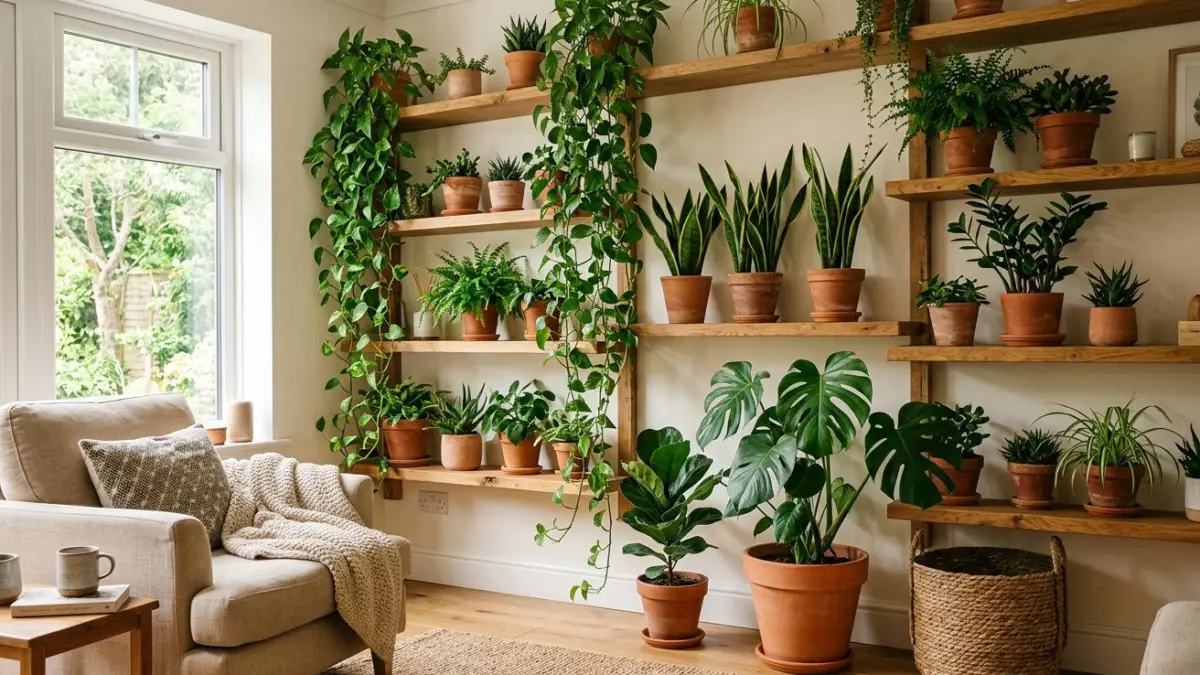
How to Water Houseplants Correctly (The Complete Guide)
Soak-and-drain watering, bottom watering, judging pot weight, water quality and how seasons change the interval, so you water by the plant and not the calendar.
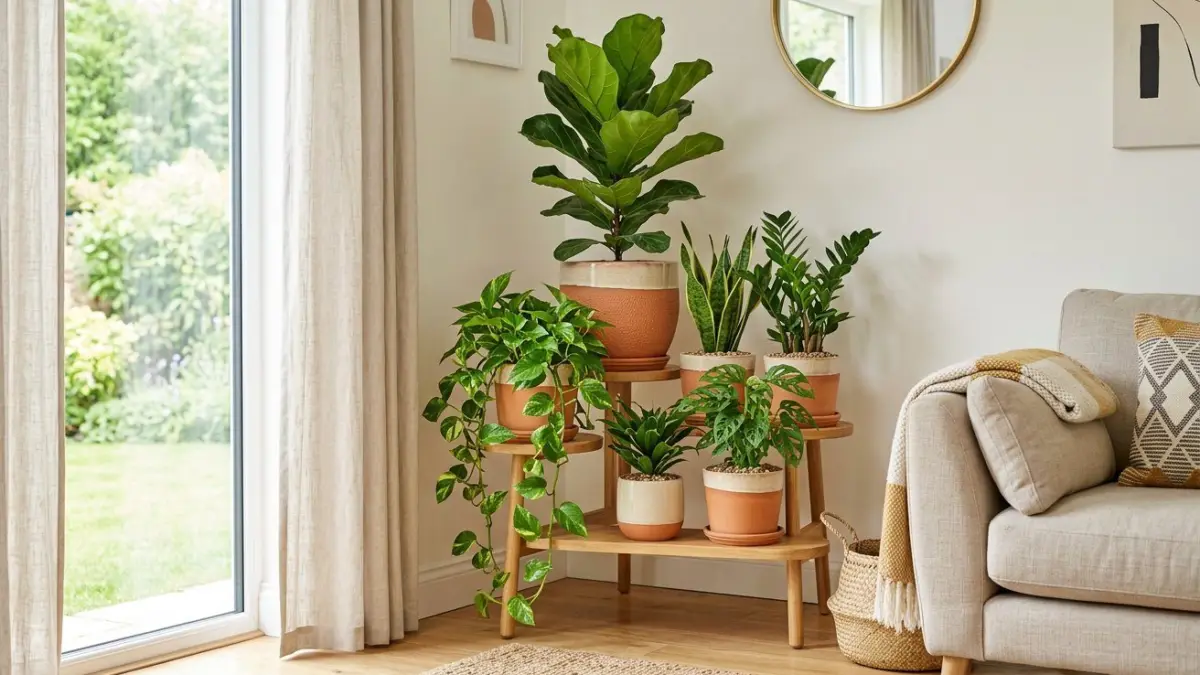
Repotting Houseplants Without Stress (Yours or Theirs)
How to tell a plant truly needs a bigger pot, how much bigger to go, what to do with the roots, and how to handle the…
Houseplant Problems & Fixes: A Visual Diagnostic Guide
Work out why a houseplant is yellowing, browning, dropping leaves or infested: a fixed diagnostic order, a symptom table, pest treatments and a root rot rescue.
Air-Purifying Indoor Plants: What the Science Actually Says
The 1989 NASA study tested sealed chambers, not living rooms. Here is why a few plants will not clean your air, and what they genuinely do…
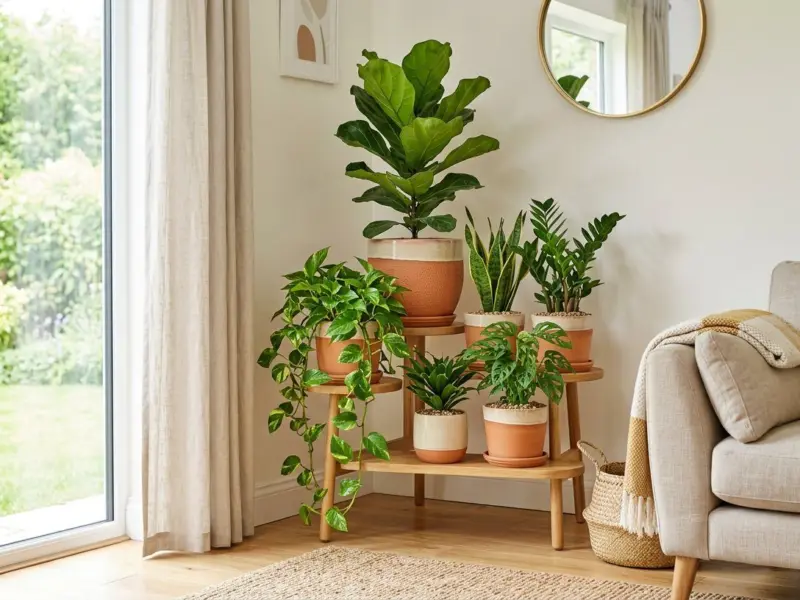
Styling with Indoor Plants: A Light-First Design Guide
Place plants by light first, then use height, grouping, pots and negative space to make a room look composed instead of crowded.
Humidity for Houseplants: What Plants Need and What Actually Works
What a hygrometer reading really tells you, which plants care about humidity and which do not, why misting and pebble trays barely register, and the fixes…
Pet-Safe Houseplants: Non-Toxic Choices and Plants to Avoid
Which common houseplants are non-toxic to cats and dogs, which are dangerous, and how to reduce risk. Includes what to do if a pet chews a…
Succulents and Cacti Indoors: Light, Watering and Potting
How to keep succulents and cacti healthy indoors: how much light they need, how and when to water, the right gritty potting mix, and how to…
Best Grow Lights for Houseplants
How to choose grow lights for houseplants: LED versus fluorescent, wattage, light intensity, colour temperature, distance, timers and which plants need which level of light.