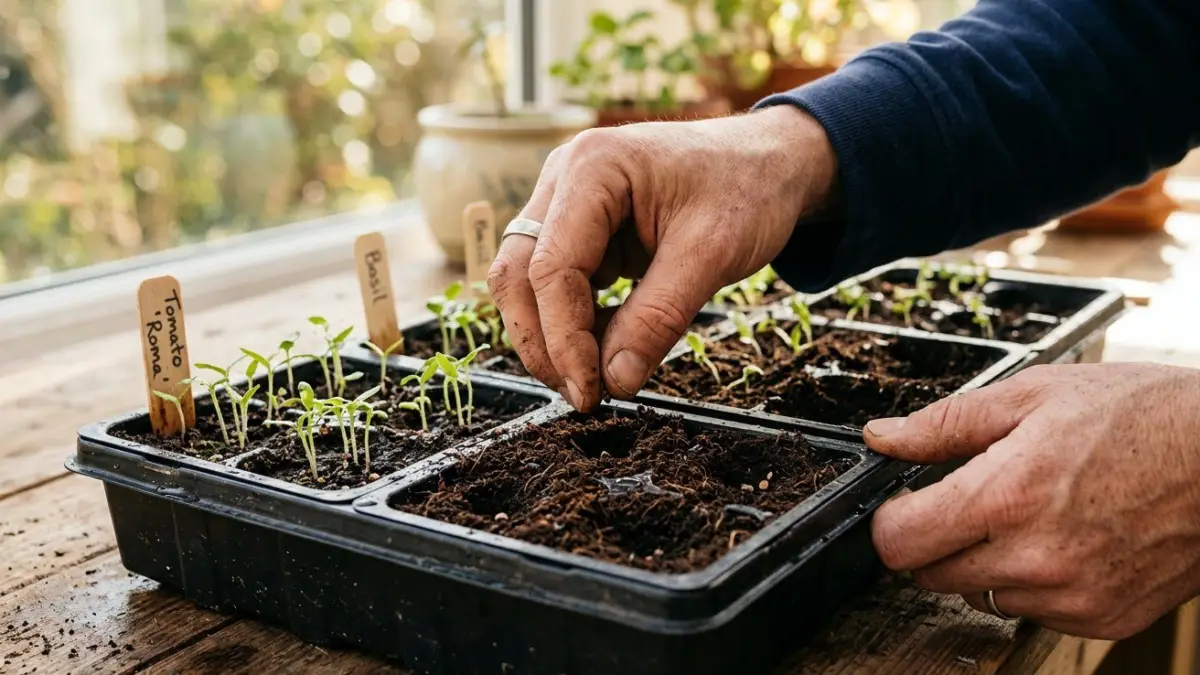
Quick answers
- How big should my first garden be?
- Start with one bed about 1.2 m wide and 2.4 m long (4 by 8 ft), or four to six large containers. A small bed you tend every week beats a large plot you abandon by midsummer, and it is easy to expand next year.
- How much sun does a vegetable garden need?
- Aim for six to eight hours of direct sun. Leafy greens and herbs manage with about four hours, but tomatoes, peppers, squash and beans want six to eight or more. Watch the site through a whole day before choosing.
- What are the easiest vegetables for beginners?
- Radishes, loose-leaf lettuce, bush beans, courgettes (zucchini), cherry tomatoes, spring onions and herbs such as parsley, chives and basil. They grow quickly, forgive mistakes and give early results that keep motivation up.
- Should I use raised beds or dig in the ground?
- Raised beds warm earlier, drain better and avoid poor soil, but cost more to build and fill. In-ground beds are cheaper if your soil is workable. If water lingers after rain, choose raised beds.
Key takeaways
- One 1.2 by 2.4 m bed or six large pots is enough for the first season
- Choose six or more hours of sun, a tap nearby and a spot you pass daily
- Keep beds narrow enough to reach across so you never step on the soil
- Add 5 to 8 cm of compost before planting and mulch afterward
- Plant what you will eat, and sow a few flowers for pollinators
Table of contents11 sections
- Choosing the site: a one-day test
- Sizing the bed and comparing garden types
- Preparing the soil
- Choosing forgiving plants
- A simple layout that works
- A first-year schedule
- The weekly routine
- How your first garden plan fits sun, soil and water
- What to plant where, and why it matters
- Common mistakes and what causes them
- What to read next
The first garden plan for beginners comes down to what to plant where: put the sun lovers, the thirsty crops and the easy wins in the spots that suit them.
The best first garden is one bed of about 1.2 by 2.4 m (4 by 8 ft) in the sunniest spot you have, within hose reach of a tap, filled with six to eight easy plants. It’s small enough to care for in 20 to 30 minutes a day, and big enough to produce real food and flowers in the first season.
This guide is for new gardeners who want a plan they can finish. It brings together the skills in the Plant Growing Guides guides: where to put the garden, how big to make it, how to prepare soil, what to plant and where, and what to do each month. Food-focused gardeners can continue into the vegetables and herbs guides afterward.
Choosing the site: a one-day test
Spend a day watching the space. Note where the sun falls at 9 am, noon and 4 pm, since a spot that’s sunny in June may be shaded by a house or tree in April or September. A good site has:
- Sun: six to eight hours of direct light for fruiting crops. Four hours supports leafy greens and herbs. Under four hours, plant shade-tolerant flowers instead.
- Water: a tap or water butt within reach of a hose, ideally under 15 m away. Hauling cans is the commonest reason beginners abandon a garden.
- Drainage: no standing water 24 hours after heavy rain. If puddles linger, raise the bed.
- Shelter: some protection from strong wind, which dries soil and snaps tall plants. A fence or hedge on the windward side helps, but keep it from casting shade on the bed.
- Convenience: a spot you walk past daily, so you spot pests and harvest at the right moment.
Avoid sites next to large trees and hedges, whose roots will compete with crops for water and nutrients, and avoid low corners where cold air collects and frost lingers. With no ground at all, a sunny balcony, patio or doorstep can host a lively container garden, as covered in container vegetable gardening.
Sizing the bed and comparing garden types
A bed up to 1.2 m wide lets you reach the centre from either side, so you never need to stand on the soil. Standing on soil compresses the air out of it and roots struggle. Leave paths 45 to 60 cm wide, or 90 cm if you want a wheelbarrow through.
| Option | Size | Approximate set-up effort | Best for | Main drawback |
|---|---|---|---|---|
| Containers | 4 to 8 pots, 20 to 40 L each | Low, a morning | Balconies, renters, poor soil | Dries fast, needs frequent watering and feeding |
| Raised bed | 1.2 by 2.4 m, 25 to 30 cm deep | Medium, a weekend plus soil delivery | Most beginners, poor or wet ground | Cost of timber and soil, can dry quickly in hot climates |
| In-ground bed | 1.2 by 3 m | Medium to high, digging and weeding | Good soil, tight budgets | Slower to warm, weeds and compaction are your problem |
| Starter plot | 3 by 3 m with paths | High | Families, keen beginners with time | Easy to overreach and lose control by midsummer |
Decision rule: if your soil is clay that stays wet, or compacted subsoil that a fork can’t enter, go raised. If it crumbles when squeezed and drains within a few hours, dig in. For hot, dry regions, sunken or level beds with mulch hold water better than tall raised ones. See understanding soil types for a squeeze test.
Preparing the soil
- Clear the area. Smother grass with overlapping cardboard and 10 cm of mulch for 6 to 8 weeks, or lift the turf. Digging out weed roots is slower than smothering.
- Loosen the soil. Push a fork in to the full depth of the tines and wiggle it, without turning the soil over. This breaks compaction while keeping soil structure intact.
- Add compost. Spread 5 to 8 cm of well-rotted compost over the surface and fork the top few centimetres in lightly.
- Test pH if you can. Most vegetables like pH 6.0 to 7.0. A cheap test kit is enough, and soil pH explained covers adjustments.
- Rake level. Aim for a fine, even surface in the top 3 to 5 cm for sowing.
- Mulch the paths. Wood chips or straw suppress weeds and prevent mud.
For a raised bed, a common mix is roughly 60 per cent topsoil, 30 per cent compost and 10 per cent coarse sand or perlite. A mix that’s all compost shrinks within a season and can hold too much water or too many salts. The pots and mix guide covers the container version.
Choosing forgiving plants
| Plant | Why it suits beginners | How to start | Time to harvest | Spacing |
|---|---|---|---|---|
| Radish | Fastest crop, teaches thinning | Direct sow, cool season | 3 to 5 weeks | 3 to 5 cm |
| Loose-leaf lettuce | Cut and come again, tolerates part shade | Direct sow or transplant | 4 to 8 weeks | 15 to 20 cm |
| Bush beans | Productive, no staking, fix nitrogen | Direct sow after last frost | 7 to 9 weeks | 8 to 10 cm |
| Courgette (zucchini) | One or two plants feed a household | Sow indoors or transplant after frost | 7 to 9 weeks | 60 to 90 cm |
| Cherry tomato | Reliable, forgiving of uneven watering | Transplant after frost | 10 to 14 weeks | 45 to 60 cm |
| Parsley, chives, basil | Compact, used constantly | Transplant or sow | 4 to 8 weeks | 15 to 25 cm |
| Marigold, nasturtium, zinnia | Cheerful, edible or cuttable, bring pollinators | Direct sow | 6 to 10 weeks | 20 to 30 cm |
Two plants to approach with care in a first year: carrots in heavy soil, which fork and stunt, and cauliflower, which dislikes stress and stalls. Mint should always live in a pot, because its runners will take over a bed. The easiest vegetables to grow guide explains the trade-offs in more depth.
A simple layout that works
For a 1.2 by 2.4 m bed running east to west, think of three bands along its length. Put the tallest plants on the north side so they don’t shade their neighbours (south side in the southern hemisphere). Tomatoes on stakes or a string trellis go at the back, bush beans, courgette and peppers in the middle, and lettuce, radish, herbs and marigold at the front.
- Pair fast with slow. Sow radish and lettuce in the gaps between young tomatoes, and harvest before the tomatoes need the room.
- Give hungry plants room. A courgette needs around 60 to 90 cm, and cramming plants raises humidity, disease and competition.
- Leave a gap for replacement sowings. When radishes finish in May, sow beans or basil in the same space.
- Add a few flowers throughout. They draw hoverflies and bees, and make the garden worth visiting. See companion planting for specific pairings.
A first-year schedule
| When | Task |
|---|---|
| Late winter, 8 to 10 weeks before last frost | Order seed, sow peppers indoors, and plan the bed on paper |
| 6 to 8 weeks before last frost | Sow tomatoes indoors; start site clearing or cardboard smothering |
| 2 to 4 weeks before last frost | Finish bed preparation; sow peas, radish and lettuce outdoors |
| Around last frost | Harden off tender seedlings over 7 to 10 days |
| 1 to 2 weeks after last frost | Plant tomatoes, courgettes and basil; sow beans and marigolds |
| Early summer | Mulch 5 cm deep; set a deep-watering routine |
| Midsummer | Sow second crops of lettuce and beans; harvest often |
| Autumn | Clear spent plants, add compost, sow hardy crops or a cover crop |
| Winter | Review your notes, order seed, adjust the layout |
Dates move with your climate. The seasonal planting calendar shows how to calculate yours from frost dates and soil temperature. In hot dry regions, move most of the cool-season row to autumn, and in humid tropical areas plan around the rainy and drier seasons.
The weekly routine
- Every few days: check soil moisture 5 cm deep. Water deeply when the top 3 to 4 cm is dry, not a little each day (see watering plants the right way).
- Weekly: pull small weeds, look under leaves for pests, tie in climbers, and harvest. Regular picking encourages more production.
- Monthly: top up mulch, and feed container plants and heavy feeders such as tomatoes and courgettes.
- Each season: add compost and record what grew well.
A short journal, even three lines a week with sowing dates, varieties, weather and yields, becomes your most valuable gardening tool by year two. When leaves change colour, reading plant signals helps you decide whether to act.
How your first garden plan fits sun, soil and water
Six to eight hours of sun feeds tomato, pepper and courgette, while lettuce, spinach and kale tolerate partial shade and bolt less in a heatwave. A raised bed improves drainage in clay and warms the soil temperature earlier in spring, so you’ll sow sooner. Compost feeds the bed and holds moisture, and mulch reduces weeds and protects the roots from drought.
A hose bib or watering can near the bed saves you effort, because plants that are hard to reach get watered less. Companion planting helps too: marigold repels some pests and basil supports tomato growth, so a small mixed bed controls trouble better than a single row. Where should you start if the plot is large? Choose a bed of about 1.2 by 2.4 metres, because you can reach the centre from both sides and avoid compacting the topsoil. The RHS suggests starting small and expanding once the first season has taught you what thrives.
What to plant where, and why it matters
Tomato, pepper and courgette need 6 to 8 hours of sun and warm soil temperature, so they belong on the south side of the bed where taller sweetcorn can’t shade them. Lettuce and spinach tolerate partial shade and bolt less often when a trellis of bean cools them in July. Carrot and radish need loose loam without stones, so you should keep them away from freshly dug clay that holds water and blocks the roots by 5 cm or more.
Basil attracts hoverfly and repels whitefly beside tomato, so a few plants at the bed’s edge protect your main crop without spraying. A hose near the bed improves your habits, because tomato and lettuce that are hard to reach get watered less. Mulch holds moisture and reduces weeds, and compost 5 cm deep feeds the bed and supports steady growth. Slug and snail damage young lettuce, so a copper tape or beer trap controls them before the first leaves open. Your extension service can confirm frost dates for the 20 weeks of the growing season, and the vegetable garden starter guide needs only a weekend to follow.
If you only have a 2 by 3 m bed, you’ll get the best return from three crops that tolerate beginner mistakes, such as radish, lettuce and courgette, and your own notes will tell you what to repeat.
Common mistakes and what causes them
| Mistake | What it causes | Fix |
|---|---|---|
| Making the garden too large | Weeds and neglect by midsummer | Start with one bed and expand only after a full season |
| Choosing a shady spot for convenience | Leggy, unproductive plants | Test sun hours, or grow shade-tolerant crops there |
| Planting everything on one weekend | A glut, then nothing | Sow small batches every 2 to 3 weeks |
| Ignoring spacing | Crowding, mildew and weak plants | Follow spacing on the table above |
| Skipping mulch | Fast drying, weeds, crusted soil | Mulch 5 cm deep once soil has warmed |
| Planting warm crops too early | Stalled or frosted plants | Wait for nights above 10°C |
Loss is normal. Every gardener loses plants, and one failed crop teaches more than a flawless one. Note the cause, replant in the gap, and move on.
For a short list of tools worth buying first, see Best Gardening Tools for Beginners.
What to read next
To learn how to start plants well, read how to plant seeds step by step and how to transplant seedlings. To expand the plan into a full kitchen plot, continue with how to start a vegetable garden. Back to the Plant Growing Guides.
Frequently asked questions
How far should my vegetable bed be from a tap?
Keep it within about 15 m of a tap or water butt, so a hose reaches without effort. Hauling watering cans is the commonest reason beginners give up. If the sunniest spot is further away, consider a water butt beside the bed or a long hose on a reel.
How wide should paths between garden beds be?
Leave paths 45 to 60 cm wide for walking and tending, or about 90 cm if you want to push a wheelbarrow through. Beds up to 1.2 m wide let you reach the middle from either side, so you never step on and compact the soil.
How do I kill grass to make a new vegetable bed?
Smother it with overlapping sheets of plain cardboard topped with about 10 cm of mulch or compost, and leave it for 6 to 8 weeks. The grass dies from lack of light and the roots rot down. Lifting the turf is the faster alternative, but it is hard work.
How much compost should I add to a new garden bed?
Spread 5 to 8 cm of well-rotted compost over the surface and fork the top few centimetres in lightly. Top up with a thin layer each season. Fresh, unrotted manure can burn roots, so use material that looks dark and crumbly and smells earthy.
Why should I avoid planting near large trees or hedges?
Tree and hedge roots compete with vegetables for water and nutrients, and their canopies cast shade. Crops beside them often stay small and need far more watering. Choose an open site, and keep the bed clear of low corners where cold air gathers and frost lingers.
Can I grow vegetables in a shady garden?
Yes, to a point. Leafy crops such as lettuce, spinach and kale, and herbs like parsley and chives, manage with about four hours of direct sun. Fruiting crops such as tomatoes and courgettes stay weak and crop poorly. Under four hours, choose shade-tolerant flowers instead.
Should I plant everything at once in spring?
No. Sow small batches every 2 to 3 weeks, so crops do not all ripen together. Radish and lettuce in particular give a glut and then nothing if sown in one go. Leave gaps to sow beans or basil when early crops finish.
How do I arrange tall and short plants in a bed?
Put the tallest plants, such as staked tomatoes, on the north side of the bed so they do not shade shorter neighbours. In the southern hemisphere, use the south side. Place bush beans and courgettes in the middle, and lettuce, radish and herbs at the front.
What happens if I make my first garden too big?
Weeds and neglect usually take over by midsummer, and the work becomes discouraging. A small bed you tend weekly gives better results than a large plot you abandon. Grow one bed through a full season, note what thrived, then expand the following year.
Is it worth testing soil pH before planting a vegetable garden?
It helps if you can. Most vegetables prefer a pH of about 6.0 to 7.0, and a cheap test kit is enough to check. If the reading is far outside that range, adjust gradually with lime or sulphur according to the product label, and retest after a few months.
More in Plant Growing Guides
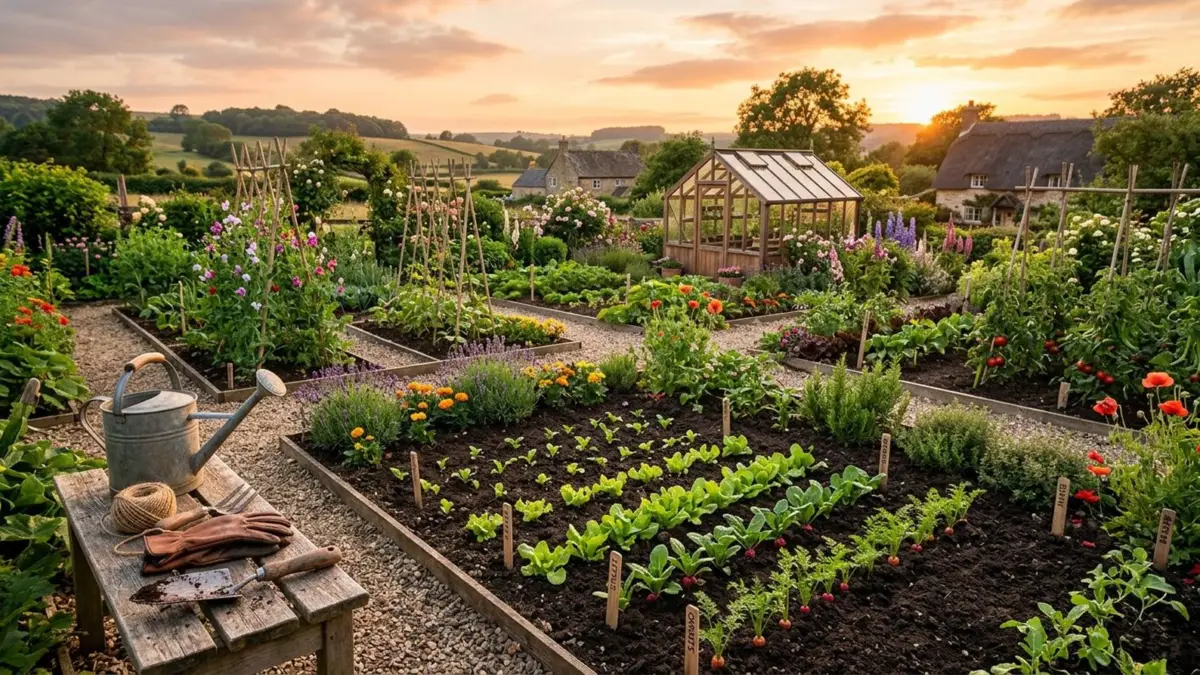
Best Gardening Tools for Beginners
Which gardening tools a beginner really needs: the first six to buy, how to judge steel, handles and weight, what to skip, and how to care…
How to Plant Seeds Step by Step (Complete Beginner Guide)
Learn exact seed-sowing depth, spacing, timing and aftercare so more of your seeds actually grow, a foolproof step-by-step method for beginners.
How to Transplant Seedlings Without Killing Them
Harden off, timing, root handling and aftercare, everything you need to move seedlings from tray to garden with zero transplant shock.