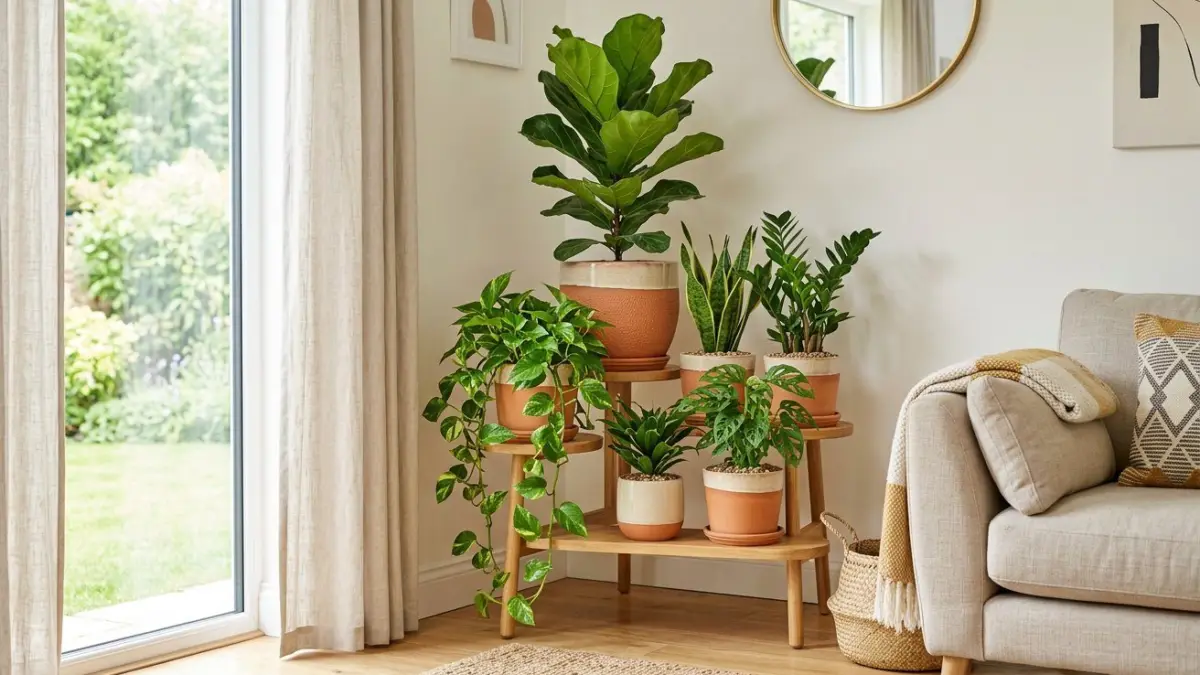
Quick answers
- What humidity do houseplants need?
- Most common houseplants cope with 30 to 50% relative humidity, which is typical indoors. Calathea, ferns, fittonia and many orchids prefer 50 to 70%. Succulents, snake plants and ZZ plants are fine at 20 to 40%. Measure with a hygrometer rather than guessing.
- Does misting houseplants raise humidity?
- Only for a few minutes. Mist evaporates quickly and has no lasting effect on room humidity. Wet leaves can also encourage leaf spot in poorly ventilated rooms. A humidifier or a closed cabinet does far more for the same effort.
- Are pebble trays worth using?
- They add very little. A tray holds too little water to change the humidity of a room, and its effect fades within centimeters of the leaves. Use one to catch drips if you like, but do not expect it to cure brown tips.
- Why do my plant leaf tips turn brown?
- Dry air is only one cause. Inconsistent watering, mineral or fluoride build-up and cold drafts are often more likely. Work through the checks in our problem guide before buying a humidifier.
Key takeaways
- Measure first: a cheap digital hygrometer at leaf height removes the guesswork
- Most houseplants are fine at 30 to 50%; only a minority truly need more
- Misting and pebble trays have no meaningful lasting effect on humidity
- A humidifier, a closed cabinet or a terrarium are the methods that really work
- Brown tips are often a watering or mineral problem, not a humidity problem
Table of contents13 sections
- Humidity at a glance
- What a hygrometer reading actually means
- Which plants actually care
- Why misting does so little
- What actually works
- Before you blame humidity
- Climate and season
- How humidity affects your houseplants
- How humidity affects houseplants, and what actually works
- Mistakes to avoid
- Where to go next
Humidity for houseplants matters because some plants need moist air and some do not, and this guide shows what actually works.
Most houseplants don’t need extra humidity, and the popular tricks for adding it, misting above all, barely work. If a plant genuinely needs moist air, the methods that help are a humidifier, a closed cabinet or a terrarium, and a few placement changes. This guide explains how to measure humidity, how to interpret the reading, which plants care and what to do about it.
It belongs to the Indoor Plants guides. For related causes of leaf damage, see How to Water Houseplants Correctly and Houseplant Problems & Fixes.
Humidity at a glance
| Question | Answer |
|---|---|
| Typical indoor humidity | 30 to 60%; heated or air-conditioned rooms often drop to 15 to 30% |
| Comfortable for people and most plants | 40 to 60% |
| Upper limit to avoid for long periods | About 65 to 70%, where mould and window condensation appear |
| Cheap hygrometer accuracy | Roughly plus or minus 3 to 5 percentage points |
| Where to place the hygrometer | At leaf height, near the plants, away from windows and vents |
| Methods that work | Humidifier, closed cabinet, terrarium, sensible placement |
| Methods that barely work | Misting, pebble trays, grouping alone |
What a hygrometer reading actually means
Relative humidity (RH) is the amount of water vapor in the air as a percentage of the most the air could hold at that temperature. The key word is “relative”. Warm air holds more vapor than cool air, so the same amount of moisture gives a lower reading as the room warms up. A room at 20°C and 50% RH, heated to 28°C with nothing added, falls to roughly 30% RH.
That is why winter heating and summer air conditioning make indoor air feel dry. Heating warms cold outdoor air without adding vapor; air conditioners cool air and remove water as condensation.
For a plant, what matters is how fast water leaves its leaves. That depends on humidity and temperature together, which scientists summarize as vapor pressure deficit. You don’t need to calculate it. Just remember that a hot, dry, windy spot demands much more of a plant than a cool, still, humid one, even with the same watering.
Using a cheap hygrometer well
- Put it where the plants are, at leaf height. Readings near a radiator or window can differ by 10 points or more from the middle of the room.
- Give it 30 minutes to settle after moving it.
- Check it with the salt test. Put a tablespoon of table salt in a bottle cap, add a few drops of water to make a damp slush, place the cap and the hygrometer in a sealed bag or jar for 6 to 8 hours. The reading should be about 75%. If it shows 70%, your device reads 5 points low; add 5 to future readings.
- Look at the daily pattern. Note morning, afternoon and night for a few days. Humidity often drops sharply when heating or air conditioning runs.
Which plants actually care
Plants from rainforest understories, with thin leaves and little wax, lose water fastest and brown at the edges when air is dry. Plants with thick, waxy leaves or water storage tissue are built for dry air.
| Group | Preferred RH | Examples | How they show stress |
|---|---|---|---|
| Need moist air | 50 to 70% | Calathea, maranta, fittonia, maidenhair fern, some orchids | Crispy edges, curling, leaf drop |
| Prefer moderate | 40 to 60% | Boston fern, peace lily, anthurium, alocasia, ficus, spider plant | Brown tips, slow new leaves |
| Tolerate average rooms | 30 to 50% | Pothos, philodendron, monstera, dracaena, rubber plant | Mild tip browning at worst |
| Prefer dry air | 20 to 40% | Snake plant, ZZ plant, cacti, most succulents, aloe | Rot and fungal problems if kept too moist |
Don’t assume that a plant labeled “tropical” needs a jungle. Most pothos, monstera and philodendron cope well in ordinary homes. Plants also acclimate: new leaves grown in drier air are often thicker and tougher than leaves produced in a humid shop or greenhouse. That explains why a plant sometimes sheds a few leaves after you bring it home and then settles.
Why misting does so little
A fine mist is a small amount of water. Spray a room-sized volume of air and it evaporates within minutes; humidity returns to where it was, usually within 10 to 15 minutes. To raise a whole room by 10 points you would have to add hundreds of milliliters of water to the air, which no spray bottle does.
Misting can also cause harm. Water that sits on leaves in still air can encourage fungal and bacterial leaf spots, especially on plants with fuzzy leaves, such as African violets and begonias. Hard water leaves white mineral spots. Misting does give you a regular reason to look at each plant, which is its real value.
The same logic applies to pebble trays. A shallow tray of water evaporates slowly. Any added humidity is confined to a few centimeters above the water and is quickly carried away by room air. If you like them, use them. Don’t count on them to fix crisp calathea.
What actually works
| Method | Typical effect | Effort and cost | Notes |
|---|---|---|---|
| Humidifier near plants | Raises a room by 10 to 25 points if sized to the space | Medium cost, daily refilling and weekly cleaning | Best option for a plant collection |
| Closed glass cabinet or greenhouse case | 70 to 90% inside | Medium to high setup cost, low effort after | Ideal for fittonia, small ferns and rare plants |
| Terrarium or cloche | High, steady humidity | Low cost | Needs ventilation; wrong for succulents |
| Grouping plants | A few points around the leaves | Free | Helps a little; also reduces air movement |
| Moving away from heaters and vents | Avoids local dry spots | Free | Often the cheapest fix |
| Bathroom or kitchen | Short spikes after use | Free | Only works if there is good light |
Running a humidifier sensibly
- Size it to the room. Check the maximum room size on the specification and choose a unit comfortably above your room.
- Aim for 50 to 60% RH. Use the hygrometer to adjust; avoid running above 65% for days, because walls, windows and soft furnishings can grow mould.
- Use distilled or demineralized water in ultrasonic units. Hard tap water throws a fine white dust over leaves and furniture.
- Place it 1 to 2 meters from the plants, with the mist rising freely, not blowing directly onto leaves.
- Clean it regularly following the manufacturer’s instructions, because a dirty tank can spread microbes into the air.
If anyone in the household has asthma or allergies, ask a doctor before running a humidifier long term.
Before you blame humidity
Brown tips are the classic “low humidity” symptom, and the most commonly misdiagnosed. Several other causes produce nearly identical damage. Work down this list first.
| Look-alike cause | Clue | Check |
|---|---|---|
| Irregular watering | Tips brown after repeated dry-outs | Does the mix dry out completely between waterings? |
| Fertilizer or mineral salts | White crust on the mix or pot rim; browning at tips and margins | Flush the pot with water for several minutes |
| Fluoride or chlorine sensitivity | Spider plant, dracaena, calathea tips browning with a yellow band | Switch to rainwater or filtered water |
| Cold draft or cold glass | Damage on the side facing the window or door | Move the plant 30 cm or more away |
| Root problems | Browning with soft stems or wet smelly mix | Inspect roots (see Repotting Houseplants) |
| Sunburn | Pale or tan patches on leaves facing a window | Move back from direct sun |
If the hygrometer says 45% and the plant is a pothos, the humidity isn’t your problem. For more on symptom patterns, see Reading Plant Signals.
Climate and season
- Cool temperate winters: central heating is the main culprit; indoor RH can fall to 20 to 30%. Run a humidifier from about November to March and keep plants off windowsills above radiators.
- Hot dry subtropical (Punjab and Sindh plains): pre-monsoon months (roughly April to June) bring very low humidity and strong heat. Air conditioners dry the air further, while evaporative coolers add moisture. In the monsoon the problem reverses, with outdoor RH often above 70%.
- Humid tropical: extra humidity is rarely needed. The risk is fungal problems; keep air moving with a fan on low and give pots space.
- Air-conditioned rooms anywhere: keep plants out of the direct airflow. Cold, dry air is harsher than the temperature alone suggests.
How humidity affects your houseplants
Calathea, fern and orchid need humidity above about 50 percent, because dry air pulls moisture from leaves faster than roots supply it. Cactus, snake plant and aloe tolerate dry rooms and suffer when you mist them, since wet leaves encourage rot. A hygrometer shows the real number, so you’ll know whether a plant needs help.
Grouping plants raises humidity through transpiration, and a humidifier holds the level steadier than misting, which dries within minutes. A pebble tray cools the air above water but only helps a little. Heating in winter dries leaves and encourages spider mite, which thrives in low humidity. Bathrooms suit fern and orchid when light is bright, but a dark bathroom blocks growth. Should you mist? Misting rarely raises humidity enough to matter, and it can spread leaf spot on fuzzy leaves, so you should rely on grouping or a humidifier.
How humidity affects houseplants, and what actually works
Calathea, fern and orchid need humidity above 50%, because dry air pulls moisture from leaves faster than the roots supply it. Cactus, snake plant and aloe tolerate dry rooms and suffer when you mist them, since wet leaves encourage rot. A hygrometer shows the real number, so you’ll know whether a plant needs help.
Grouping plants raises humidity through transpiration by 5% to 10%, and a humidifier holds the level steadier than misting, which dries within minutes. A pebble tray cools the air above the water but raises humidity only a little. Heating in winter dries leaves and encourages spider mite, which thrives in low humidity and spreads webbing on pothos and palm. Bathrooms suit fern and orchid when light is bright, but a dark bathroom blocks photosynthesis and growth. Misting rarely raises humidity enough to matter, and it can spread leaf spot on fuzzy african violet leaves, so you should rely on a humidifier or grouping. A clear cloche or terrarium holds humidity near 80% for small calathea and fittonia cuttings. Radiators and cold windows both dry or chill leaves, so keep palm, fern and orchid 1 m away. The watering guide shows how humidity changes thirst, and your extension service lists plants for dry homes.
Calathea needs humidity, and orchid tolerates less. Aim for 50% humidity and group pots within 30 cm.
Mistakes to avoid
- Buying a humidifier before measuring the humidity or ruling out watering faults
- Misting succulents, cacti and hairy-leaved plants
- Putting a humidifier directly in front of a plant so leaves stay wet
- Adding a pebble tray of standing water under an orchid pot, which leaves roots wet
- Ignoring airflow in humid rooms, which invites mould and pests
Where to go next
Match plants to your conditions with 15 Best Low-Light Houseplants, tackle watering faults in How to Water Houseplants Correctly and read about indoor air in Air-Purifying Indoor Plants. Back to Indoor Plants.
Frequently asked questions
Do I need a humidifier for my houseplants?
Only if you grow plants that need moist air, such as calathea, fittonia or maidenhair fern, and your hygrometer reads below about 40%. Most common houseplants cope with 30 to 50%. Measure first, and rule out watering and mineral problems before buying one.
Can high humidity harm houseplants or my home?
Yes. Above about 65 to 70% for days, mold can grow on walls, windows and soft furnishings, and fungal leaf spots become more likely. Keep air moving with a fan on low, space pots apart and aim for 50 to 60% when running a humidifier.
How accurate are cheap hygrometers?
Roughly plus or minus 3 to 5 percentage points. You can check one with the salt test: seal it with damp salt in a bag or jar for 6 to 8 hours, and it should read about 75%. If it reads 70%, add 5 to later readings.
Which houseplants prefer dry air?
Snake plant, ZZ plant, cacti, aloe and most succulents prefer 20 to 40% humidity. Too much moisture around them invites rot and fungal problems. Do not mist them or keep them in a steamy bathroom, and give them a bright spot.
Does grouping plants together really raise humidity?
Only a little, by a few points around the leaves. Plants release water vapor, so a tight group helps slightly, and it also reduces air movement. Grouping works best as an extra on top of a humidifier or cabinet, not as the only fix for a thirsty calathea.
Can I put my plants in the bathroom for humidity?
Yes, if the room has good light. Showers raise humidity in short spikes, which suits ferns and some orchids, but the effect fades quickly. A dark bathroom blocks growth, so add a grow light if there is no window.
How do I use a humidifier safely around plants?
Size it to the room and place it 1 to 2 meters from the plants, so mist rises freely and does not blow onto leaves. Use distilled water in ultrasonic units to avoid white dust, and clean it as the maker instructs. People with asthma should ask a doctor first.
Why does indoor humidity fall so low in winter?
Heating warms cold outdoor air without adding moisture, so relative humidity drops. A room at 20°C and 50% falls to roughly 30% if warmed to 28°C with nothing added. Readings of 20 to 30% are common in heated homes, so check plants on sills above radiators.
Is a glass cabinet worth it for humidity-loving plants?
It suits small, fussy plants well. A closed cabinet or greenhouse case holds 70 to 90% humidity inside, which suits fittonia and small ferns. It has a setup cost but little daily effort. Leave some ventilation, and never put succulents in it.
Can a terrarium or cloche work for small plants and cuttings?
Yes, a clear cloche or terrarium holds steady, high humidity that helps small plants and cuttings of fittonia or calathea. Open it regularly for fresh air, since still, wet air invites mold. It is the wrong place for cacti and succulents.
More in Indoor Plants
Pet-Safe Houseplants: Non-Toxic Choices and Plants to Avoid
Which common houseplants are non-toxic to cats and dogs, which are dangerous, and how to reduce risk. Includes what to do if a pet chews a…
Succulents and Cacti Indoors: Light, Watering and Potting
How to keep succulents and cacti healthy indoors: how much light they need, how and when to water, the right gritty potting mix, and how to…
Best Grow Lights for Houseplants
How to choose grow lights for houseplants: LED versus fluorescent, wattage, light intensity, colour temperature, distance, timers and which plants need which level of light.