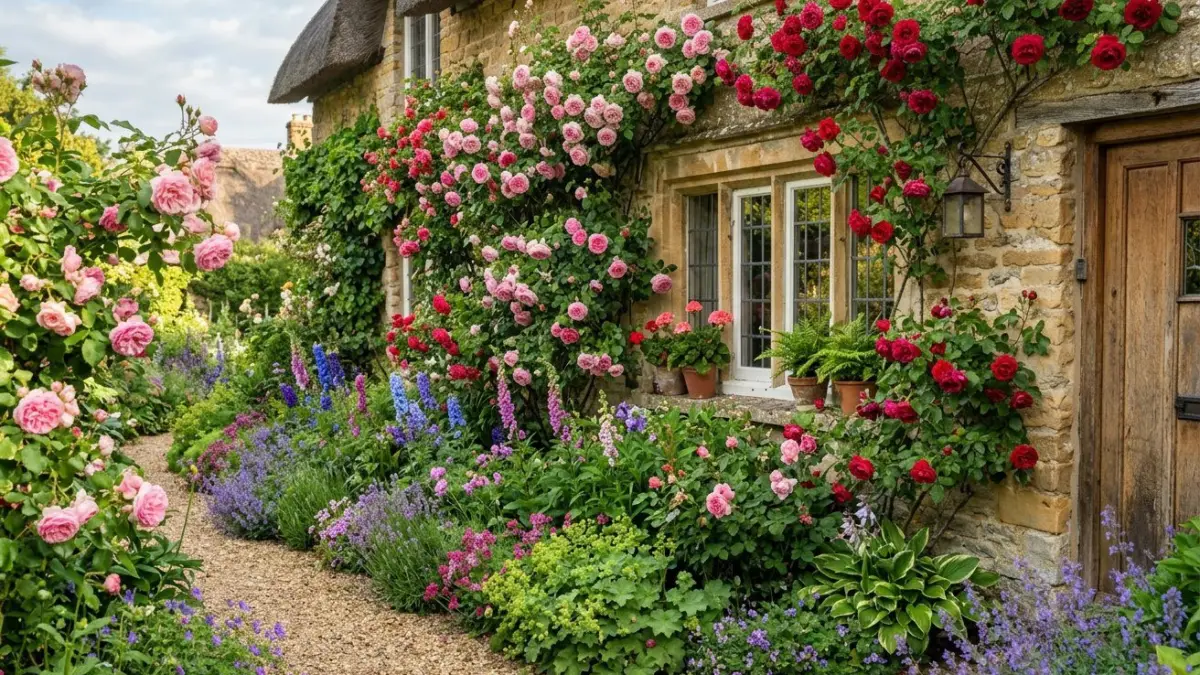
Quick answers
- When should I prune roses?
- Prune repeat-flowering roses in late winter, as buds swell and the worst frost has passed. In hot plains climates, pruning usually falls in October or January instead. Once-blooming roses are pruned right after flowering. Check local timing.
- How do I tell black spot from other leaf spots?
- Black spot makes dark, circular spots with feathered edges and a yellow halo, starting on lower leaves. Tan centers, sooty wipe-off films and uniform pinprick stippling point elsewhere. Our disease guide covers diagnosis.
- How often should I feed roses?
- Feed three times in the growing season: when shoots reach 15 cm, after the first flush, and about midsummer. Stop six weeks before the first frost. Compost mulch adds slow background nutrition, as compared in organic vs synthetic fertilizers.
- Why are my rose leaves yellow?
- Yellow lower leaves with black spots mean disease. Yellow leaves with green veins suggest iron shortage in alkaline soil. Uniform pale yellow across the plant suggests hunger or soggy roots. Test soil pH before adding fertilizer.
Key takeaways
- Six hours of sun and open airflow prevent more rose disease than any spray
- Prune repeat bloomers in late winter, once-bloomers straight after flowering
- Black spot has feathered edges and a yellow halo; many look-alikes do not
- Feed three times a year and stop six weeks before first frost
- Cut to healthy white pith, 5 mm above an outward-facing bud
- In hot plains climates the calendar shifts: prune and feed around the cool seasons
Table of contents13 sections
- Roses at a glance
- Pick a rose that suits the effort you will give
- Planting in six steps
- When to prune, by climate
- Feeding that matches growth
- Black spot, powdery mildew and their look-alikes
- Deadheading and summer care
- What your roses need from sun, air and feed
- How to grow roses through planting, pruning, feeding and care
- Mistakes that quietly cost flowers
- Where to go next
How to grow roses is a complete care cycle covering planting, pruning, feeding and the sun, air and water they need.
Roses are tougher than their reputation, but they punish three things: too little sun, stagnant air and badly timed pruning. Give a rose six hours of direct light, space to dry off after rain and one well-timed prune a year, and most of the famous problems never start. This guide concentrates on the parts that people usually get wrong: when to prune in each climate, how to diagnose leaf problems correctly and how to feed without forcing soft, disease-prone growth.
It sits in the Flower Gardening guides and pairs with Cutting Garden for bouquet roses and Low-Maintenance Flower Borders for roses that earn their place with little work.
Roses at a glance
| Need | Target |
|---|---|
| Sun | 6 to 8 hours; morning sun matters most because it dries dew |
| Soil | Deep, well drained, rich in organic matter, pH 6.0 to 6.5 (up to 7 is tolerated) |
| Spacing | 60 to 90 cm for bush roses, 1.2 to 1.5 m for shrub roses, 2 to 3 m for climbers |
| Water | Roughly 15 to 25 litres per mature bush per week in dry weather, delivered at the base |
| Feeding | Three light feeds in the growing season, plus a mulch |
| Time to full size | Two to three years; the old saying is sleep, creep, leap |
Pick a rose that suits the effort you will give
Roses sold as hybrid teas give the classic cut flower but carry the most disease risk and need the most pruning skill. Floribundas, shrub roses and groundcover types flower in sprays and tolerate neglect better. Single and semi-double flowers also feed more insects than tightly packed double blooms, where the nectar and pollen are hard to reach (see Flowers That Attract Pollinators).
Two choices save years of grief. First, look for varieties described as disease resistant by a local nursery, since resistance varies by region and a rose that stays clean in a dry climate can spot badly in a humid one. Second, ask whether the rose is grafted or own root. Grafted plants flower sooner but throw suckers from the rootstock. Own-root plants are slower to start but can’t revert to a rootstock, and they often cope better with heat and cold stress.
Planting in six steps
- Plant dormant bare roots in late autumn to early spring where the soil isn’t frozen, or October to February on the plains. Potted roses can go in most of the year if you water well. Soak bare roots for 1 to 2 hours first.
- Dig a hole about 45 cm wide and deep. Dig in one bucket of compost for the whole hole, not a rich pocket, or roots circle inside it.
- Set the graft union by climate. Where winters drop well below freezing, set it 2 to 5 cm below soil level for protection. In mild climates keep it level with the surface.
- Backfill and firm, then water slowly with about 10 litres.
- Mulch 5 cm deep and keep it a hand’s width from the canes (see Mulching Mastery).
- Cut back weak top growth by about a third at planting, then leave the plant to settle.
When to prune, by climate
The reason timing matters is simple. Pruning wakes dormant buds. Prune too early and a late frost kills the tender new shoots. Prune too late and the plant has spent energy on growth you then remove. Exact dates shift each year, so use the plant as your clock and check local advice.
| Climate | Main prune | Notes |
|---|---|---|
| Cold temperate (Northern hemisphere) | Late winter to early spring, as buds swell and hard frost has passed | Often February to April; Southern hemisphere roughly July to September |
| Mild temperate | Mid to late winter | Two to three weeks before the usual last frost is a workable guide |
| Hot dry subtropical (Punjab, Sindh plains) | October for winter bloom, or a second lighter prune around January | Many gardeners also cut back lightly after the spring flush; avoid hard pruning in peak summer heat |
| Humid tropical | After a flush, once or twice a year | Rain makes cuts slow to heal, so prune in a dry spell |
| Once-blooming old roses and ramblers (any climate) | Straight after flowering | They flower on last year’s wood, so a winter prune removes the flowers |
How to cut
- Remove the three Ds first: dead, diseased and damaged wood, then crossing stems. Cut to healthy cane with white pith. Brown pith means keep cutting.
- Make each cut about 5 mm above an outward-facing bud, sloping away from it, so new growth opens the center.
- Hybrid teas are usually cut to 30 to 45 cm with three to five strong canes. Shrub and floribunda roses need only about a third removed.
- Climbers: leave the framework alone for the first two or three years, then tie main stems close to horizontal and shorten side shoots to two or three buds.
- Pull suckers (leaves with seven leaflets, growing from below the graft) away from the root rather than snipping them, which only leaves buds to regrow. For general technique see Shrub Maintenance and Renewal Pruning.
Feeding that matches growth
Roses respond to feeding, but in rhythm rather than in bulk. Heavy nitrogen late in the season produces soft shoots that mildew and frost both punish.
| Moment | What to give | Why |
|---|---|---|
| New shoots about 15 cm long | Balanced granular rose or general fertilizer at the label rate (often 30 to 50 g per square meter), then a compost mulch | Fuels the first flush when the plant is growing fastest |
| After the first big flush | Repeat at the label rate | Powers the repeat flowering |
| Midsummer | A light feed or liquid seaweed | Maintenance only |
| Six weeks before first frost | Stop | Lets canes harden |
| Hot plains, peak heat | Pause in the hottest weeks; resume with autumn growth | Plants stall above roughly 35°C and cannot use the food |
Water the plant well before and after feeding to avoid root burn. If leaves yellow between green veins while the plant is otherwise growing, suspect iron shortage in alkaline soil (pH above about 7.5) rather than hunger, and read Soil pH Explained before buying more fertilizer. For the organic and synthetic trade-offs, see Organic vs Synthetic Fertilizers.
Black spot, powdery mildew and their look-alikes
Most “black spot” is something else. Treating the wrong thing wastes a season, so diagnose first.
| What you see | Likely cause | Key difference |
|---|---|---|
| Dark circular spots with feathery edges, yellow halo, leaves drop from the bottom up | Black spot (a fungus that needs leaves wet for several hours) | Spots cannot be wiped off; edges look fringed |
| Smaller spots with tan or grey centers and purple borders | Other leaf spot fungi | Pale center; usually less leaf drop |
| Black film that wipes off with a thumb | Sooty mold feeding on aphid honeydew | Fix the aphids, not the fungus |
| White powder on new leaves and buds, twisted growth | Powdery mildew | Thrives on dry days with cool humid nights, and needs no leaf wetness |
| Purple to red angular blotches with grey fuzz underneath in cool wet weather | Downy mildew | Fuzz is underneath, not powdery on top |
| White crust or speckles after spraying or hard water irrigation | Mineral residue | Brushes or washes off, no distortion |
| Fine pale stippling, webbing underneath, in hot dry weather | Spider mites | Hand lens shows tiny moving dots |
| Excess red, thorny, distorted shoots | Rose rosette disease in regions where it occurs | Not a fungus; ask local extension advice |
What actually helps
Prevention beats cure because fungicide only protects clean leaves. Space plants so air moves through them, water at the base in the morning and thin the center when pruning. In autumn rake up fallen leaves and bin them (see Garden Hygiene), since black spot overwinters on leaves and cane lesions. Pick up fresh infected leaves weekly. If you do use a fungicide, choose one labeled for roses, follow the rate and re-application interval printed on the label and wear the protection it lists. Home sprays such as baking soda have thin and mixed evidence, so treat them as a minor helper, not a plan.
For pests, a hard jet of water removes most aphids, and ladybirds and hoverflies do the rest if you let them (see Beneficial Insects and Common Garden Pests). Check the wider diagnostic picture in Plant Diseases.
Deadheading and summer care
For repeat bloomers, cut a spent flower back to the first leaf with five leaflets, where a bud sits in the leaf axil. A cut lower down gives a longer stem for the vase but a slower rebloom. Many modern landscape roses clean themselves, so a quick shear is enough. In hot weather, mulch, give afternoon shade if possible and water deeply once or twice a week, not a daily sprinkle. In cold climates, mound 20 to 30 cm of soil or mulch over the crown after the ground first freezes, and see Frost Protection Methods for borderline winters.
What your roses need from sun, air and feed
Six hours of sun dries the dew on rose leaves, and dry leaves prevent black spot and powdery mildew. Crowded stems trap humidity, so pruning the centre of the bush improves airflow and protects the foliage from rust and leaf spot. A soaker hose keeps the leaves dry, while overhead sprinklers spread black spot spores from fallen leaves onto healthy growth.
Heavy nitrogen feeds soft shoots that attract aphid colonies, and frost then kills that tender growth. Potash from tomato feed hardens the wood and supports flowers, which is why many gardeners switch to it in midsummer. Mulch and compost hold moisture around the roots and reduce the heat stress that stops buds opening. Ladybird and hoverfly larvae control aphids on the buds, and lavender, catmint and marigold nearby attract them to your border.
How to grow roses through planting, pruning, feeding and care
Rose needs 6 hours of sun, good air and loam enriched with compost. Mulch of 5 cm protects roots and reduces weeds, and clay improves with compost and sand. Prune rose in late winter to 3 or 4 buds, because pruning boosts bloom and improves air flow. Black spot and powdery mildew attack rose in damp air, so you should water at the base. Aphid attracts ladybird and hoverfly, and lavender and garlic repel some pests. Feed rose in spring and midsummer, and dig bare root plants in when soil is workable. Deadheading boosts bloom, and manure feeds heavy feeders. Clematis climbs rose and shades its roots. Plant 60 cm apart, and water 10 litres weekly in the first summer. Your extension service or the rhs lists disease resistant varieties. The pruning guide covers technique.
You can feed in spring, and you’ll see stronger blooms by early summer.
Mistakes that quietly cost flowers
- Planting in four hours of sun and then trying to fix it with fertilizer
- Pruning once-blooming roses in winter, which removes that year’s flowers
- Planting too close to a wall or hedge, which blocks airflow
- Overhead evening watering, which keeps leaves wet all night
- Feeding heavily in late summer, which pushes soft growth into autumn
For how to choose a support for climbers, see Best Trellises & Plant Supports.
Where to go next
Return to the Flower Gardening guides, then plan cut-flower roses with Cutting Garden, build a calmer bed with Low-Maintenance Flower Borders, or place roses among other plants using Annuals vs Perennials.
Frequently asked questions
How deep should I plant a grafted rose?
Where winters drop well below freezing, set the graft union 2 to 5 cm below soil level. In mild climates keep it level with the surface. Dig a hole about 45 cm wide and deep, and soak bare roots for 1 to 2 hours before planting.
When is the best time to plant bare-root roses?
Plant dormant bare roots from late autumn to early spring where the soil is not frozen, or October to February on hot plains. Potted roses can go in most of the year if watered well. Mulch 5 cm deep, a hand's width from the canes.
How much sun do roses need?
Roses need 6 to 8 hours of direct light, and morning sun matters most because it dries dew and lowers disease risk. Fertiliser cannot make up for four hours of sun. Open airflow around the bush also helps prevent black spot and powdery mildew.
How do I deadhead roses properly?
Cut a spent flower back to the first leaf with five leaflets, where a bud sits in the leaf axil. Cutting lower gives a longer vase stem but a slower rebloom. Many modern landscape roses clean themselves, so a quick shear is enough.
What are rose suckers and how do I remove them?
Suckers are shoots from the rootstock below the graft, recognised by leaves with seven leaflets. Pull them away from the root instead of snipping, because cutting leaves buds that regrow. Own-root roses do not produce rootstock suckers.
Should I spray roses with fungicide?
Prevent first: space plants, water at the base in the morning, thin the centre and bin fallen leaves. If you use a fungicide, choose one labelled for roses, follow the rate and interval on the label and wear the protection it lists. Baking soda has mixed evidence.
How do I protect roses in winter?
In cold climates, mound 20 to 30 cm of soil or mulch over the crown after the ground first freezes. Stop feeding six weeks before the first frost so canes can harden. Leave pruning until late winter, when the worst frost has passed.
Can roses cope with hot summer weather?
Yes, with care. Mulch, give afternoon shade if possible and water deeply once or twice a week instead of sprinkling daily. Plants stall above roughly 35°C and cannot use fertiliser then, so pause feeding in peak heat and resume with autumn growth.
How hard should I prune hybrid tea roses?
Cut them to about 30 to 45 cm, leaving three to five strong canes. Make each cut 5 mm above an outward-facing bud and remove dead, diseased and damaged wood first. Shrub and floribunda roses need only about a third removed.
Which roses are easiest for beginners?
Shrub, floribunda and groundcover roses tolerate neglect better than hybrid teas. Ask a local nursery for disease resistant varieties, because resistance varies by region. Own-root roses start slower but often cope better with heat and cold stress.
More in Flower Gardening
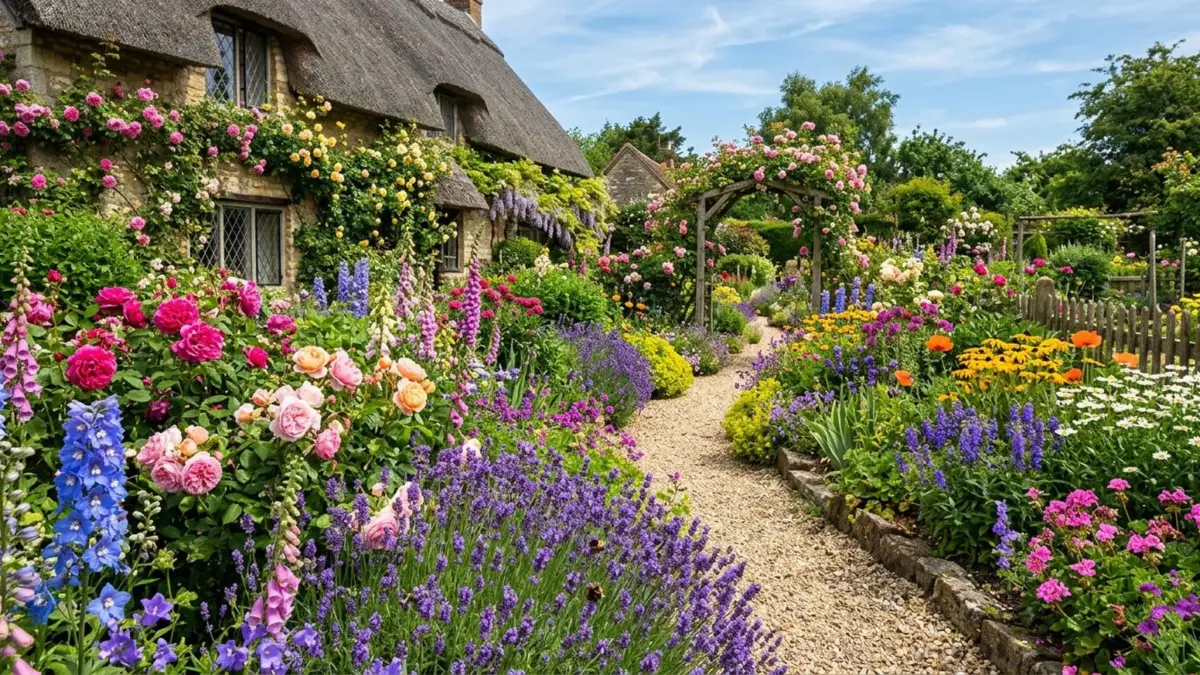
Flower Bulbs 101: Planting for Year-Round Bloom
Plant at about three times the bulb's height, match chill needs to your winter, and sequence true bulbs, corms and tubers so something flowers nearly every…
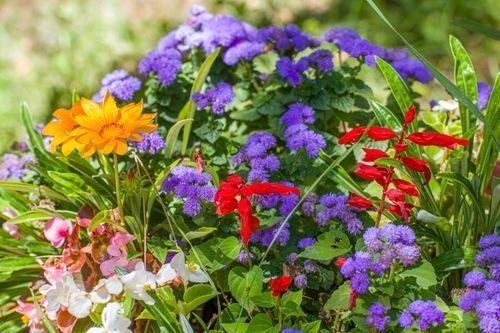
Flowers That Attract Pollinators: Bloom Calendar and Habitat Guide
Plant a continuous bloom sequence, match flower shape to the pollinator and protect nesting habitat, a practical plan for bees, butterflies and hoverflies.
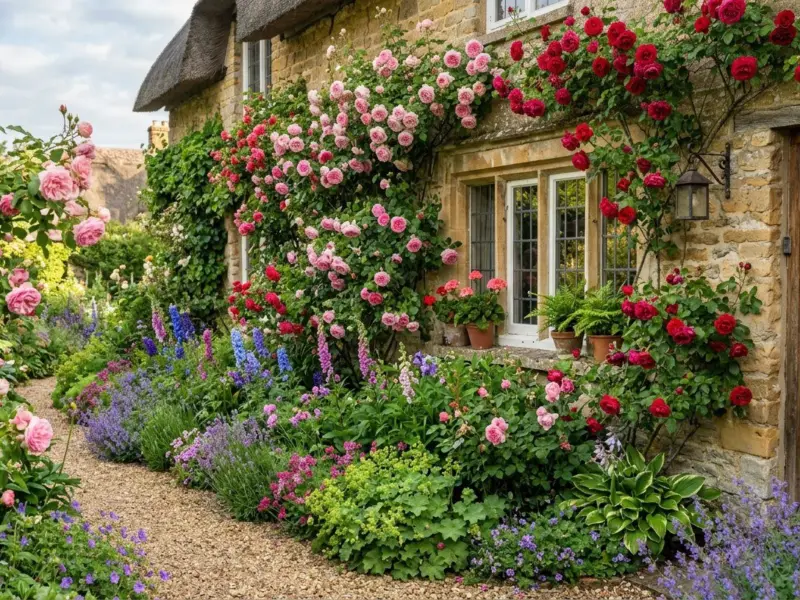
Low-Maintenance Flower Borders That Look Professionally Designed
Plant spacing, plant counts per square metre, a sample 4.5 m2 plan and a yearly work calendar for a border that needs about an hour a…