Quick answers
- Why does timing matter so much in gardening?
- Plants respond to temperature, day length and moisture. The same seed sown three weeks too early or too late can fail or thrive, so doing the right job at the right time beats working harder.
- How do I find the right dates for my garden?
- Look up your average last spring frost and first autumn frost, or in hot climates your cool and hot seasons, then count backwards and forwards from them. Refine with your own notes.
- What are the most important jobs in each season?
- Spring: sow and plant. Summer: water, feed and harvest. Autumn: plant trees, shrubs and bulbs and prepare soil. Winter: protect, prune dormant plants and plan.
- Does this calendar work in hot climates?
- The principles do. Replace the four seasons with a cool growing season, a warm season and a heat or monsoon break, and plan sowing, shading and watering around them.
Key takeaways
- Garden by conditions, not by the calendar. Soil temperature, frost dates and day length decide timing.
- Each season has one main job: sow, tend, plant and protect, and plan.
- Find your frost dates and build your own calendar from them.
- Weekly habits matter: look, water, weed, harvest, and clean tools.
- In hot climates, the cool season is the main growing time and the heat is the pause.
- Keep a journal; it turns experience into a calendar that fits your garden.
Table of contents29 sections
- The year at a glance
- Spring: preparing and starting
- Summer: maintaining and harvesting
- Autumn: tidying and planting
- Winter: protecting and planning
- Frost and cold snaps
- Succession planting and the year-round checklist
- Planning for next year
- Seasonal troubleshooting
- How seasonal gardening tasks follow the year round weather
- What questions does this guide answer?
- What does each guide cover?
- Spring: Spring garden tasks
- Summer: Summer garden maintenance
- Autumn: Autumn garden tasks
- Winter: Winter garden care
- Checklist: The gardener year-round checklist
- Batches: Succession planting
- Cold: Frost protection methods
- Review: Planning for next year
- Heat and drought: Heatwave and Drought Garden Care: Watering, Shade and Recovery
- Covers: Best Frost Protection Fleece and Covers
- How often should you sow each crop in succession?
- What should you do when frost is forecast?
- What jobs belong in each season?
- How do the seasonal choices affect each other?
- Key terms
- Common mistakes through the year
- Where to go next
Seasonal gardening is a complete year round calendar, so this guide shows you what to sow, plant, protect and harvest in each season.
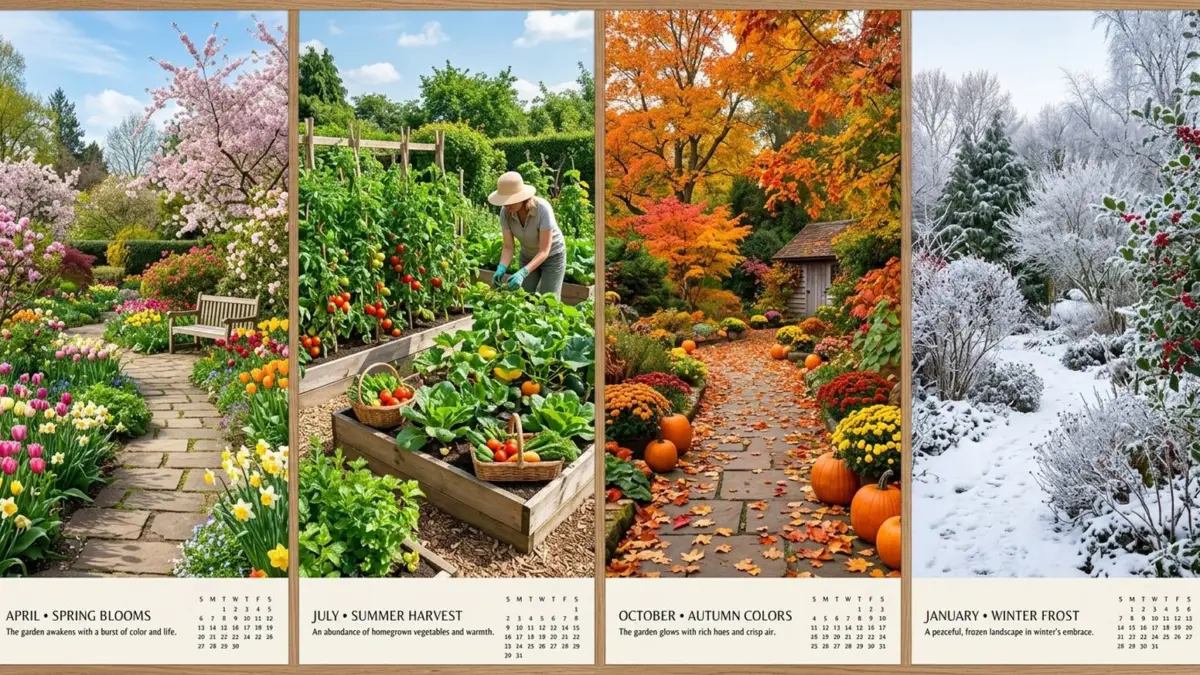
Seasonal gardening is the practice of timing each job to the garden year: preparing and sowing in spring, watering and harvesting in summer, tidying and planting in autumn, and protecting and planning in winter, using frost dates and soil temperature rather than calendar months.
The garden year runs on a repeating cycle, and good seasonal gardening is mostly about doing the right job at the right time: preparing and sowing in spring, watering and maintaining in summer, tidying and planting for next year in autumn, and protecting and planning in winter. This guide links the seasonal guides, so you can see what is due now, plan ahead and avoid the common problem of doing the right job at the wrong time.
Quick answer: build your calendar from your last and first frost dates and soil temperature, sow quick crops in small batches every two to three weeks, protect tender plants before frost, and keep a simple log of what you did and when.
Timing depends on your climate, so treat month names as rough guides and use frost dates and soil temperature, as explained in the seasonal planting calendar. The seasons below are described for the northern hemisphere temperate climate, so shift by six months in the southern hemisphere and adjust for your own conditions. Skills used through the year are in the plant growing guides, and crops in the vegetables and herbs guides.
The year at a glance
| Season | Focus | Main jobs | Guide |
|---|---|---|---|
| Spring | Prepare and start | Clean up, feed soil, sow, plant out after frost | Spring garden tasks |
| Summer | Maintain and harvest | Water, feed, deadhead, control pests, harvest | Summer garden maintenance |
| Autumn | Tidy and plant | Plant bulbs and trees, collect leaves, sow cover crops | Autumn garden tasks |
| Winter | Protect and plan | Protect tender plants, prune dormant trees, service tools | Winter garden care |
| All year | Rhythm | Monthly checklist | Year-round checklist |
| Crop timing | Continuous harvest | Repeat sowing | Succession planting |
| Cold snaps | Frost response | Cover, move, water | Frost protection methods |
| Next year | Review and plan | Records, rotation, seed orders | Planning for next year |
Spring: preparing and starting
Spring work starts with the soil. Clear winter debris, lightly feed the soil with compost, and avoid working it while it’s wet and heavy. Sow hardy crops as soil warms, harden off tender seedlings, and plant out only after the last frost risk has passed. Prune shrubs that flower on new wood and cut back spent perennial stems if you left them for winter wildlife. See spring garden tasks.
Summer: maintaining and harvesting
Summer jobs are mostly about steady care. Water deeply in the morning, mulch to hold moisture, deadhead flowers to prolong bloom, feed containers regularly, and harvest often so crops keep producing. Heat and drought make pests and stress more likely, so check plants weekly. See summer garden maintenance.
Autumn: tidying and planting
Autumn is the best season for planting trees, shrubs and perennials in many climates, because warm soil and cooler air let roots establish before winter. Plant spring bulbs, collect leaves for leaf mould, clear diseased material, and sow cover crops on empty beds. See autumn garden tasks.
Winter: protecting and planning
Winter is for protection and planning. Mulch tender roots, bring in or wrap vulnerable plants, check stakes and ties after storms, prune dormant deciduous trees where appropriate, and service and sharpen tools. It’s also the time to plan next year’s beds. See winter garden care.
Pruning large trees, working at height and using chainsaws are dangerous. Hire a qualified arborist for large limbs, work near power lines or any job that needs a ladder with a saw.
Frost and cold snaps
A sudden frost can undo months of work, so have a plan ready. Cover tender plants with horticultural fleece or cloth before dusk, water the soil beforehand since moist soil holds heat better than dry soil, and move container plants close to the house. Remove covers in the morning so plants can breathe. See frost protection methods.
Succession planting and the year-round checklist
Succession planting means sowing small batches of the same crop every two to three weeks, or following one crop with another in the same space, which spreads the harvest and avoids gluts. It works best with quick crops such as lettuce, radish, beans and spinach. The succession planting guide gives intervals, and the year-round checklist condenses the monthly jobs into a single list.
Planning for next year
A simple record of what was sown, when, how it performed and what went wrong improves every later season. Note frost dates, harvest quantities, pest outbreaks and varieties you wouldn’t grow again, then use the notes to plan crop rotation, order seed and decide which beds to rest. See planning for next year.
Seasonal troubleshooting
| Problem | Common seasonal cause | Fix |
|---|---|---|
| Seedlings lost after planting out | Late frost or no hardening off | Harden off and watch the forecast |
| Crops bolt in summer | Heat and long days | Sow heat-sensitive crops in cooler seasons |
| Bare soil in autumn | No cover crop or mulch | Sow green manure or add mulch |
| Winter dieback on tender plants | No protection from cold | Mulch roots and wrap or move plants |
| Harvest all at once | One large sowing | Use succession planting |
How seasonal gardening tasks follow the year round weather
Lettuce, spinach and pea tolerate cool soil of 5°C or more, while tomato and pepper need warmth and a frost free date. Frost damages dahlia and geranium, so cover them on cold nights, and mulch protects rose and hosta roots and reduces frost damage. Compost feeds loam and improves clay, tulip and daffodil need planting 10 to 15 cm deep in autumn, lavender needs a trim after bloom, and rose needs pruning as buds swell.
Aphid attracts ladybird and hoverfly in spring, slug damages hosta and lettuce, and gravel blocks slug. Bean and pea fix nitrogen that cabbage uses next year, and sowing lettuce every 2 weeks gives steady harvests. Fleece of 30 g holds heat and protects tomato seedlings to about -2°C, and leaves cause lawn rot, so rake them within 2 weeks. Keep a diary of dates and you’ll plan better each year, and your extension service or the rhs lists local frost dates.
What questions does this guide answer?
Quick answers to the questions people ask most, each linked to the guide that answers it in full.
| Type | Question | Short answer | Full answer |
|---|---|---|---|
| What | What is a succession sowing? | Sowing small batches of the same crop every two to three weeks, or following one crop with another, to spread the harvest. | Succession planting |
| How | How do I protect plants from frost? | Cover before dusk with fleece or cloth, water soil beforehand and remove covers in the morning. | Frost protection |
| When | When do I plant out tender crops? | After the last frost date and when soil has warmed, usually one to two weeks later. | Spring tasks |
| When | When is best for planting trees and perennials? | In many climates autumn, when warm soil and cool air let roots establish. | Autumn tasks |
| Why | Why do my lettuces bolt? | Heat and long days trigger flowering. Sow in cooler seasons or give shade. | Summer care |
| Which | Which jobs matter most in winter? | Protect tender plants, check ties and stakes, prune dormant trees as suits the species and service tools. | Winter care |
| How | How do I plan next year? | Record sowing dates, results and problems, then plan rotation and seed orders. | Planning |
| Which | Is there a monthly checklist? | Yes, a condensed list of jobs for each month. | Year-round checklist |
What does each guide cover?
Spring: Spring garden tasks
Clean-up, soil preparation, sowing and planting out.
Summer: Summer garden maintenance
Watering, feeding, deadheading, pest checks and harvesting.
Autumn: Autumn garden tasks
Planting trees and bulbs, leaf collection, cover crops and clearing diseased material.
Winter: Winter garden care
Protecting tender plants, pruning dormant trees and tool care.
Checklist: The gardener year-round checklist
A month-by-month list that condenses the jobs.
Batches: Succession planting
Intervals and crop choices for a continuous harvest.
Cold: Frost protection methods
Covers, watering, siting and rescue after frost.
Review: Planning for next year
Records, crop rotation and seed planning.
Heat and drought: Heatwave and Drought Garden Care: Watering, Shade and Recovery
The guide covers deep watering, mulch, shade, priorities for beds, vegetables, lawns and containers, and recovery after a heatwave.
Covers: Best Frost Protection Fleece and Covers
The guide compares fleece weights, cloches and cold frames, and shows how to fit and remove covers without harming plants.
How often should you sow each crop in succession?
| Crop | Repeat every | Stop sowing |
|---|---|---|
| Radish | 1 to 2 weeks | When it turns very hot |
| Lettuce | 2 to 3 weeks | In peak summer heat, restart in late summer |
| Spinach | 2 to 3 weeks | When days lengthen and it bolts |
| Bush beans | 2 to 3 weeks | About 8 to 10 weeks before first frost |
| Carrots | 3 to 4 weeks | About 10 to 12 weeks before first frost |
What should you do when frost is forecast?
| Step | Action | Why |
|---|---|---|
| 1 | Water the soil in the afternoon | Moist soil holds more heat than dry soil |
| 2 | Cover tender plants with fleece or cloth before dusk | Traps heat rising from the soil |
| 3 | Move pots against the house or indoors | Walls and shelter give a few degrees |
| 4 | Remove covers in the morning | Plants need light and air |
What jobs belong in each season?
| Season | Plant | Maintain | Protect |
|---|---|---|---|
| Spring | Sow hardy crops, plant out after frost | Feed soil, mulch | Cover against late frost |
| Summer | Succession sow, take softwood cuttings | Water, deadhead, harvest | Shade for lettuce, check pests |
| Autumn | Trees, shrubs, bulbs, cover crops | Clear leaves, compost | Bring in tender pots |
| Winter | Order seed, plan beds | Prune dormant trees, service tools | Mulch roots, wrap tender plants |
How do the seasonal choices affect each other?
Planting before the last frost causes seedling loss, which wastes the weeks spent raising them. Leaving soil bare in autumn causes erosion and nutrient loss, which cover crops and mulch prevent. Cutting everything back in autumn removes habitat for wildlife that eats pests in spring. Keeping records improves each following year because you plan from your own dates, not a generic chart.
Key terms
- Last frost date: the average date of the last spring frost.
- Hardening off: gradually acclimatising seedlings to outdoor conditions.
- Green manure: a cover crop dug in to improve soil.
- Dormancy: the resting state of plants in winter.
- Succession sowing: repeating sowings over time for a continuous harvest.
Common mistakes through the year
- Planting out too early. A late frost kills tender plants, so wait for the last frost date.
- Cutting everything back in autumn. It removes wildlife habitat and winter structure, so leave some stems.
- Leaving soil bare. It erodes and loses nutrients, so cover it.
- Skipping records. You repeat mistakes, so keep a simple log.
- Pruning at the wrong time. You may remove flower buds or invite disease, so check the species first.
Where to go next
Use the plant growing guides for the core skills, the vegetables and herbs guides for crop timing and harvest, and the trees guides for seasonal tree care.
Frequently asked questions
What is the difference between last frost date and first frost date?
The last frost date is the average day of the final frost in spring, and the first frost date is the average day of the first frost in autumn. The time between them is your frost-free growing season. Both are averages, not guarantees.
Where can I find my local frost dates?
Look them up through a local extension service, a national weather service or a garden centre. Keep your own notes too. After 3 to 5 years of records, your garden's own dates are usually more accurate than a regional chart.
How early should I start seeds indoors?
Count back from your last spring frost. Tomatoes and peppers usually start 6 to 8 weeks before it, and onions about 8 to 10 weeks before. Check the seed packet, because varieties differ, and harden seedlings off before planting out.
Is autumn or spring better for planting trees and shrubs?
In many climates autumn is better, because warm soil and cool air let roots establish before winter. Spring also works if you water well through summer. In very cold areas or for borderline-hardy plants, spring planting is often safer. Water weekly through dry spells either way until roots are established.
How do the seasons differ in the Southern Hemisphere?
The calendar shifts by about six months. Autumn runs from March to May, and a gardener's October planting window in the north becomes April in the south. Frost dates, soil temperature and your own notes matter more than month names.
Why did my seedlings die after planting out?
The usual causes are a late frost or skipping hardening off. Harden seedlings off over 7 to 10 days, plant tender crops 1 to 2 weeks after your last frost, and watch the forecast. Keep fleece handy for cold nights.
How do I know if the soil is warm enough to sow?
Use a soil thermometer at 5 to 10 cm depth in the morning. Cool-season crops such as peas and spinach sow at roughly 5 to 10°C, and warm-season crops such as beans need 15°C or more. See the Seasonal Planting Calendar.
Is winter pruning safe for every tree and shrub?
No. Dormant deciduous trees suit winter pruning, but spring bloomers such as lilac wait until after flowering, and plums and cherries are best pruned in summer. Hire a qualified arborist for large limbs or work at height. See How to Prune Trees Safely.
Can I still sow vegetables in midsummer?
Not always. In midsummer you can still sow bush beans, carrots, beetroot and lettuce, as long as you count back from your first frost. Add about 14 days to the packet's days to maturity, and use shade cloth in hot spells.
How long should I keep a garden diary?
Keep it for at least 3 to 5 years. Record sowing dates, first and last frosts, yields, pests and varieties. After that period your own averages usually beat any regional chart, and you can spot patterns such as repeated problems in one bed.
All Seasonal Gardening guides
Spring Garden Tasks: Clean-Up, Planting, Feeding and Pest Watch
Spring jobs in the order that protects your soil and seedlings: soil temperature triggers, a sensible clean-up sequence, pruning by flowering time, feeding rates and a…
Summer Garden Maintenance: Watering, Pruning, Deadheading and Harvest
Deep watering numbers, heat stress signs, mulch top-ups, deadheading rules, weekly pest scouting and vacation watering options for the hottest part of the year.
Autumn Garden Tasks: Bulbs, Clean-Up and Winter Preparation
Time autumn jobs by your first frost date: when to plant trees, tulips and garlic, lift dahlias, sow green manure and clear leaves, with soil temperatures…
Winter Garden Care: What to Do, What to Leave and What to Protect
Protect roots, evergreens, containers and wildlife in winter, prune the right plants at the right time and plan the year ahead while the garden rests.
The Gardener’s Year-Round Checklist: Tasks by Season
A season-by-season checklist of tasks, tools and what to stop doing, timed by frost dates so it works in any climate and either hemisphere.
Succession Planting: Staggering for Continuous Harvest and Bloom
Get steady harvests instead of gluts: days between sowings for each crop, how to handle bolt-prone leaves, interplanting, and how to count back from your first…
Frost Protection Methods: Row Covers, Cloches and When to Act
Fleece weights, frost thresholds, watering before a cold night, cold frames and the tricks that fail, so you cover the right plants at the right time.
Planning for Next Year: Evaluate, Order and Prepare
Review what failed, keep a useful garden journal, time soil tests, plan a four-bed crop rotation and budget and store seed, all anchored to your frost…
Heatwave and Drought Garden Care: Watering, Shade and Recovery
How to protect a garden in a heatwave or drought: smart watering, shade, mulch, container care, lawn and vegetable tips, and how to help plants recover…
Best Frost Protection Fleece and Covers
How to choose frost protection fleece and covers: fleece weights in grams, cloches, cold frames, pot insulation, sizes and how to fit and remove covers without…